
Does the NHT still serve a purpose?
Published:Thursday | January 23, 2025 | 12:07 AMDavid R. Salmon/Gleaner Writer
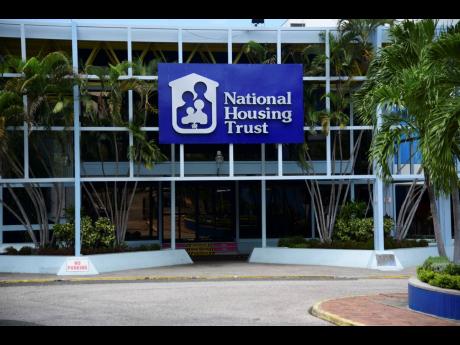

Much has been said about the National Housing Trust (NHT) and its performance in recent months. The primary accusation levied against the organisation is that it simply does not build enough housing. Instead, its executives have pocketed millions in compensation with scant results to show for it.
This opprobrium is exemplified by the claim made by Member of Parliament Lisa Hanna. In a newspaper column last year, Hanna stated, “Instead of building houses for our people, the NHT is taking a percentage of workers’ and employers’ salaries to build cash in the bank. This approach by the NHT is contrary to its original mission.”
This begs the question: What is the NHT’s actual mission, and does it satisfy its mandate? Moreover, given the chronic shortage of affordable housing, does the NHT still have a purpose today?
Misunderstanding the NHT’s Mandate
From its inception, the NHT’s job was to provide access to financing for housing, not to construct dwellings. Don’t take my word for it. Section 4(1) of the NHT Act states that the Trust is directed to add to and improve the existing supply of housing by: (1) promoting housing projects approved by the relevant minister; (2) make loans available to contributors to assist in the purchase, building, maintenance, repair, or improvement of houses; and (3) encourage the improvement in methods to produce houses.
There is nothing in the NHT’s overarching legislation that stipulates that its directive is to create housing. That is a myth. Even at the time when Prime Minister Michael Manley outlined the establishment of the NHT, he specified that the agency should operate as a “financial institution”.
During his October 8, 1975, address to the House of Representatives, Manley stated: “It is proposed to establish, as of January 1st, 1976, a National Housing Trust, which will be required to receive and disburse funds from compulsory contributions to be made by both employers and employees. The Trust will operate primarily as a financial institution for the housing sector. Its role will be to supplement the existing public and private institutions in the field and not to replace them.”
Therefore, the performance of the NHT should really be assessed on whether Jamaicans can access its financial solutions and not on housing units being developed.
The Real Problem
Based on this metric, the surprising reality is that the NHT is actually executing its mandate. The Caribbean Policy Research Institute (CAPRI) noted in a 2016 report that the NHT is the largest provider of mortgages in the country. However, given that its mortgage offerings are linked to income, many Jamaicans are not able to benefit from greater assistance. So low-income Jamaicans may qualify for a loan, but the amount they receive is quite small.
Thus, the problem is not that the Trust is failing to carry out its mission. Rather the structure of Jamaica’s society means that only persons of a certain income bracket can access its offerings. This has been flagged by CAPRI, which identified that “the poorest 60 per cent of contributors received only 33 per cent of mortgages”.
While the NHT has attempted to bridge this gap by providing loans at zero per cent interest rates, in many cases it is still not enough. This broadly has to do with the informal nature of the economy where countless Jamaicans either do not have a consistent income or they do not formally own the property they occupy.
Hollow Comparisons
One of the most popular prescriptions proposed is that the NHT should just build more housing. Singapore does it with the Housing Development Board (HDB), so why can’t Jamaica? Let’s unpack this some more.
The challenge with this logic is that it does not address some of the structural issues that might lead to divergences in performance between the two countries. The NHT is not designed in the same way as the HDB. Unlike the NHT’s responsibility, which is to provide loans and promote the occasional housing project, the HDB’s role is far more expansive. It includes providing loans, clearing and redeveloping slums, conducting housing upgrades, and much more.
Apart from that, this line of reasoning is based on the view that the NHT can achieve what the HDB did with its existing resources. Across many years, the NHT frequently spends above its net annual collection. In 2020-2021, that expenditure reached a high of 140 per cent, which meant that for that year, the Trust spent 40 per cent more money on housing than what it received in annual contributions. That budgetary deficit is then financed from its built-up savings. By contrast, the HDB does not have a problem servicing its deficits as it receives generous grants from the Singaporean government.
Moreover, like the NHT, the HDB is also funded by deductions from salaries and employers’ contributions. But unlike Jamaica, where this represents a combined five per cent of the wage bill, the HDB is funded from deductions that constitute as much as 23 per cent of wages. The difference is stark. Expecting the NHT to serve the same role as the HDB would be akin to screaming at an orange tree for not producing apples. Simple suggestions such as “build more housing” does not solve this problem. In fact, it is likely to perpetuate this issue as the houses made could probably only be afforded by the most well-off contributors.
Tackling the Housing Crisis
Solving Jamaica’s housing challenges requires more than vacuous musings and hollow comparisons with Singapore. It requires serious reflection on what is the nature of the local housing situation. Thankfully, this reflection has already been done. According to the NHT Strategic Mandate Review Commission Report (2017), one in four Jamaicans live in irregular settlements, and 40 per cent of all occupied land lacks any proof of ownership. This is the problem that needs to be addressed, and it is one that affects many contributors of the NHT.
Without this intervention, most of the Trust’s initiatives will continue to benefit higher income groups. For example, the Build on Own Land (BOL) is a sound programme as up to $7.5 million is available for an individual to construct their own home though the linchpin of this initiative is that this individual must own the property they want to build on. With at least 700,000 Jamaicans being unable to prove that the land they dwell on is theirs, clearly a well-intentioned initiative such as BOL is unable to yield the fullest benefits.
Using the NHT’s resources to provide formalisation services necessitates the revision of the Trust’s overarching legislation to empower it with the authority to regularise informal settlements and provide land-titling services. This is not meant as an all-encompassing proposal. However, at this juncture, solutions call for more in-depth thinking of sound strategies that reflect the reality of many Jamaicans.
Does the NHT still serve a purpose? Yes, it most definitely does, but it needs to be restructured and empowered for it to yield its fullest potential. In the meantime, I look forward to the solutions the Trust provides for 2025.
- David R. Salmon is a public commentator, development specialist, and a Rhodes Scholar. Send feedback to columns@gleanerjm.com and davidsalmon@live.com or on X @DavidSalmonJA.