Jamaica faces UN scrutiny - Advocates say proposed gun sentence hike a step in wrong direction as country faces human rights test
Loading article...
-
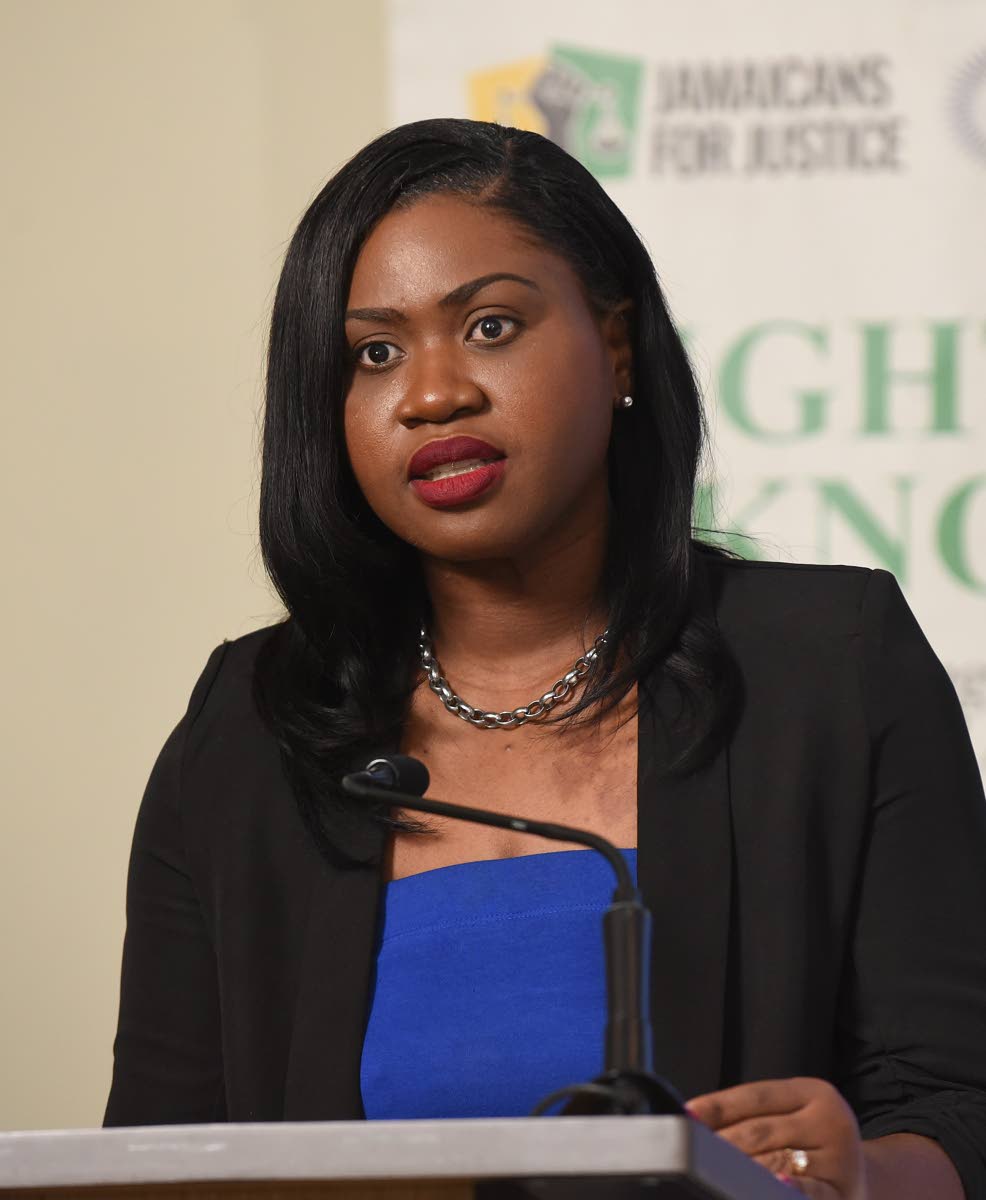 Mickel Jackson, executive director of Jamaicans for Justice. Photo - File
-
Mickel Jackson, executive director of Jamaicans for Justice. Photo - File
-
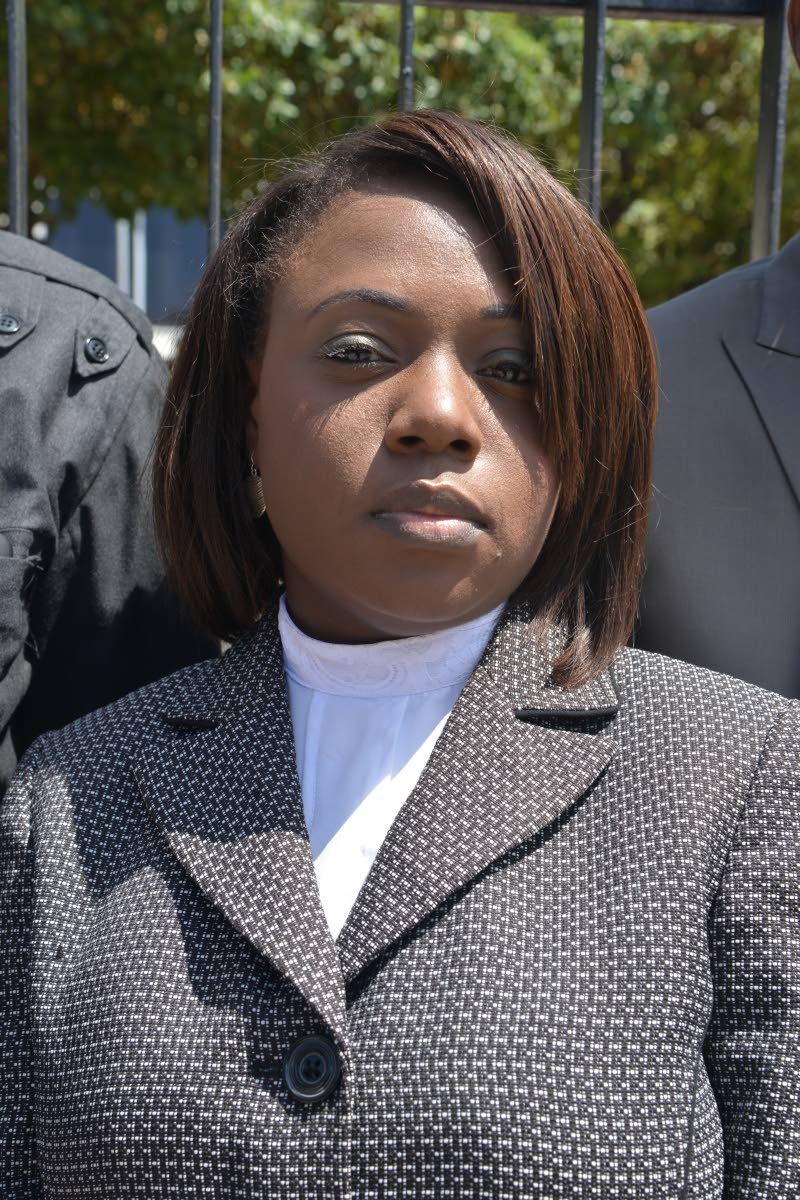 Tamika Harris, president of the Advocates’ Association of Jamaica. Photo - File
The Advocates’ Association of Jamaica (AAJ) is raising concern over the announcement of a proposed increase in the mandatory minimum sentence for illegal gun possession to 20 years. The revelation came on Sunday on the eve of a human rights country review by the United Nations (UN).
The current mandatory minimum sentence for illegal possession of a firearm is 15 years.
The UN Human Rights Committee’s 146th session is currently under way in Geneva, Switzerland, from October 19 to November 6, and is reviewing Jamaica, Austria, Rwanda, and Cameroon.
Jamaica was last reviewed in 2016.
AAJ President Tamika Harris told The Gleaner that the proposal made by the National Security Council (NSC) raises serious constitutional concerns.
Citing the case of Tafari Morrison and the King, she noted that the Privy Council decision recognises that mandatory sentences may, in certain circumstances, amount to inhumane or degrading punishment.
“We all want to see an end to gun violence, but increasing mandatory minimum sentences while denying judges the discretion to consider individual circumstances is deeply concerning. The question is not whether gun crime should be punished severely, but whether justice is served by compelling a judge to impose 20 years’ imprisonment, even where that sentence is grossly disproportionate,” she said.
“Specifically, Section 13.6 of the Jamaican Constitution, containing the Charter of Fundamental Rights and Freedoms, provides that no person shall be subjected to torture or inhumane or degrading punishment or other treatment. So, yes, while in Tafari Morrison, that specific case, they did not think that sentence was so inhumane. The case still established that in certain circumstances it can be. And I’m saying that if you move from 15 to 20, you’re moving closer to the inhumane and degrading punishment,” Harris added.
Fail-safe clause
She said any mandatory minimum sentence must include a fail-safe clause to allow a judge to maintain some discretion and not be forced to pass a sentence knowing it is manifestly excessive.
The NSC also disclosed that under proposed amendments to the Firearms Act, a new criminal offence will be created for adults who groom children to use, store, transport, or acquire illegal guns.
Prime Minister Dr Andrew Holness, who chairs the NSC, said the move is to send “a strong signal against illegal guns and those who promote them, while making sure the law is fair to the most vulnerable”.
“Make no mistake, this administration is drawing a line in the sand against gun crime, and we are determined to eliminate the gun culture from our society,” he said.
The issue of the mandatory minimum sentence under the Firearms Act is among several being raised by human rights advocates with the UN Human Rights Committee, a body of 18 independent international experts examining how Jamaica is implementing the International Covenant on Civil and Political Rights and the committee’s previous recommendations.
The collaborative report being examined by the committee was crafted by Jamaicans for Justice (JFJ), the Jamaica Environment Trust, the Equality for All Foundation, Stand Up for Jamaica, the Caribbean Vulnerable Communities Coalition, and the Jamaica Youth Advocacy Network.
They have asked the committee to recommend that Jamaica consider amending the Firearms Act so that a sentencing judge may depart from a mandatory minimum where the interests of justice require it, including by revisiting the requirement that the minimum be imposed before an appeal can remedy the situation.
While acknowledging that some progress has been made in the last decade, JFJ Executive Director Mickel Jackson said Jamaica still has some way to go to achieve a satisfactory level of human rights protection.
“In terms of the priority issues here at JFJ, we looked at the right to life [and] police use of force, so within the report, we made note of the increase in fatal shootings the country has recorded in the past decade,” Jackson told The Gleaner on Sunday.
She noted that since the last review, the lowest annual figure for fatal police shootings was 86 in 2019. There have, however, been significant increases, with the figure jumping to 311 in 2025. The year-to-date figure for 2026 is comparable to that for 2025.
“Not that we are saying that every fatal encounter was unlawful, but the absence of body-worn cameras continues to be an issue of concern for us. The fact that we have several families that have reached out to JFJ to indicate that they have a different account of what may have taken place is an area of concern,” Jackson pointed out.
She said that while body-worn cameras were not a panacea, they would help provide an independent account of events.
“It’s just for concrete recommendations to be made and for the Jamaican Government to accept these recommendations and move with alacrity.”
One of the main calls that the groups are making is for the Government not only to fully fund the Office of the Public Defender but also to expand its role to include that of a National Human Rights Institute. Jackson said the call was originally made in 2016 and that the Government had committed to looking into it.
“It’s one of the main recommendations that we are making and we hope the UN body will agree, too,” Jackson said.
Jackson said that significant strides had been made since 2016, pointing to the Integrity Commission Act in 2017, the Children Diversion Act in 2018, which became operational in 2020, the move to repeal the Uncontrollable Child Provision and the reduction in homicides.
“So that is significant progress made in the last 10 years. While we see that progress, we still have a far way to go. While we have made significant strides we believe that the Government should examine the human-rights violation issues that still remain and move to address them in short order,” Jackson stated.
tanesha.mundle@gleanerjm.com carl.gilchrist@gleanerjm.com