Editorial | IFC and noisy MPs
Loading article...
-
 Courtney Williams, Commissioner of the Independent Fiscal Commission
-
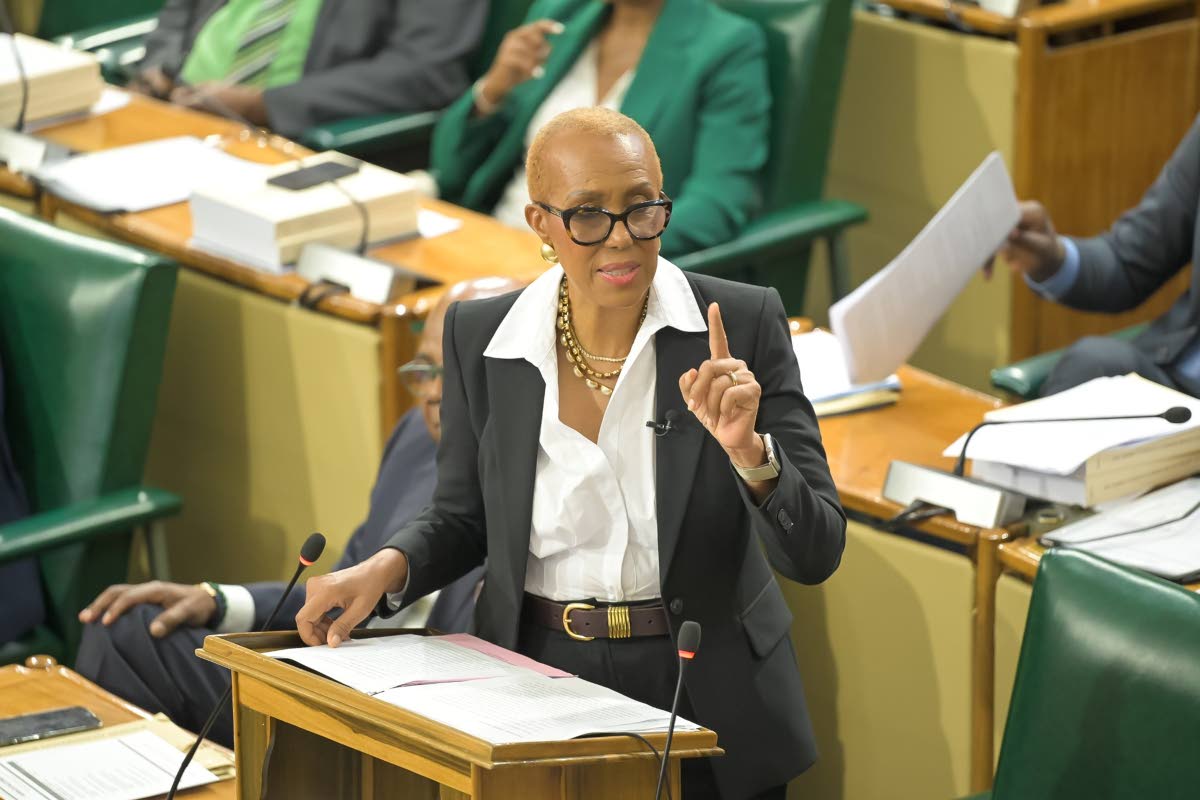 Minister of Finance and the Public Service, Fayval Williams, opens the 2026/27 Budget Debate in the House of Representatives on March 10, 2026.
Apart from their partisan desk-thumping, an unfortunate feature of Jamaica’s legislators is how little attention they pay to, and therefore know about, the bills upon which they vote. They generally leave it to the executive, the Cabinet, to decide and then corral the votes.
This ignorance was on display in the House of Representatives a week ago, during a sitting of the Standing Finance Committee. Members, mostly on the Government’s side, moaned, whinged and complained that the Independent Fiscal Commission’s (IFC) economic and fiscal assessment report (EFAR), for the period up to December 31, 2025, was in the public domain, and being discussed, before being tabled in Parliament.
There was a sense that the fiscal commissioner, Courtney Williams, had been rude and offensive and had trampled on the dignity of Parliament. Even Fayval Williams, the soft-spoken, mild-mannered and gracious finance minister, joined in.
“... He shouldn’t be out there in the media talking about it (the EFAR),” Ms Williams said, responding to a complaint by one member. In truth, Mr Williams hadn’t been “out there” talking to the press, although the report was on the IFC’s website.
“Member, it is unfortunate that you make mention (of) it (the report) being out there in John Public’s domain, before it is even tabled here,” the Deputy Speaker, Heroy Clarke, said in response to the shadow finance minister, Julian Robinson’s implied criticism of a delay in the tabling of the document. Mr Clarke’s suggestion was that Commissioner Williams had jumped the gun.
A reasonable conclusion from last week’s contretemps was that, for the most part, members had neither read the Independent Fiscal Commission Act of 2021 nor understood the context of its development and passage, or the work the IFC was designed to do.
IMPORTANT CORNERSTONE
Basically, the IFC is the legislated successor to the Economic Programme Oversight Committee (EPOC), the much-praised multi-stakeholder group that policed the government’s adherence to economic reforms under its second round of 2010’s borrowing agreements with the International Monetary Fund (IMF). The first of those agreements collapsed. So, now domestic banks, having taken further haircuts in another default, wanted to ensure that they would be repaid.
When the IMF programme ended, there was a wish for EPOC, or something akin thereto, to be institutionalised beyond a good-faith undertaking.
“Jamaica’s independent fiscal council will be an important cornerstone in Jamaica’s fiscal responsibility architecture, and holds the promise of helping to keep Jamaica on a path towards the achievement and maintenance of economic independence long into the future,” remarked the former finance minister, Nigel Clarke, in the May 2018 speech promoting a concept of a fiscal council. The idea enjoyed broad consensus.
With EPOC, except for career public servants from the finance ministry and other government agencies, its members were volunteers, representing key sectors of the society, including trading unions, the private sector, including banks, and NGOs. The government undertook to provide them with its fiscal and economic data, but wasn’t bound by law. EPOC didn’t have an independent, full-time staff.
With the IFC, these things are legislated.
KEY OBLIGATION
While the law was passed in 2021, the commission became operational in 2025. Its primary responsibility, as established in Section 3 (2) (a), is to “provide the public with an informed and independent opinion of the soundness and sustainability of Jamaica’s fiscal position and policies in keeping with the Fiscal Responsibility Framework (FRF) as set out in Part VII of the Financial Administration and Audit Act”.
A key obligation of the FRF is the reducing, and sustaining of Jamaica’s debt at no more than 60 per cent of GDP.
The IFC’s first job is to provide Parliament with an analysis of the credibility of the government’s fiscal policy paper, (FPP) a document the administration produces at the start of the financial year, setting out its fiscal and economic projections. The commission is to deliver its report “within two weeks” of the FPP being tabled in Parliament.
The IFC’s review must be published on the commission’s website within 10 days of the report being sent to Parliament. Another report, on actual fiscal outcomes, is to be published at least twice each fiscal year on the site, “within 21 days of the receipt of quarter-end fiscal data for the 30th day of June, and within 42 days with respect to the 31st day of December”.
This newspaper, at the tabling of the bill, had suggested that the IFC be specifically mandated to disclose if there was any delay, beyond a specified period, in receiving data from the finance ministry. In any event, this law was one of the few wins for transparency in the public sector.
As the commissioner pointed out in the wake of the noise, once the IFC’s reports have been submitted to Parliament, the legislation does not require an actual tabling before their publication.
It says at Section 15 (6): “ Prior to the publication of any report on the official website of the fiscal commission, in accordance with this section, the fiscal commissioner shall ensure that the report is submitted to the speaker of the House of Representatives and the president of the Senate, who shall, as soon as possible, upon receipt of said report, have it laid on the table of the respective houses.”
Chalk one up for Nigel Clarke, who clearly wanted to avoid what has been attempted with reports by the auditor general and the Integrity Commission.