Yaakov Raskin |Purim, Persia, and the mystery of the red heifer
Loading article...
-
-
 Jews pray at the Western Wall, beside the Temple Mount, known to Muslims as the Noble Sanctuary, or the Al-Aqsa Mosque compound, in the Old City of Jerusalem, Monday, Oct. 16, 2023.
This past week Jewish communities around the world celebrated the holiday of Purim.
Purim commemorates a dramatic moment in Jewish history nearly 2,500 years ago, when the Jewish people living in the Persian Empire faced annihilation. A wicked prime minister named Haman plotted to destroy every Jew – men, women, and children – in a single day.
Here in Jamaica, our Purim celebration carried an added sense of history.
With the help of Douglas Reid, president of the United Congregation of Israelites, I had the privilege of reading the Purim story from a historic scroll connected to Jamaica’s early Jewish families who lived here as far back as 1791.
Nearly lost completely to history, this scroll of Esther was miraculously rediscovered and restored in 2008 by esteemed members of Jamaica’s Jewish community.
Holding that scroll in my hands was a powerful moment. The footsteps of Jewish history stretch across continents and centuries – from ancient Persia to the Caribbean – reminding us of the resilience of a small people who have survived against all odds.
Yet this year, Purim had an even stronger relevance than I can remember.
In the Purim story, the very gallows Haman prepared for Mordechai, the leader of the Jews, became the instrument of his own downfall. What was meant to destroy the Jewish people became a moment of salvation and celebration.
MOST INCOMPREHENSIBLE REALITY
This year, in the very same week that Jewish people gathered in synagogues to read the ancient scroll of Esther – as our ancestors have done for generations – a modern enemy of the Jewish people faced the same fate as Haman. The Ayatollah, a man deeply responsible for funding and directing terror against Israel, perished in the war he helped ignite following the horrific attacks of October 7.
As the famous saying goes, “History does not repeat itself exactly, but sometimes it rhymes.”
Just as Haman’s plot ultimately collapsed under the weight of its own evil, so too we are reminded that hatred and violence ultimately destroy themselves.
This year on Purim, we had an extra reason to breathe a sigh of relief. The Jewish people do not celebrate the fall of our enemies. What we celebrate is survival. We celebrate the stubborn belief that good ultimately prevails over evil, that life prevails over death.
As Purim passes, we immediately begin preparing for Passover. In synagogues this time of year we read an additional Torah portion about one of the most mysterious commandments in the Bible: the law of the Parah Adumah, the red heifer.
The red heifer was used in ancient times to purify someone who had come into contact with death. Yet its laws defy logic. Even King Solomon, the wisest of men, said he could not fully understand it.
The Lubavitcher Rebbe once explained that perhaps this is because death itself is the most incomprehensible reality human beings face.
A SPARK OF THE DIVINE
Biologically, death makes sense. Everything physical eventually fades.
But emotionally and spiritually, it never feels natural. Something deep inside every human being insists that life should continue, that existence should not simply end.
The Torah teaches that human life contains a spark of the Divine. In essence, life is meant to be eternal.
The red heifer, with all its paradox and mystery, reminds us that some of the deepest experiences in life – loss, grief, suffering – cannot be solved through logic alone. Sometimes healing comes through faith, humility, and trust in something greater than ourselves.
In 2026, with war raging in the Middle East and so much uncertainty in our world, this ancient teaching feels more relevant than ever.
The red heifer reminds us that not everything can be understood.
In moments of darkness, having faith demands that we continue forward with courage, with hope, and with the conviction that redemption is still possible.
And that is a message the world could use right now.
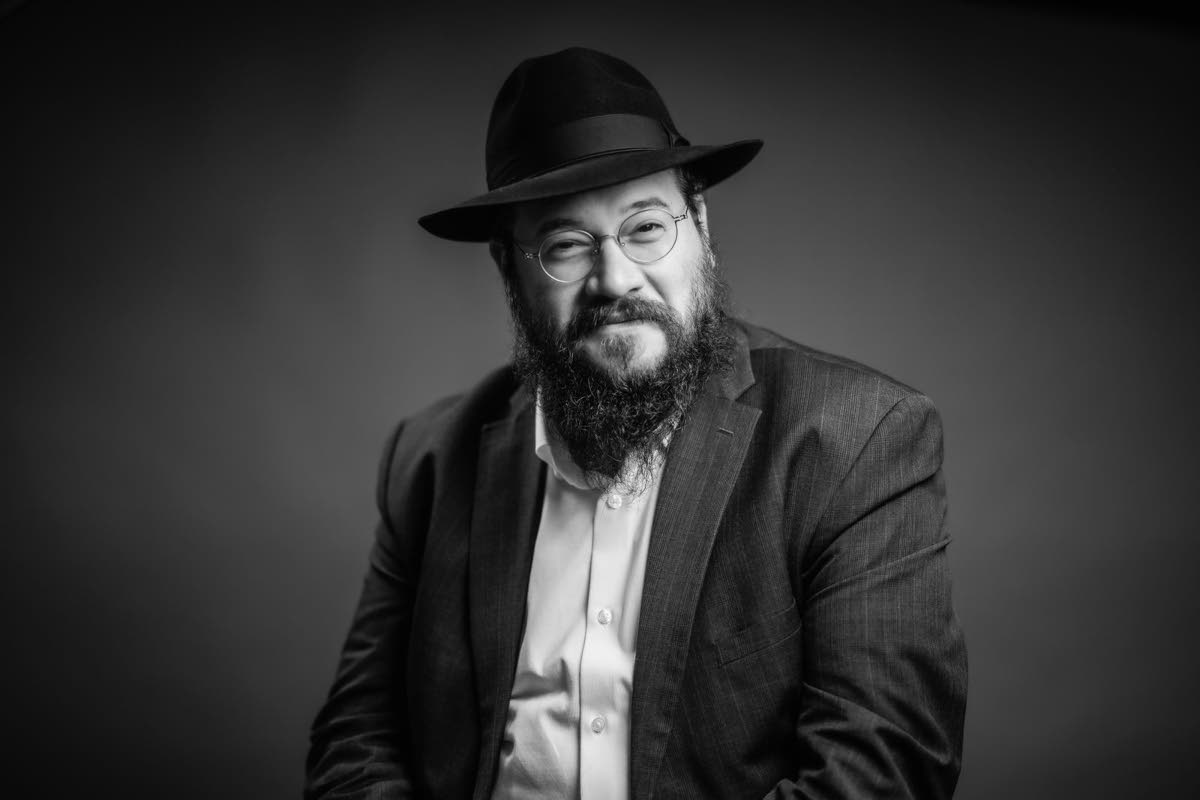
Rabbi Yaakov Raskin has co-directed Chabad of Jamaica alongside his wife Mushkee since 2014.