Gov’t looking at new economic model for Black River coastline
Loading article...
-
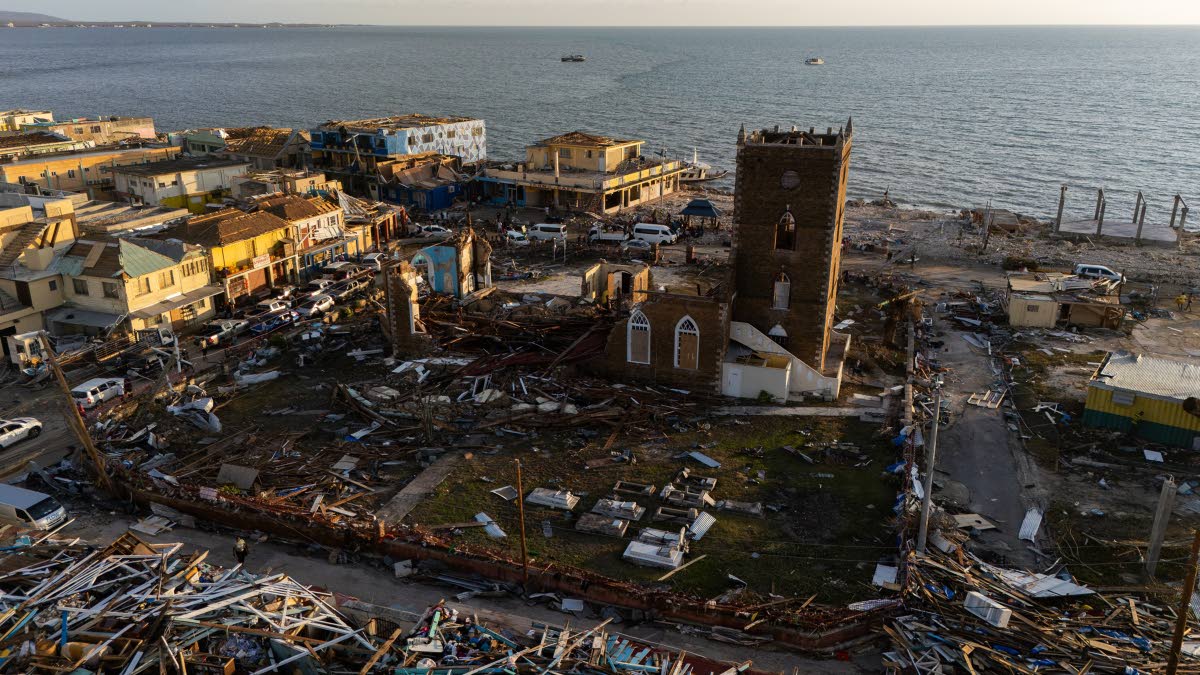 A section of Black River, St Elizabeth, after the passage of Hurricane Melissa last year. The St John Anglican Church is seen in ruin. Photo - File
-
A section of Black River, St Elizabeth, after the passage of Hurricane Melissa last year. The St John Anglican Church is seen in ruin. Photo - File
-
 Dr Andrew Holness, prime minister of Jamaica. Photo - File
WESTERN BUREAU:
Prime Minister Dr Andrew Holness says the Government has no intention of abandoning the hurricane-ravaged coastal communities of Black River, St Elizabeth, but will instead pursue a new economic development model that balances environmental protection, sustainable livelihoods and reduced exposure to natural disasters.
He said the proposed transformation would create opportunities for fishing, tourism and other environmentally sustainable enterprises, while allowing residents to continue benefiting economically from the area’s natural resources.
“If properly protected and properly developed, it can become a natural environmental asset for the people,” Holness said, amid growing concerns about the future of vulnerable coastal settlements following the devastation caused by Hurricane Melissa in 2025. “And so, the idea is not to abandon the area. The idea is to develop the area, but in a different economic model.”
Holness, who was speaking at last Wednesday’s groundbreaking ceremony for the National Water Commission’s Black River-to-Arlington pipeline project, said he was making it clear that relocating vulnerable residential and commercial activities from the shoreline should not be interpreted as abandoning the coastal area.
He also spoke about the Government’s proposal to establish a new, climate-resilient town centre for Black River, while noting that fishing and tourism are two industries capable of sustaining economic activities along the coastline.
Essential infrastructure
Holness said investments in essential infrastructure would continue to support those economic opportunities.
“So, we will put in the water infrastructure. It will benefit those who might be doing fishing there, who may continue to have their fishing business for people who may want to do tours. All kinds of other economic activity can emerge there,” Holness said, in referencing the vision for the coastline.
As part of that commitment, Holness announced that the Government would proceed with a smaller water distribution line into Parottee, while the main pipeline project would extend from Black River towards Arlington.
The smaller line, he explained, would help ease the difficulties experienced by residents and businesses in the coastal community, notwithstanding the Government’s longer-term vision for the area’s redevelopment.
“So, we will continue with the investment for a smaller line to go into Parottee to ease the pressure on the people there,” he said.
According to Holness, continued investment in public infrastructure, particularly in communities severely affected by Hurricane Melissa, demonstrates the Government’s determination to strengthen Jamaica’s resilience against future natural disasters.
He said rebuilding efforts must extend beyond replacing damaged structures to creating communities better equipped to withstand increasingly destructive weather events.
“The Government is focused on our resilience, our preparedness, because that is what ensures speedy recovery,” he said. “The government is focused on dealing with the challenges of the people, their healthcare, dealing with their roots, dealing with their livelihoods, particularly for those affected by Hurricane Melissa.”
He said the proposed economic transformation of Black River’s coastline forms part of a broader government strategy to reconsider development in areas exposed to storm surges, flooding and other climate-related hazards.
Holness’ latest remarks suggest that the Government envisages a coastline that remains economically productive, but with a greater emphasis on environmentally compatible activities rather than rebuilding vulnerable communities in precisely the same manner as before.
He said such investments were particularly significant as Jamaica marked the first anniversary of the hurricane, which he described as the most powerful to have affected the country, while still insisting that despite the scale of the destruction, the Government remained committed to recovery and long-term resilience.
albert.ferguson@gleanerjm.com