
Leys takes pounding on first day of enquiry
Published:Tuesday | January 18, 2011 | 12:00 AM

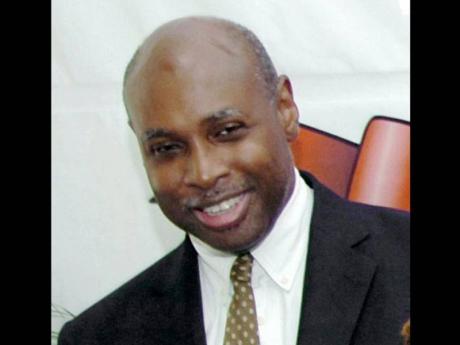


Gary Spaulding, Senior Gleaner Writer
The names of Solicitor General Douglas Leys and attorney Harold Brady took centre stage on a fascinating first day of the Manatt-Dudus Enquiry at the Jamaica Conference Centre in downtown Kingston.
During an intriguingly eye-opening presentation, the commission was given a blow-by-blow account of a disagreement between Ambassador Evadne Coye, permanent secretary in the Ministry of Foreign Affairs and Foreign Trade, and Leys.
Coye, the only witness who presented verbal evidence yesterday, revealed that as Jamaica and the United States (US) wrestled over the extradition request for Christopher 'Dudus' Coke, a delegation comprising her, Leys, and Deputy Solicitor General Lackston Robinson was sent abroad to meet with US officials.
Coye revealed how she took Leys to task when he included an American, unknown to her, in the Jamaica delegation to meet with US officials in Washington.
She said she flatly told Leys that they were not authorised to increase the size of the delegation.
Protestations dismissed
But Coye said her protestations were firmly dismissed by Leys, who told her that "his minister (Minister of Justice Dorothy Lightbourne) knows about it".
"I then terminated the conversation," Coye said.
She also recalled how she ended up in the offices of US law firm Manatt, Phelps & Phillips, at the direction of Leys, without knowing where she was.
Coye said she subsequently found out that the American included in the Jamaican delegation was Kevin diGregory, a representative of Manatt.
She noted that to her knowledge, up to this point, Brady had not come into the picture.
Under cross-examination by attorney for the Jamaica Labour Party (JLP), Frank Phipps, Coye stressed that she was acting on behalf of the Jamaican Government and not the JLP.
Meanwhile, there are indications that Brady will have to be hauled kicking and screaming before the commission.
Privileged information
Legal adviser to the commission, Garth McBean, who is marshalling the evidence, said Brady had dispatched a letter to the Emil George-led commission, arguing that information in his possession was privileged.
McBean disclosed that Brady also raised the question as to whether the summons served on him by the commission was valid.
On a day marred by hiccups created by the failure of several critical witnesses to present statements, lawyers expressed an interest in hearing from former police commissioner Rear Admiral Hardley Lewin and National Security Minister Dwight Nelson.
K.D. Knight, the lead attorney for the People's National Party (PNP), colourfully characterised the seeming lack of preparedness of the commission as putting up a ceiling without a foundation.
The commission was in receipt of statements from only Prime Minister Bruce Golding; the PNP's Dr Peter Phillips, who introduced the matter in the House of Representatives; and the foreign affairs ministry.
Lewin has also expressed a willingness to give testimony.
"Before we embark on evidence, it would be advisable to know who the witnesses will be, and the order in which they will be called," Knight argued.
He complained that he had received some of the documents as late as yesterday morning.
"I am bringing the matter to your attention for you to guide us as to how to proceed," added Knight.
But George was not inclined to give the PNP's attorney his way when he moved an early adjournment until all the statements were collected.
"We will just have to deal with what we have," declared the commission chairman.
Knight, a former national security minister, queried whether the current minister would be called to testify.
"Is the minister going to present a statement, given his public pronounce-ments? We can't just ignore ... and (it) could provide a better feel," argued Knight.
As day one got under way, Coye told the commission how Herman Lamont, the director of the Department for Diaspora and Consular Affairs in the foreign ministry, had received informal word that an extradition request was on its way to the ministry.
That would set in motion a series of meetings between officials from Jamaica and the United States over a seven-month period involving Leys, Brady, Isiah Parnell, US chargé d' affaires, and officials of the US Justice Department.