Youth put priorities on table for Child Month 2026
Loading article...
-
-
Ronieka Robinson
-

Sandrine Morris
-

Shanice Folkes
-
Dane Egla
Each year, the month of May provides an opportunity to reflect on the issues that impact our nation’s children. For this Child Month, young people across the country have suggested the issues that they believe should be prioritised. Many propose reforms to improve mental health services for children and their caregivers. Some recommend interventions to support children with special needs. While for others, promoting human capital development from early remains a pressing matter. Supporting the implementation of these measures is essential to build a society where children have the chance to pursue self-fulfilment in an environment that is safe, happy and free.
REFORMING MENTAL HEALTH SERVICES
Sandrine Morris | Deploy Clinical Psychologists to Curb School Violence
In recent times, there has been a troubling increase in school violence, particularly in St Ann, Kingston and St Andrew, as well as St. Thomas. Many have attributed this to poor parenting or children growing up in unstable homes. While these may be contributing factors, it would be misleading to suggest that violence is confined to children from unstable households.
Violence knows no class and there are numerous children from supportive homes, where financial hardship is minimal, who still react violently in seemingly minor situations. This raises important questions: What is truly at the root of the problem? Is it solely poor parenting and growing up in an unstable home, or are there deeper, less visible influences affecting our children?
A common thread among Jamaican children, regardless of background, is exposure to emotional, physical, or psychological trauma. This may arise from corporal punishment, parental pressure, neglect, or sexual abuse. Even where children have not directly experienced such trauma, many have witnessed it within their homes and communities.
The reality is that many children carry unresolved trauma that remains largely unaddressed. Therapy is neither widely accessible nor fully embraced, leaving schools as the primary point of intervention through guidance counselling. However, it remains uncertain whether this is sufficient.
While the guidance counselling and the human and family life education syllabuses support personal development, conflict resolution, and emotional awareness, they are not designed to address deep-seated trauma. Moreover, school counsellors are not clinical psychologists and must operate within defined professional limits. Consequently, the root causes of violent behaviour often remain untreated.
A more effective approach would be the strategic deployment of clinical psychologists within the education system. Although costly, a regional model where psychologists serve multiple schools on a referral basis could provide targeted support. If we are serious about curbing school violence, we must address its underlying causes rather than merely its symptoms.
Sandrine Morris is an attorney-at-law who is committed to national development. She currently serves as a member of the Youth Advisory Council of Jamaica.
Shanice Folkes | Turning Awareness into Action
As Child Month is observed across Jamaica, it must serve as more than a celebration. Rather, it should drive urgent action to address the challenges facing the nation’s children. First, child abuse and neglect remain major concerns. Therefore, strengthening reporting systems, increasing public awareness, and enforcing existing laws are critical steps. In addition, schools and communities must create safe spaces where children feel protected and heard.
Growing up in St Ann, there was a range of activities for teenagers. This included football clubs for boys and development clubs for girls. In the case of the latter, these clubs provided safe spaces where girls could discuss experiences that they had in the home and community. One such example is the Rutty Roots Walkerswood Youth Foundation.
Initiatives like this are critical, given the increase in incidents of violence in schools. Several of these issues stem from the home environment. Hence, further support needs to be provided to parents on how to deal with children who may be at risk of anti-social behaviour.
Moreover, mental health support must also be prioritized, as rising stress and exposure to violence are affecting our children’s well-being. Thus, educating parents and teachers to identify warning signs can make a meaningful difference.
Similarly, attention should be directed towards expanding the pool of social workers in the country. This would ensure that children can have more one-on-one support, instead of having to resort to group settings to ventilate their issues.
To ensure success, expanding schools’ guidance counselling departments and increasing the frequency of interactions between said counsellors and students is required. Similar to how subjects like mathematics and English are given dedicated time in the classroom timetable, human and family life education also needs greater time allocation.
Ultimately, Child Month must go beyond symbolic activities. By introducing safeguards, expanding mental health support and integrating social interventions in schools, Jamaica can build a safer and more secure future for its children.
Shanice Folkes is a third-year accounting and finance student at the University of Technology, Jamaica. She is interested in becoming a chartered accountant.
Ronieka Robinson | Reform Mental Health to Restore the Future
Mental health remains one of the most urgent yet overlooked challenges within Jamaica’s education system. Although schools are meant to support students, many children feel discouraged from seeking help. Students I know have shared that they would rather struggle in silence than approach a guidance counsellor due to fear of judgement and lack of trust. When mental health needs are ignored, the effects go beyond the individual. Students may withdraw from school, underperform academically, or even engage in harmful behaviours, such as bullying.
To effectively tackle this issue, Jamaica must adopt a more proactive approach, beginning at the earliest stages of education. Introducing mental health awareness in basic schools through regular emotional check-ins can help normalise expressing feelings. When students grow up understanding that their emotions matter, they are more likely to seek help if they need it. This early intervention would enable a shift in perception of mental health issues, from one that is taboo to one that is manageable.
Building on this, schools’ mental health services must be rebranded to remove stigma. Currently, only ‘serious’ problems are seen as worthy of attention, causing smaller concerns to be dismissed until they escalate. Schools should instead promote counselling as a space for everyday support. Framing these as ‘check-ins’, ‘well-being’, and ‘talk it out’ sessions can make students feel like their concerns are valid. Equally important, counsellors must respond without judgement, as dismissive attitudes can discourage students from speaking up altogether.
Finally, structural improvements are necessary to make support more accessible. Counselling spaces should feel welcoming and private, instead of formal and intimidating. Additionally, reducing the student-to-counsellor ratio would allow for more personalised care. Peer support programmes can be strengthened to bridge the gap, as students often turn to each other first. Together, these changes can create a system where mental health support for our students is truly satisfactory.
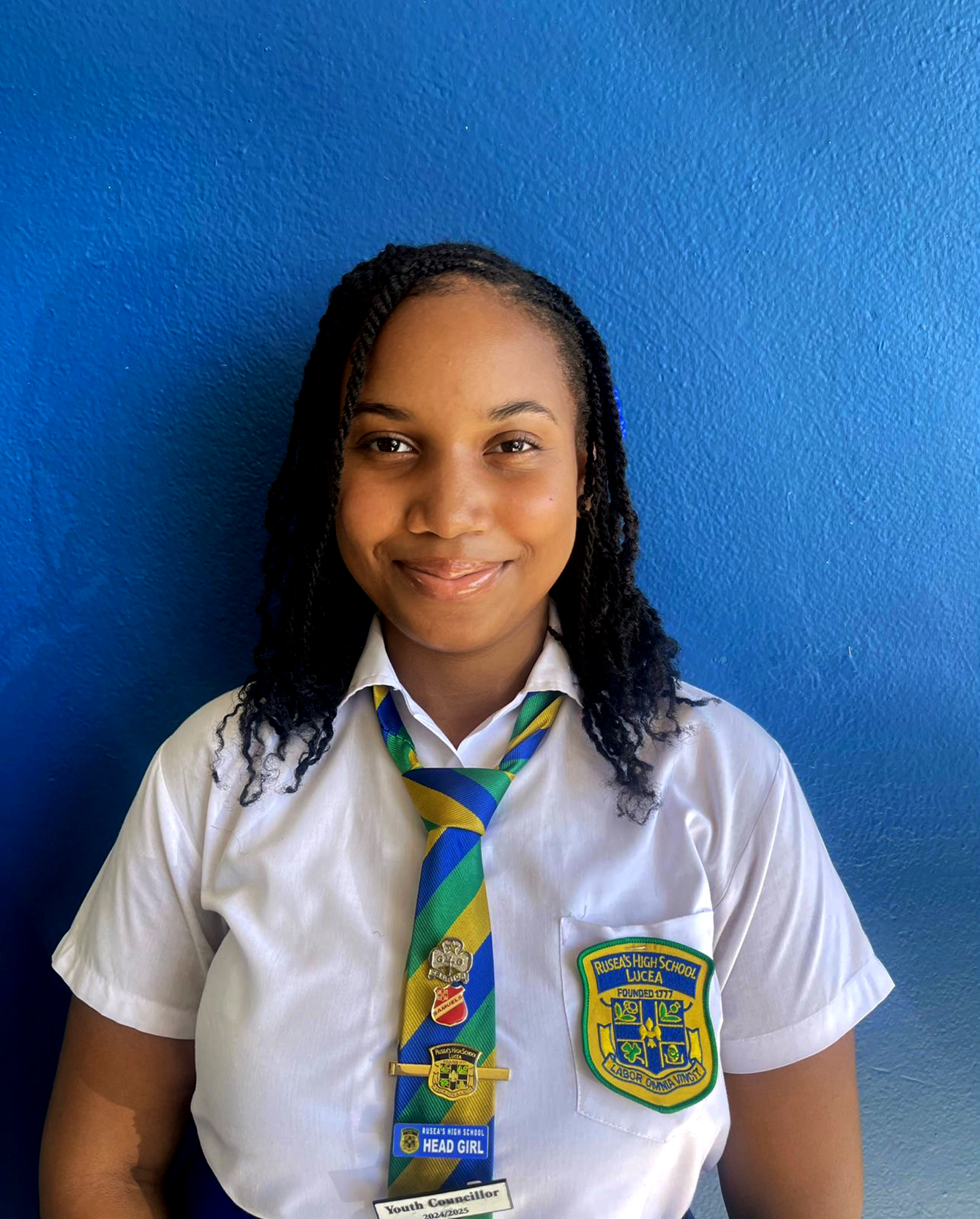
Ronieka Robinson is the head girl of Rusea’s High School and the president of the Quiz Society and Girl Guides Club. She is the outgoing deputy junior mayor of the Hanover Junior Council and a co-founder of her school's chapter of the Emerging Global Leaders Jamaica.
David R Salmon is the coordinator for this youth contributor series. A former Gleaner journalist, David is committed to providing opportunities for young people to share their thoughts and perspectives on important national issues. To send ideas and feedback, email davidsalmon@live.com or message him on Instagram @davidsalmonja.