Jamaica advises against travel to DR Congo, Uganda amid Ebola emergency
Loading article...
-
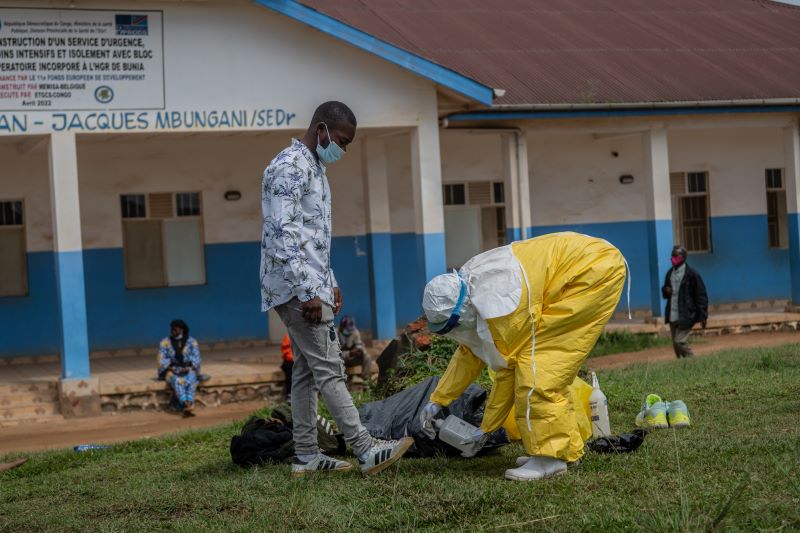 A health worker disinfects a person after transporting a suspected Ebola case to the General Hospital in Bunia, Congo on May 21, 2026. (AP Photo/Moses Sawasawa)
-
A health worker disinfects a person after transporting a suspected Ebola case to the General Hospital in Bunia, Congo on May 21, 2026. (AP Photo/Moses Sawasawa)
-
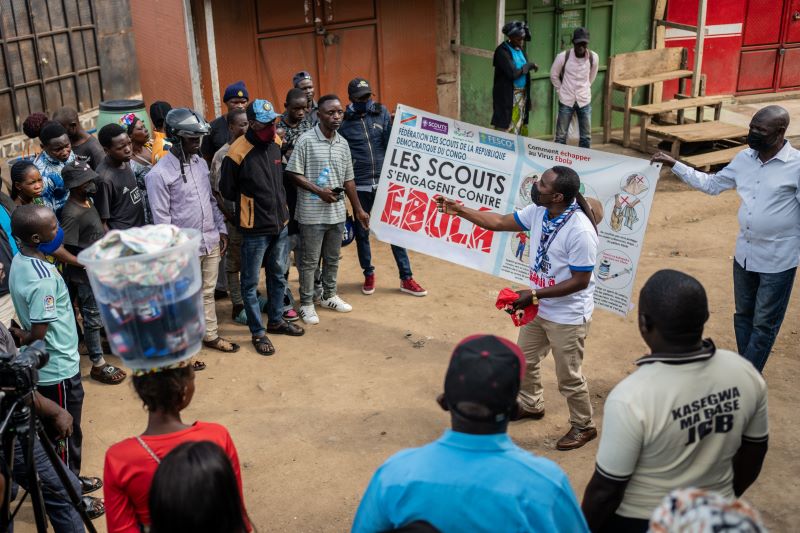 Francois Kasereka, a member of the Congo Scouts movement, speaks to people during a public sensitisation campaign amid the Ebola outbreak in Bunia, Congo on May 23, 2026. (AP Photo/Moses Sawasawa)
The Ministry of Health and Wellness is urging Jamaicans to avoid travelling to the Democratic Republic of Congo and Uganda following the World Health Organization’s declaration of an Ebola Public Health Emergency of International Concern.
“The Ministry of Health and Wellness wishes to advise members of the public to review their travel plans and avoid traveling to or transiting through affected countries,” the ministry said in a public advisory on Tuesday.
The health ministry said that although the WHO has assessed the risk as high in the African region and low globally, port-of-entry surveillance in Jamaica has been enhanced.
It said travellers who have visited affected countries within the last 21 days and show no symptoms will be required to self-quarantine under health supervision, while symptomatic persons will be treated as suspected cases and isolated.
The ministry is also urging the public to obtain health information from official and authorised channels only.
Officials in Dr Congo said Monday there were more than 900 suspected cases of Ebola, and 223 suspected deaths, since the outbreak was declared on 15 May. Seven cases were reportedly confirmed in Uganda.
On Monday, WHO director-general Tedros Adhanom Ghebreyesus said the Ebola outbreak is outpacing urgent efforts to scale up a response adding that responders were "playing catch-up".
Ebola is a severe and often fatal viral illness. According to the World Health Organization, the average case fatality rate is around 50 per cent, with past outbreaks ranging from 25 to 90 per cent.
The WHO says transmission occurs through direct contact with the blood, secretions, organs or other bodily fluids of infected people, or with surfaces and materials such as bedding and clothing contaminated with these fluids. The virus is believed to originate in wild animals, including fruit bats, porcupines and non-human primates.
The largest Ebola outbreak on record occurred between 2014 and 2016 in West Africa, when the disease spread across Guinea, Sierra Leone and Liberia and caused more deaths than all previous outbreaks combined. The first known outbreaks were recorded in remote Central African villages near tropical rainforests following the virus’s discovery in 1976.
Follow The Gleaner on X, formerly Twitter, and Instagram @JamaicaGleaner and on Facebook @GleanerJamaica. Send us a message on WhatsApp at 1-876-499-0169 or email us at onlinefeedback@gleanerjm.com or editors@gleanerjm.com.