Yaneek Page | US midterm elections are over, but Jamaica’s exposure remains
Loading article...
-
 Yaneek Page. Photo - AG Guest Guest
-
Yaneek Page. Photo - AG Guest Guest
-
 AP
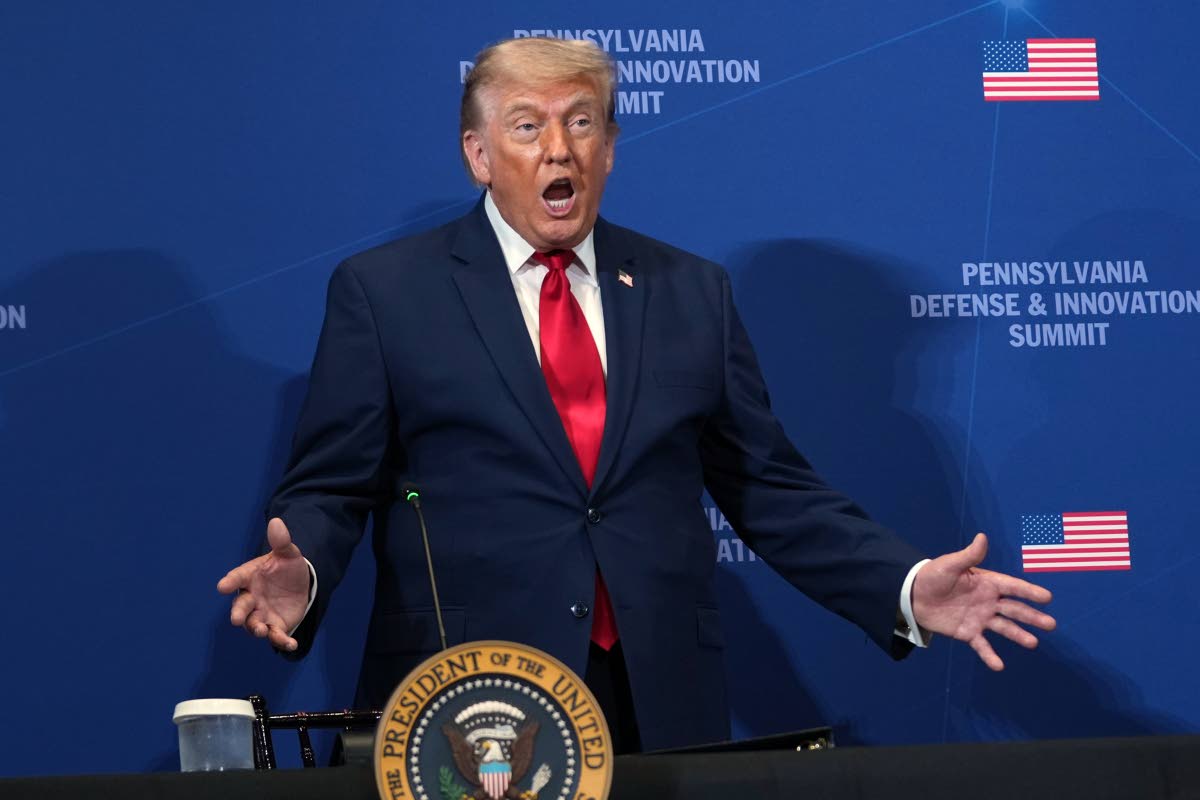
President Donald Trump speaks at the United States Army War College in Carlisle, Pa., during the Pennsylvania Defense and Innovation Summit, Wednesday, July 15, 2026. Photo - Julia Demaree Nikhinson
When American voters handed Democrats control of Congress in the November 3rd midterm elections, it was hailed as a knockout blow to the Trump administration.
On local social media, many Jamaicans began celebrating instantly as if the eye of the storm had passed. It has not, and we are still squarely in its path. Trump remains president, and his administration’s policies will continue to reach well beyond America’s borders. Trade tariffs, the ongoing Middle East war, volatile oil prices, and growing uncertainty in global markets still threaten our already vulnerable economy. Washington’s increasingly hostile posture towards the Caribbean, aggressive immigration enforcement, and retreat from foreign aid and international cooperation bring further risks. However, the most precarious circumstance for a small island struggling to recover from Hurricane Melissa is an administration actively undermining global efforts to confront the climate crisis. The fact is, a change in congressional control will not instantly reverse these policies, undo the damage already done, or insulate Jamaica in the foreseeable future.
First, the new Congress will not take office until January 3, 2027, and even then, Donald Trump will maintain his powerful veto pen until January 2029. Second, the economic fallout of the last two years has already been eating away at our pockets. You feel it in the gas prices, electricity bills, grocery receipts, and total import costs. It has made airfares steeper, logistics more complex, and local transport more expensive. The Bank of Jamaica’s decision to hike interest rates by 50 basis points in September further elevated the cost of capital, squeezing cash flow across all sectors. Realistically, these compounded losses are unrecoverable. Third, a change in legislative control in the US capital is unlikely to yield an immediate rewrite of foreign or economic policy towards the region. Fourth, the Federal Remittance Transfer Tax, which came into effect on January 1, 2026, is still law and continues to disproportionately affect older, lower-income diaspora senders who rely on cash agencies over electronic bank transfers. That steady drain on foreign exchange flows also burns pockets of many beneficiaries in communities across Jamaica.
If you run a local business, rely on remittances, or have family in the States, it impacts your cash flow. Also, foreign exchange stability, consumer demand, supply chains, and even the financial stability of your household may be affected.
Forewarned and Still Exposed
In December 2024, weeks after the US general elections, I urged readers to brace for impacts such as tighter visa requirements, protectionist tariffs, banking de-risking, foreign aid cuts, and remittance taxes. By February 2025, just 20 days after the inauguration, those warnings materialised into hard policy. Regional geopolitics shifted with America’s large-scale attack across Venezuela’s capital in January 2026 while local sovereignty took a hit in June of this year when Jamaica agreed to act as a transit point for third-country deportees.
Meanwhile, US deportations of Jamaicans nearly doubled in 2025 to 967, with thousands more expected in future removal proceedings. The consequences extend far beyond those deported, potentially disrupting remittance flows to families at home while placing new financial and social pressures on households supporting returning citizens as they struggle to reintegrate. Again, these are not consequences that vanish in January next year.
What the Blue Wave Can and Cannot Change
We may find hope in promises by Democratic leaders to pursue early votes to roll back trade surcharges and defund foreign conflicts. But promises are not law. Indeed, the plan floated earlier this week to impeach the Secretary of War appears to have been a non-starter. Also, overriding a presidential veto requires a two-thirds majority in both chambers, or 290 House votes and 67 Senate votes if all seats are filled and all members vote. Democrats hold nowhere near those numbers. Furthermore, executive authority over tariffs and border enforcement rests partly on statutory powers delegated by Congress decades ago, powers a new legislative majority cannot simply void by decree. The realistic gains from this “blue wave” may, therefore, be greater oversight, transparency, and leverage over federal spending rather than immediate policy reversal.
Here are three potential scenarios for Jamaica as we enter two years of divided government in Washington, and spoiler alert: Jamaican businesses and consumers should prepare for persistent volatility.
Gridlock: Congress investigates, the White House resists, and tariffs, immigration enforcement, and the remittance tax stay in place. This is the scenario against which we must plan.
Transactional Bargaining: The White House negotiates concessions with Democrats, potentially offering movement on trade or spending in exchange for support on immigration, security, or other administration priorities. Jamaica may benefit from some adjustments, but there is no guarantee that Caribbean interests will feature prominently in those negotiations.
Further Escalation: Geopolitical tensions in the Middle East or Caribbean waters deepen, sending oil prices, freight costs, and airfares higher. For Jamaica, the consequences would reach from the petrol pump and supermarket shelves to tourism, business profitability, and household budgets.
Unfortunately, none of these scenarios offers Jamaica a clean escape from the pressures we have faced under the Trump doctrine. Even where Congress succeeds in restraining the administration, the economic consequences of policies already implemented will not simply disappear.
And therein lies the danger of celebrating the midterm results as though they mark the end of our troubles. The political balance in Washington may have changed, but Jamaica’s exposure to American decisions hasn’t. That is the crux of the matter. We cannot control who occupies the White House, how Congress votes, or whether Washington becomes more confrontational with its neighbours. What we can control is how seriously we address our own vulnerabilities, from our dependence on imported energy and fragile supply chains to the resilience of our businesses and our preparedness for an increasingly hostile climate.
One love,
Yaneek Page is the programme lead for Market Entry USA and a certified trainer in Entrepreneurship.