
CARICOM urges policy to deal with rising food prices
Published:Monday | March 28, 2022 | 5:29 PM
QUITO, Ecuador, CMC –
Caribbean Community (CARICOM) member states today called for a policy to deal with rising food prices globally, as they joined their Latin American counterparts in discussing the agri-food sector which is regarded as critical to move beyond the crisis that has engulfed the world over the past two years.
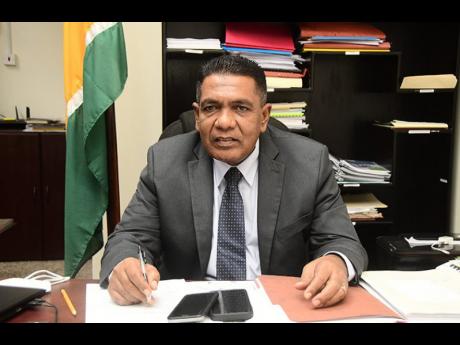
Guyana's Agriculture Minister, Zulfikar Mustapha, told the 37th Regional Conference for Latin America and the Caribbean of the Food and Agriculture Organization (FAO) that food prices had become a “very very important issue” around the world.
“What is taking place, we have had the (COVID-19) pandemic for two years, we have had the war in Russia and Ukraine and we have other issues that exacerbate the situation with food prices around the world,” Mustapha told the conference being attended by ministers and delegations both virtually and in person.
Mustapha, who was elected vice-chair of the five-day conference, said “we as a region in Latin America and the Caribbean, especially in CARICOM, we are now looking at proposals and ways on how we could bring down the food prices and reduce our import bill”.
He said he is supportive of a proposal tabled by Ecuador on the issue, adding “I think we can come out here when we leave this conference, we can come out with a lot of measures that we can put in place and take back to our countries and region so that we can work together to reduce the food import bill of Latin America and the Caribbean and also for food security for this part of the world”.
Earlier, St. Vincent and the Grenadines Agriculture Minister, Saboto Caesar, told the conference that while he too supported the Ecuador proposal, food prices would not only be affected by the conflict between Russia and Ukraine.
“We are at a particular period where we have witnessed over the last two years, because of significant disruptions in food supply chains as a resultant implication of the COVID-19 pandemic, that we really cannot say coming out of this conference the impact it is going to have on food prices,” Caesar said, fully endorsing the Ecuador proposal.
“And while I support the presentation from the delegation of Argentina, I think we cannot leave Quito without having as a major consideration on the agenda, the issue of the impact on food prices of all that is taking place and not only what is happening in the Russia-Ukraine conflict, but also the existing impact that existed because of the COVID-19 pandemic.”
HARDEST HIT
According to the FAO, Latin America and the Caribbean is committed to confronting and overcoming the most complex humanitarian, economic and social crisis in recent decades, caused by the COVID-19 pandemic. It said no other region has been hit so hard.
“The agri-food sector is key to move beyond the crisis. From farms all the way to consumers' tables, the people, organizations and businesses that make up the region's agri-food systems employ tens of millions of people,” said the FAO.
The FAO said that these systems are responsible for between nine and 35 per cent of the gross domestic product (GDP) of the countries of the region, and contribute 25 per cent of their exports.
It warned that without optimizing the contribution of agri-food systems, it will be much more difficult to get out of the crisis.
“However, there is a broad agreement that the region's agri-food systems must be transformed, according to the priorities and capacities of each country. This transformation is also essential to move towards more sustainable, resilient agriculture and agri-food systems, adapted to climate change,” said the FAO.
“Without it, we will not be able to ensure safe, nutritious and healthy food for the entire regional population, especially for the 267 million people who suffer from food insecurity. Nor will we be able to create conditions for rural inhabitants to overcome poverty, which affects 45 per cent of the said population.”
The FAO said that its member countries unanimously approved the new FAO Strategic Framework 2022-2031, which calls for supporting the 2030 Agenda through transformation towards more efficient, inclusive, resilient and sustainable agri-food systems, to achieve better production, better nutrition, a better environment and a better life, leaving no one behind.
The Regional Conference is held every two years and brings together the governments of the 33 member states of FAO in Latin America and the Caribbean to establish the regional priorities of the Organization for the next biennium.
Follow The Gleaner on Twitter and Instagram @JamaicaGleaner and on Facebook @GleanerJamaica. Send us a message on WhatsApp at 1-876-499-0169 or email us at onlinefeedback@gleanerjm.com or editors@gleanerjm.com.