
Editorial | CARICOM weather partnership
Published:Saturday | June 14, 2025 | 12:06 AM
The potentially negative impact on the Caribbean of Donald Trump’s move to cut spending on weather research and forecasting highlights the need for the region to widen the network of countries with which it collaborates in this area.
Indeed, as this newspaper reported last week, regional meteorologists are already moving in that direction. But, again, the American action emphasises not only the value of regional integration and the logic of an institution like the Caribbean Community (CARICOM), but the breadth of issues in which it makes sense for the Caribbean to share services and otherwise cooperate.
It underlines, too, the need for efficiency and accountability in public ventures, so that taxpayers are clear about the value they receive for the money they spend. When things go awry, they are kept abreast of developments. That is called transparency and accountability.
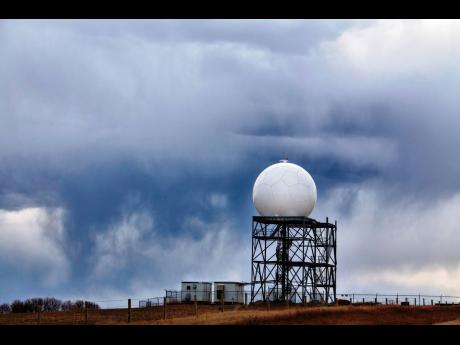
For instance, most Jamaicans will likely be surprised that a Doppler radar that the Jamaica Meteorological Services (the Met Service) installed in 2022 is not yet commissioned. That is, it is not fully up and running, providing data and other information to weather analysts and forecasters.
Primarily, Doppler radar is superior to other forms of radar because of the its ability not only to identify the presence of objects, but, by analysing the frequencies of the waves they reflect, the speed and direction in which these objects are moving.
That makes the system especially good in weather forecasting.
NEVER COMMISSIONED
In early 2022, it was announced that the Met Service was about to launch a Doppler weather radar. It, however, emerged this week that the system was never commissioned.
According to Evan Thompson, the head of the Met Service, in March of that year, a mechanical defect was discovered, which required the replacement of an antenna. Initially, the repair should have taken six months. But, for reasons that are unclear, the fix has now stretched to nearly three years.
Mr Thompson is hopeful that the job will now be complete and the Doppler radar will be in full operation by July.
We are, too.
The Gleaner would also appreciate an explanation of the economics of the delay, including the fact that Jamaica has not enjoyed the benefit of the system for more than three years after it should have been ready.
According to Mr Thompson, the delay hasn’t compromised Jamaica’s weather forecasting capabilities.
“We have a number of other tools,” he told The Gleaner. “... I mean, not many countries have Doppler radars, but they still have to produce forecasts. We utilise satellite imagery; we use other inputs that come into our system, because we are constantly monitoring based on information we get from all the other countries.”
The country from which Jamaica gets the bulk of that information is the United States, whose National Hurricane Center (NHC) provides critical data on weather patterns and weather events in the north Atlantic to countries in the Caribbean.
The NHC is an agency of the National Oceanic and Atmospheric Administration (NOAA), whose multi-billion dollar budget the Trump administration proposes to slash by over a quarter. More than 600 NOAA staff have already been cut, via redundancies or early retirements.
AFFECTED DELIVERY
These retrenchments have already affected the delivery of weather services in the United States, and experts have warned that it could also impact the NHC’s ability to conduct the kind of research and analysis, including flying planes into the eyes of hurricanes, for which it is famed.
The extent and quality of the NHC’s work is not easily matched or replaced, not least because it is expensive to do so.
That, however, oughtn’t to deter the Caribbean from expanding other partnerships, as officials have said they are doing with the European Union (EU).
“We have to look … to ways to make sure that we build the necessary resilience in the region that allows us to deal with these types of shocks, where governments change policy, so that we don’t build a unique dependence on any one country,” said Dr David Farrell, head of the Caribbean Institute of Meteorology and Hydrology, the technical and research arm of the Caribbean Meteorological Organisation (CMO).
“We (have to) build a dependence on a world community,” Dr Farrell added.
We understand Dr Farrell’s thrust, especially in the context of the globalised impact of climate change. But global partnership should be on the basis of expanding concentric circles.
The CMO is an institution of CARICOM. It coordinates responses to weather/climate activities in the region and represents CARICOM’s interests in global forums.
Changing global dynamics, such as is the case with trade, suggest that this integration should strengthen. The more the Caribbean can pool resources and do for itself , the less it will feel the external shocks when they happen.