
Editorial | Managing disasters better
Published:Wednesday | July 16, 2025 | 12:06 AM

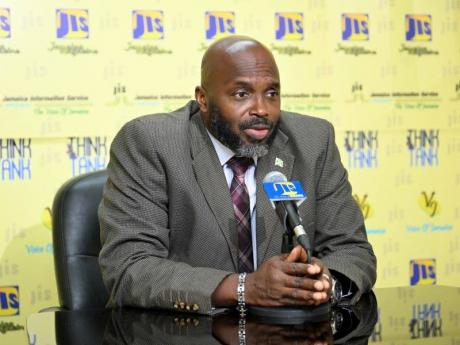
Prime Minister Dr Andrew Holness has described as “sobering” the findings of a committee which reviewed disaster risk management and relief mechanisms, and has said that his administration is implementing reforms.
“The Government is moving with urgency to act on the committee’s recommendations, including legislative amendments, improved inter-agency coordination protocols, and deeper integration on climate resiliency into all aspects of national planning,” Dr Holness said last week.
It is good that the administration appreciated the need for such an evaluation of the system, which is in keeping with best practices in management. Periodic assessments may flag drifts, or erosions in organisational and operational structures – which tends to occur imperceptibly over time – and allow for the recalibrations of systems to make them more efficient.
So, while The Gleaner welcomes the review and objects to nothing in the sweeping overview of the findings by the prime minister, we are disappointed that the process appears not to have been more front-facing and engaging of the public, and that the committee’s findings and recommendations were not published ahead of the start of implementation.
Among the recommendations of the report, apparently, was for a major overhaul of the Office of Disaster Preparedness and Emergency Management (ODPEM), which, on its face, is unlikely to be a controversial proposal. Except, as in most things, the devil, as they say, is in the details.
That is why we would have preferred a detailed publication of the committee’s terms of reference before it began its work, as well as the names and the backgrounds of the people who were asked to do the job and how they went about the exercise. Further, what they proposed should be subjected to a rigorous public analysis ahead of the final and near – at least in the short term – irreversible implementation.
FEARS
There are good reasons for this approach.
First, living in a disaster-prone region, which is being made worse by global warming and climate change, all Jamaicans have a high stake in how the country prepares for, and mitigates, natural disasters and other catastrophes.
Further, there are substantial amounts of high-level expertise in disaster risk management that reside outside the public bureaucracy. We would wish to be assured that these skills were tapped into while the committee prepared its work. Alternatively, their findings should have been open to public scrutiny before they become a permanent part of new or adjusted structures. Preferably, this should be via parliamentary committee hearings, which would have required the report being tabled in the House of Representatives.
According to Prime Minister Holness, the committee concluded that Jamaica had solid institutional systems for disaster preparedness and risk management. However, there were gaps in the mechanism, particularly in cooperation between agencies, the sharing of data, and the speed with which they sometimes responded to issues.
It is not clear which agencies were especially targeted by the committee, except for ODPEM, the primary disaster planning and relief body, the review of whose structures was explicitly part of the review committee’s terms of reference.
Hopefully, the committee addressed the relative roles of ODPEM and the political directorate, given the concern of many in recent years that the disaster agency has become increasingly deferential to its political bosses, at the expense of its technical staff. There are fears, in this situation, of citizens losing trust in disaster management information, to the detriment of public safety.
INVERSION OF ROLES
A case in point was the October 2023, 5.6 magnitude earthquake that occurred in the morning while the Cabinet was in session, causing uncertainty across the island. Within minutes of the tremor Prime Minister Holness and his Cabinet colleagues were on social media assuring Jamaicans that all was well.
There was nothing wrong with Mr Holness speaking as head of the country and chairman of the National Disaster Risk Management Committee. What many people found disconcerting, however, was that it was five hours later that senior ODPEM or technical officials directly addressed Jamaicans with information about the quake.
Richard Thompson, the executive director of ODPEM, did not appreciate that people were disconcerted about the apparent diminution of the agency’s role.
He said: “You have to follow a protocol. You are in the middle of a response, so you are generating information, pulling down information, and you have to brief and update your respective portfolio ministers, and that goes up to the prime minister.
“It should not be a situation where you speak to media and then to your portfolio minister, or that the head of the country is hearing that information in the news without you having spoken to them on the matter.”
In an environment where politicians enjoy low levels of trust, that was worrisome. This was not an isolated situation.
In 2016, with Hurricane Matthew threatening Jamaica, a press conference on the pending storm was hogged by politicians, with little input from technical staff, causing a former head of ODPEM and University of the West Indies disaster management specialist, Dr Barbara Carby, to highlight the inversion of the roles.
She said: “There is nowhere in the world where a few hours before a disaster is expected to make an impact, you do not have the head of the disaster agency addressing the public. The kinds of information that one would have expected from the press conference was also lacking. So when you have politicians taking over the role of and sidelining disaster management professionals, then they had better be prepared to do it properly.”