Lloyd Barnett | Challenges of constitutional change
Loading article...
-
 In this September 2025 photo, members of parliament are seen at a sitting in Gordon House.
-
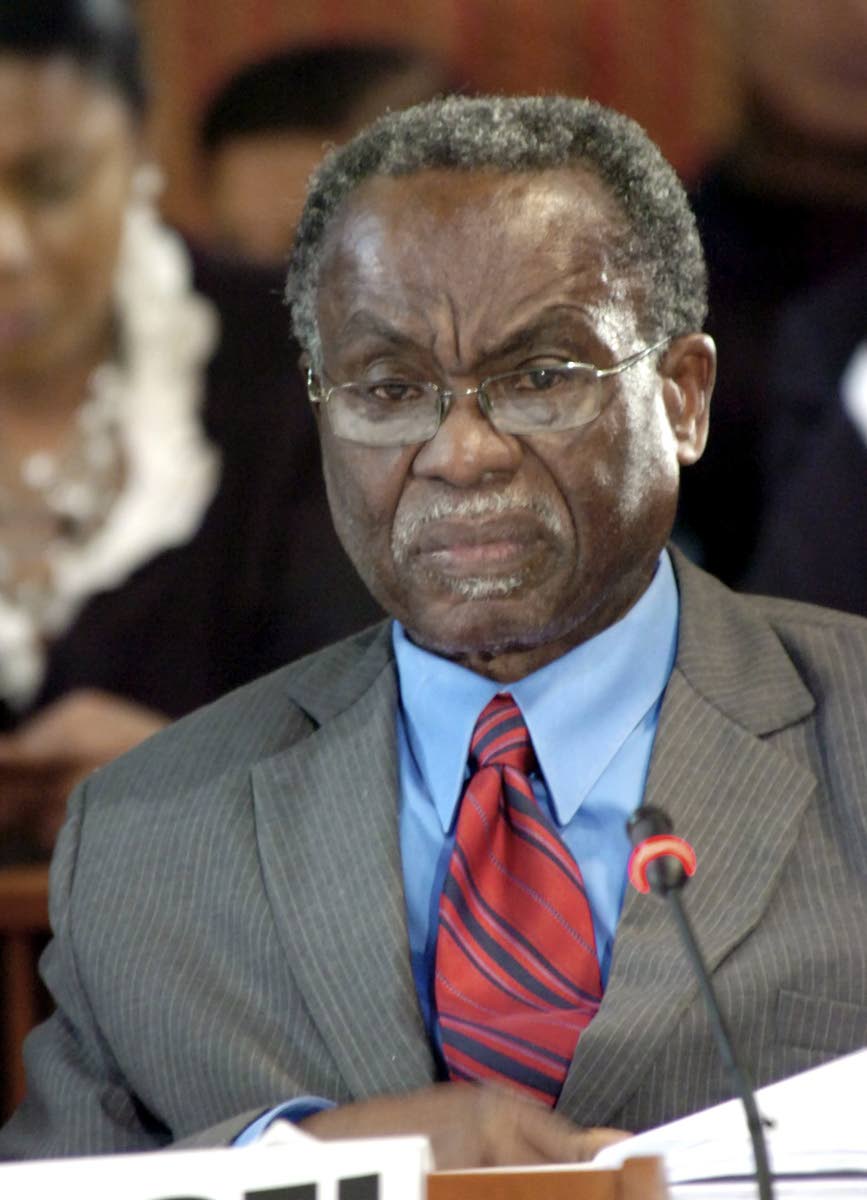 Lloyd Barnett
The former Ministry of Legal and Constitutional Affairs promoted a video which depicted a decorated vehicle proceeding at good speed on a beautiful and smooth highway towards the republican terminal. This image is unrealistic and misleading. The true picture is of a dented vehicle driving slowly up a hilly and rugged road with several impeding potholes. We now need a road map, skilful driving and concentrated attention to navigate the obstacles, so as to reach our destination safely and without undue delay.
In the 1970s, a previous constitutional reform initiative in which a minister of government was placed in the driver’s seat failed. A constitutional reform project in the 1990s which was piloted by a Commission of Parliament had commendable success, producing a new and sound Chapter on Citizenship and a comprehensive and progressive Charter of Fundamental Rights and Freedoms. It is significant that, although the opposition members on this commission did not sign its first report, this was not because of any disagreement with its recommendations but the opinion that the commission should have gone further and submitted a draft of the new Charter of Rights which it had recommended.
Accordingly, the commission was reconvened. Many difficult questions were amicably resolved by a small subcommittee, comprising the chairman, Edward Seaga, David Coore, with Shirley Miller as technical consultant. The bill was drafted and agreed on and the Supplemental Report signed by the members, representing Government, Opposition and civil society.
I therefore suggest that the ministry now responsible for constitutional reform promote the same approach and request Parliament to appoint a similar commission. Successful constitutional reform has also been achieved in Trinidad and Tobago by the adoption of a non-ministerial commission. Barbados recently appointed a Constitutional Reform Commission comprised of mainly members of civil society to make recommendations for the reform of their Constitution.
The Gleaner editorial of October 2 supports the approach which I advocate, and so does Mr Hugh Small, KC, in a letter to the editor published on the same day. A commission appointed by the elected Parliament will have a national status which an internal ministerial committee cannot duplicate. This commission should comprise persons appointed from both Houses of Parliament and representatives of civil society. So as to ensure this essentially national and non-partisan characteristic, this commission should be chaired by a respected member of civil society and not a leader of a political party. Such a commission has the potential to provide a trusted compass as we negotiate the obstacles in the road ahead.
RETABLED
Accordingly, the Constitutional Reform Bill which was tabled in the last Parliament should not be retabled without full discussion. The proposed Parliamentary Commission should be mandated to conduct a comprehensive programme of public education and consultation on the proposals for the replacement of the present monarchical Constitution with a Jamaican and republican form Constitution. The recently published Report of the Constitutional Reform Committee and the various other proposals have been advanced for inclusion in the new Constitution. Among the varied proposals which have been made and which should be made the subject of the public education and comprehensive discussions are (1) whether we should adopt the presidential system of government; (2) if we retain the Parliamentary Cabinet System, should we have a formal head of state; (3) if so, how should he or she be selected; (4) should we introduce fixed dates or periods for national parliamentary and/or local government elections; (5) should we adopt term limits for members of Parliament; (6) should a system of impeachment be introduced, and (7) what judicial body should be our final appellate court.
It should be borne in mind that the final Report of the Commission and the legislative proposals must receive wide consensus firstly, because the governing Jamaica Labour Party does not command the two-thirds majority in the House of Representatives which is necessary for the successful completion of the first stage of the legislative journey, but secondly, approval at the level of the electorate, which has been proven to be difficult, will also be necessary since the major projected reforms will require the approval of the electorate in a referendum. There is, however, cause for some hope as both the prime minister and leader of the Opposition have made a promise to cooperate in the endeavour to jointly overcome the pitfalls in the road ahead. Nevertheless, it is likely that differences of opinion will arise from time to time. However, such differences are more likely to be resolved by placing reliance on a commission such as the one I recommend, rather than personal confrontation by the political parties.
I will endeavour in subsequent articles to examine the nature of the constitutional instrument that we should adopt, and the merits of various proposals which have so far been made for reform of our constitutional system.
Dr Lloyd Barnett is an attorney-at-law and author. Send feedback to columns@gleanerjm.com.