Lloyd Barnett | Removing monarchy and Jamaicanisation of the Constitution
Loading article...
-
 Britain’s Queen Camilla (left) and King Charles III (right) pose for a photo before a State Banquet at Windsor Castle, in Windsor, England. AP
-
Britain’s Queen Camilla (left) and King Charles III (right) pose for a photo before a State Banquet at Windsor Castle, in Windsor, England. AP
-
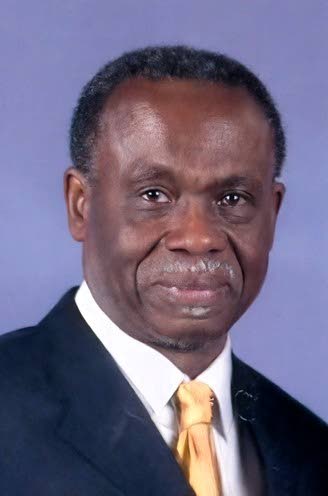 Lloyd Barnett Contributed
The Constitution which was applied to Jamaica on our attainment of independence in 1962 still bears the symbols of colonisation and the scars of imperialism. It designates the Head of the British Royal Family as our Head of State.
As Jamaicans, we have no control over who that person is despite any deficiencies he or she may have in intellectual or moral qualities. Nevertheless, that person, whosoever he or she may be, is declared by our present Constitution to be the head of the legislative and executive branches of our government. Bills passed by our representative Parliament can only become law if the Governor General assent to them on behalf of the British monarch. The final determination of legal issues arising in our Courts are subject to the final appellate jurisdiction of His Majesty’s Privy Council.
We have made two symbolic attempts to remove the imperial label. In 2000 the prescribed Pledge of Allegiance was changed to a Pledge to Jamaica instead to the British Monarch. In 2024, in the midst of the consideration of what was described as a comprehensive constitutional reform process, a Bill was tabled in Parliament and passed so as to make a merely superficial change of removing the Monarch in the prescribed words of enactment although the signature of the Governor-General on behalf of the King was still necessary. It is, however, generally accepted that the majority of Jamaican citizens now desire that the imperial garb should be completely removed.
The second significant aspect of the colonial characteristics of our first Constitution is that it was contained in an Imperial instrument. In fact, it is not even the principal part of that instrument but is an Appendix to it. There is no reference to the Parliament or people in Jamaica as giving their approval of it. It declares itself to have been made by the then English Monarch on the advice of Her Privy Council at Buckingham Palace which did not include any Jamaican. It is signed by the Clerk to that body. This is completely unacceptable for a sovereign and independent nation.
Our national aspirations were clearly expressed by the Most Honourable P.J. Patterson in addressing the Constitutional Reform Commission at its inaugural meeting on May 13, 1992 in the following terms: “... the reformed Constitution must seek to capture popular will, symbolize national values and aspirations, and reflect the soul and spirit of the people. In addition, it had to characterise the mission of economic independence, the fostering of the entrepreneurial spirit and the regulation of equality of opportunity.”
With respect to the Jamaicanisation of the Constitution, the Commission stated in its 1993 report: “At the inception, it is apparent that among members of the Commission and in the public there was a strong feeling that the Jamaica Constitution should be Jamaicanised. It should be seen to be made by Jamaicans in Jamaica, symbolize national values and aspirations and inspire a sense of independent nationhood. The present Constitution is a schedule to the Jamaica (Constitution) Order in Council, 1962, which was promulgated by Her Majesty the Queen at Buckingham Palace in England. It was decided that this format should be abandoned.”
On the issue of the significance of the symbolism of nationhood, the Report of the Commission stated:
“The Commission made two important initial decisions which are of major constitutional significance and of far-reaching implication for the process of the proposed amendments. These are, that the Constitution should be re-enacted in Jamaica by the Jamaican Parliament and People. This requires the revocation of the Jamaica (Constitution) Order in Council, 1962, to which the present Constitution is a schedule. This will emphasize that a new Constitution is the product of the Jamaican People and rid our basic law of its present colonial form. The second is that the monarchical form should be replaced by a republican form so as to enhance our sense and national identity and consciousness and to foster our self-esteem.”
Consistent with these aspirational expressions and principles of self-affirmation, the Constitutional Reform Committee (CRC) in 2024 recommended that:
“the constitutional reform programme should begin with the Jamaicanisation of Jamaica’s Constitution by repealing and replacing the present imperial instrument with a Jamaican instrument made by the Parliament and approved by the People of Jamaica, in Jamaica.”
As a critical feature of the attainment of these goals, the CRC recommended that: “simultaneously with this historic change, the monarchical form of our government should be abolished, the King of England removed as our Head of State and the Republic of Jamaica be established.”
Nevertheless, in a complete repudiation of this patriotic approach, the Bill which was recently tabled in Parliament states that the Constitution now in force “shall be read and construed as one with the amendments made thereto by this Act.” This drafting strategy preserves the imperial instrument instead of replacing it and is therefore entirely unacceptable.
The CRC had, in a further effort to ensure the assertion of Jamaica’s nationhood, made recommendations not only for the adoption of a patriotic Preamble but for the incorporation of our major symbols of nationhood, such as the National Anthem, the National Pledge and other national symbols. In respect of the Coat of Arms, a revision is clearly necessary as the current one which is dominated by two Tainos, a crocodile and the Royal Helmet and Mantlings is clearly inappropriate. Instead, other iconic figures or national symbols such as a freed slave, a doctor bird, a musical instrument and athlete should be given consideration.
Another important recommendation of the CRC is that the new Jamaican Constitution should generally be composed and presented in a more reader-friendly style. It should not begin as at present with a long section in which words and phrases are defined. In particular, it should be presented as a new, complete and composite document. The Bill, which was proposed for passage through Parliament and for approval by the electorate, is a complex document which lists sections or words which are to be deleted and for which substitutes are to be provided, so that it cannot be read as one composite document. The approach of the Bill which was presented is in conflict with the generally accepted approach and our national aspirations.
These are all important matters in which further public consideration by the recommended Commission will prove invaluable.
Dr Lloyd Barnett is an attorney-at-law and author. Send feedback to columns@gleanerjm.com.