Lloyd Barnett | Duties and responsibilities of parliamentarians
Loading article...
-
 Members of Parliament before being swore at the swearing-in ceremony for members of the upper and lower houses of Parliament held on September 18, 2025 in Gordon House.
-
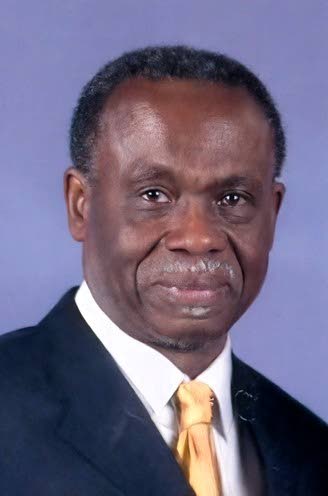 Lloyd Barnett
Historically and universally the elected representatives of the people have been regarded as constituting the critical agents for the control of arbitrary government. An early and famous demonstration of this was the declaration of the principle of “no taxation without representation”. This was extended to a requirement for changes to the law for the imposition of obligations on citizens or the denial or variation of their rights to require legislation approved by the people’s representatives in the legislative assembly.
Over time these principles developed so as to guarantee freedom of speech for parliamentarians, including the right to participate in debates on laws and policies proposed by the executive arm of the government. However, it has not been the norm for Constitutions to specify or spell out the duties of individual Parliamentarians.
Our present Constitution states in general terms “the power of Parliament to make laws for the peace, order and good government of Jamaica.” It provides specifically that amendments of the Constitution can only be accomplished by an Act of Parliament. It reaffirms the principles that Members of Parliament may introduce any Bill or propose any motion for debate. It reaffirms the ancient principle of no taxation without representation by providing that a Money Bill can only be introduced in the House of Representatives.
NO ALTERATIONS
Very importantly, no alterations can be made to any of the provisions of the Constitution without the approval of the elected House. Before entering on their parliamentary duties, each member has to subscribe to an Oath of Office which merely states that he or she “will be faithful and bear true allegiance to Jamaica, that I will uphold and defend the Constitution and the laws of Jamaica and that I will conscientiously and impartially discharge my responsibilities to the people of Jamaica”. Apart from these general provisions for the collective responsibility of the members of Parliament, there is no definition or description of their individual duties and obligations.
The Standing Orders of both Houses similarly do not deal specifically with or even in a general way describe the duties of Parliamentarians but outline the procedures which they should observe in carrying out their parliamentary functions.
In recognition of this deficiency in our constitutional system and in the light of impending increases in the salary of Members of the House of Representatives, the eminent political scientist, Professor Carl Stone, was appointed on the initiative of Prime Minister Michael Manley in 1990 to advise the Government on how to specify the duties and responsibilities of members of parliament. Dr Stone’s Report pointed out that members of parliament who hold ministerial office were only able to spend one-fifth of their working time on constituency work. However, those who had no ministerial duties dedicated only half of their working time to their duties at the parliamentary and constituency levels. Professor Stone concluded that “Some MP’s work intensively, are accessible to the public, maintain a wide network of communication and contact throughout their constituencies. There are others, however, who devote little time to constituency work and perform at a level that is below what is acceptable or desirable to satisfy the requirements of democratic representation.”
LOW-LEVEL PARTICIPATION
The majority of the non-ministerial Parliamentarians, apart from thumping the desks, have had a very low level of participation in debates and tabled few or no questions or Private Member’s motions. Professor Stone’s Report recommended that the tasks and responsibilities assigned to members of parliament should expressly include: attendance at parliament and participation in law and policy making in parliament, representing all citizens in their constituency, monitoring all government projects in their constituency, providing leadership in their constituency, working with and accepting accountability to a Constituency Council, meeting with constituents in scheduled public meetings to give account of constituency management, formulating a constituency development budget with a priority list of major projects, negotiating with government annually for funds to finance constituency development budgets, organising efforts to raise additional private funds to help finance constituency projects, mobilising constituents in self-help initiatives, administering the local development fund in consultation with the Constituency Council, giving help to people in need on non-partisan basis, touring their constituency on a regular basis, meeting with citizens at constituency offices on a properly scheduled basis, responding promptly to citizens with complaints problems and grievances and administering scarce benefits on a non-partisan basis.
These recommendations were never implemented although there have been increases in the salaries of members of the house of representatives.
Subsequently, a Handbook for Parliamentarians was published in January 2012 but it only provided Parliamentarians with “basic information about Parliament as well as their privileges and obligations and the benefits and services that are afforded them during their time”. It made no attempt to specify their duties.
In June 2023, Prime Minister, Dr Andrew Holness, tabled a Green Paper in Parliament with what was described as ‘comprehensive job descriptions for Members of Parliament and Ministers of Government”. These job descriptions are generalised and lack many of the important provisions of Professor Stone’s recommendations.
Most importantly, they provide no criteria by which the performance of Members of Parliament can be measured and assessed. The question properly arises as to how can members of parliament be made answerable for failure to perform their duties if they are not clearly specified and made legally obligatory. This question of providing for true accountability will be examined in the next article in this series.
Dr Lloyd Barnett is an attorney-at-law and author. Send feedback to columns@gleanerjm.com