Byron Blake | CARICOM’s support for Guyana: Unquestionable
Loading article...
-
 The CARICOM Secretariat, Georgetown, Guyana.
-
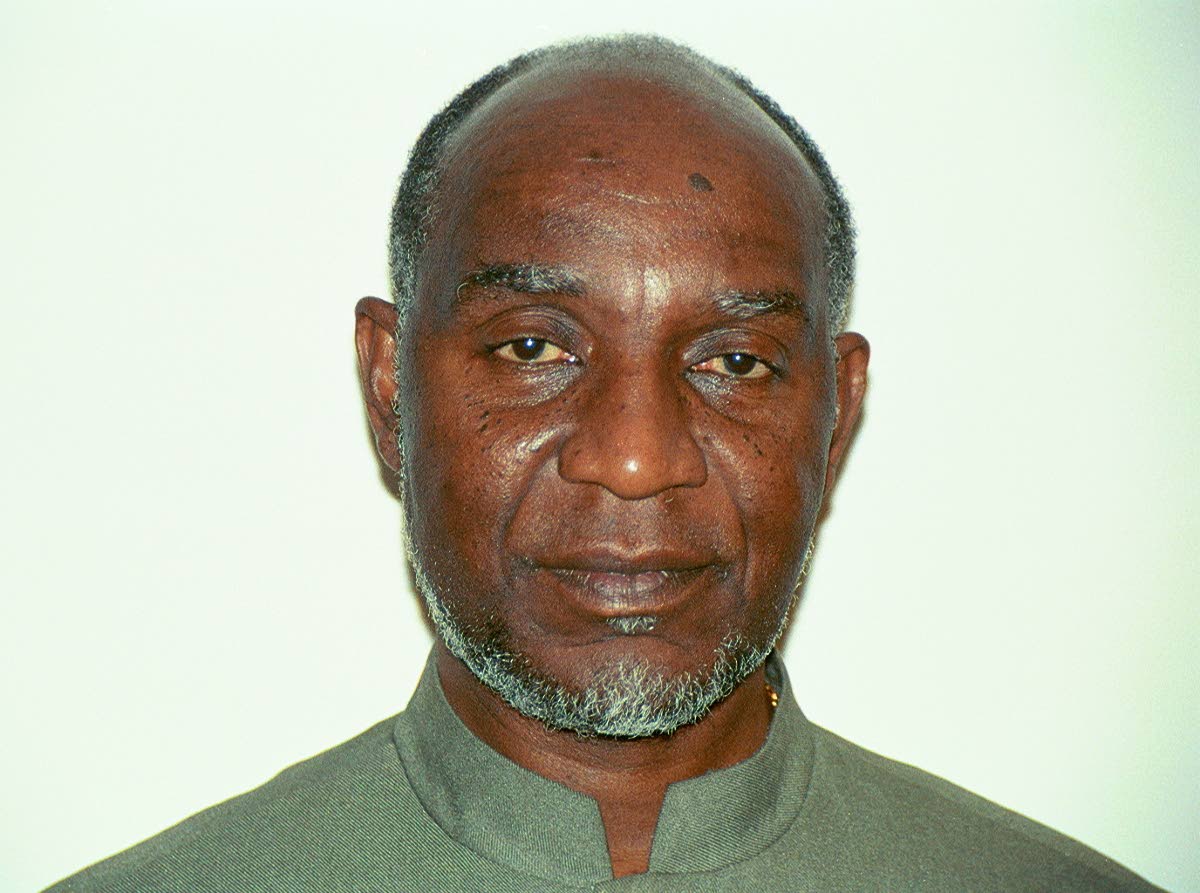 Ambassador Byron Blake
Trinidad and Tobago’s Prime Minister Kamla Persad-Bissessar, in seeking to justify a clear departure from established CARICOM practice and align with President Donald Trump, has raised the issue of CARICOM’s support for Guyana in relation to Venezuela’s territorial claim — and has implied that CARICOM has failed Trinidad and Tobago.
CARICOM states supported Guyana’s sovereignty and territorial integrity before CARICOM was a formal entity.
The Caribbean Free Trade Area (CARIFTA) was created in 1968, giving effect to the Dickenson Bay Agreement signed in Antigua and Barbuda in 1965 by Vere Bird (Antigua and Barbuda), Errol Barrow (Barbados), and Forbes Burnham (Guyana). Logically, CARIFTA’s headquarters should have been in Dickenson Bay or centrally located Bridgetown. Instead, without contest, Georgetown, Guyana, was chosen as headquarters. To understand that decision, we need only to recall that this was two years after the 1966 Geneva Agreement, which was championed by Dr. Eric Williams, Prime Minister of Trinidad and Tobago.
That decision was a clear regional signal that the English-speaking Caribbean stood firmly with Guyana.
The 1973 Treaty of Chaguaramas, which established CARICOM reinforced that signal by stipulating that the headquarters of the Community “shall” be in Georgetown, Guyana. The language was deliberate. The headquarters can only be shifted with the consent of all members, including Guyana.
For decades thereafter, “Guyana–Venezuela relations” was a standing agenda item at every Conference of Heads of Government. So too were “Guyana–Suriname Relations” and “Belize–Guatemala Relations.” The sovereignty and territorial integrity of member states were treated as matters of collective concern. Resolutions reflected support for the affected state, but in a tone consistent with any perceived threat by that state.
Support went beyond formal resolutions.
When President Hugo Chávez proposed the Caracas Accord – an arrangement from which Guyana was initially excluded – CARICOM leaders made clear in private discussions that they would not accept the agreement unless Guyana were included. President Chávez relented.
In December 2023, when President Nicolás Maduro mobilised forces and raised the spectre of military action in the Essequibo, CARICOM acted decisively. Prime Minister Ralph Gonsalves convened Presidents Irfaan Ali and Nicolás Maduro in Argyle, St. Vincent and the Grenadines. He invited CARICOM Chairman Roosevelt Skerrit and Special Adviser and Personal Envoy of Luiz Lula da Silva, president of Brazil, Celso Amorim, to serve as principal interlocutors, alongside an additional six CARICOM Prime Ministers, an observer from Colombia, and Observers representing the Secretary General of the United Nations.
The resulting Argyle Declaration committed both states to, among other undertakings:
• resolve controversies in accordance with international law, including the 1966 Geneva Agreement;
• avoid escalation by words or deeds; and
• the pursuance of good neighbourliness, peaceful coexistence, and the unity of Latin America and the Caribbean.
These represent a sample of publicly known interventions. Much of diplomacy occurs in private.
For one so well-positioned to know this history to suggest that CARICOM has failed Guyana is, at best, a selective reading of events.
No specific evidence has been advanced for the suggestion that CARICOM has failed Trinidad and Tobago. The likely reference is to the recent United States–Venezuela confrontation, in which Trinidad and Tobago aligned openly with Washington and permitted its territory to be used in a manner that unsettled regional partners.
That created a dilemma. Only two years earlier, at Argyle, all participants reaffirmed the Caribbean as a Zone of Peace. When the United States assembled the largest array of naval assets in the Caribbean since the 1962 Cuban Missile Crisis — without consultation — several states questioned the implications for the Caribbean as a Zone of Peace and a tourism-dependent region. When several small boats were blown out of the waters, and no effort was made to save the lives of the people on board or secure evidence of narcotics, many began to question the legality of such actions. That scrutiny was not opposition to Trinidad and Tobago; it reflected unease with unilateral decisions about the Caribbean Sea without prior consultation or official post-event notification.
FOREIGN POLICY COORDINATION
The evolution from CARIFTA to CARICOM introduced a crucial innovation: coordination of foreign policy. While Member States remain sovereign, the Treaty of Chaguaramas recognised that collective action amplifies influence. In 1972, when four independent Caribbean States recognised Cuba, their unity constrained external pressure. In 1975, those four CARICOM States, through coordinated diplomacy, enabled 46 African, Caribbean, and Pacific states to negotiate collectively with the European Economic Community. They secured the novel Lome Convention, which became the model for agreements between developed and developing countries.
CARICOM States could only subscribe to the “Foreign Policy Coordination” component of the Treaty of Chaguaramas after they achieved political independence. It was their sovereign decision. Each of the eight member states, on achieving Independence, made that sovereign decision.
The Revised Treaty institutionalised the Council for Foreign and Community Relations (COFCOR) to preserve and manage the coordination. COFCOR meets at least once per year to agree on how the Grouping responds to, or votes on, particular issues. The experience has been that fourteen coordinated votes carry weight in multilateral forums. Fragmented votes diminish influence.
External actors understand that reality also. That explains the number of States and Organisations seeking audience at meetings of CARICOM Heads of Government.
There have been times when the Region found consensus difficult. In such situations, the decision would be to accept different positions. While some of those decisions have been painful for the Region, no one has been surprised.
Two areas, namely, “One China” policy, and international whaling are illustrative.
The new global environment is more complex and unpredictable. The pressures to divide the community have intensified. The Region must now assemble its best minds and strengthen its institutional arrangements to meet these unprecedented challenges. The strategic question is not whether member states are sovereign. It is whether, and how, they will use that sovereignty to ensure their survival as small states?
Ambassador Byron Blake is former deputy permanent representative of Jamaica to the United Nations and former assistant secretary general of CARICOM. Send feedback to columns@gleanerjm.com.