Editorial | A bolder vision for King’s House and Heroes Circle
Loading article...
-
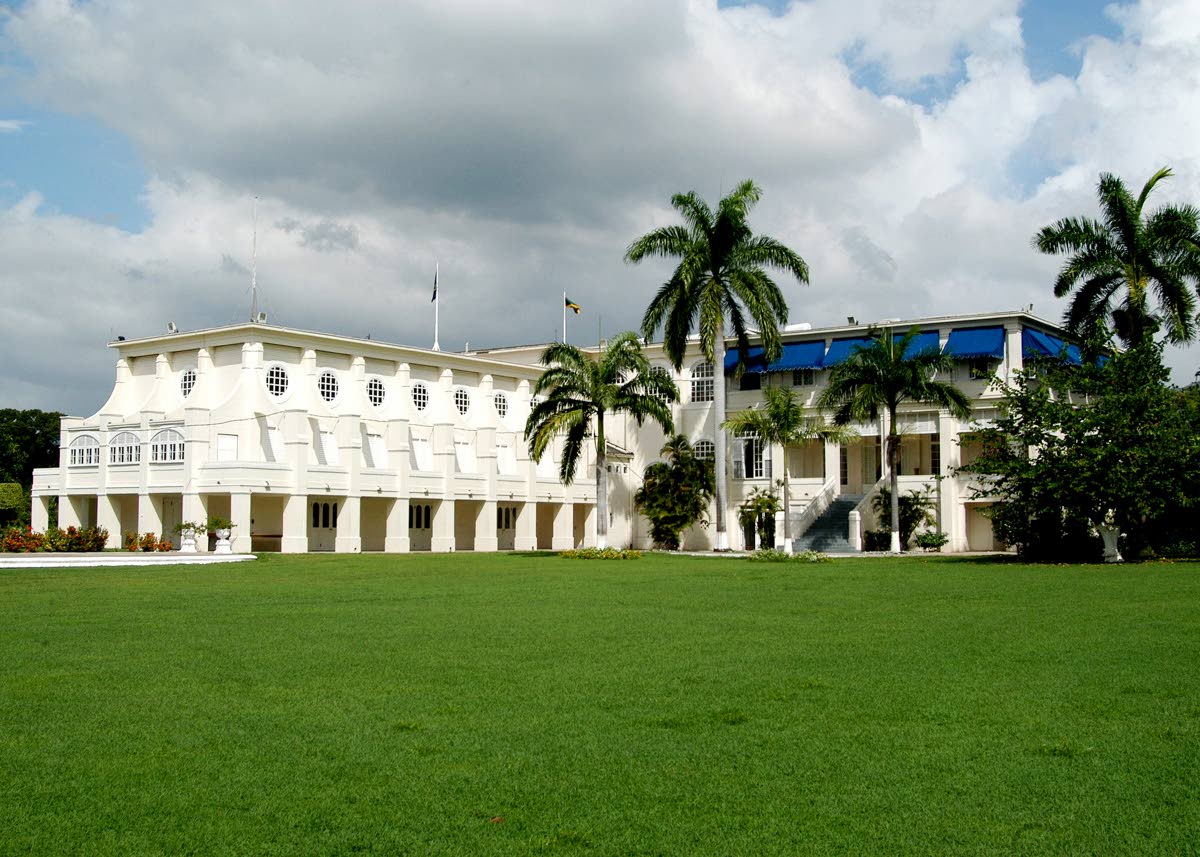 King’s House, the official residence of the Governor General, located on Hope Road, St. Andrew.
-
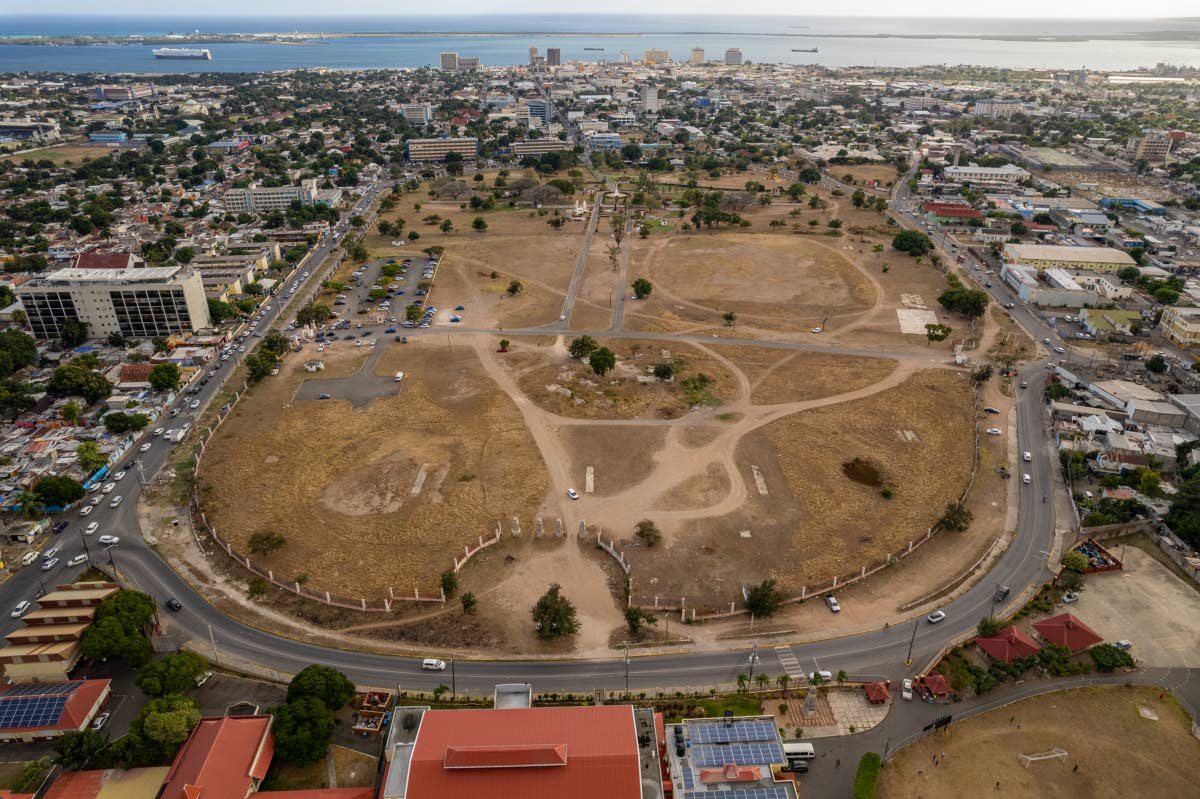 An aerial photograph of National Heroes Circle on Friday, February 11, 2022. The park will site a new multibillion-dollar Parliament building.
Prime Minister Dr Andrew Holness got it mostly right with his plan for a park in Kingston for older people, to be established on the acreages adjoining the governor general’s residence, King’s House.
But having broken the taboo over the use of the King’s House lands and gained important endorsement for it, he should take the logical next step of also making the area the venue for his proposed new parliament building. Heroes Circle in downtown Kingston should remain the home of the National Heroes Park and be further developed as a decent recreational space for the surrounding communities – and anyone else who wishes to use it.
Further, the idea for the park at King’s House should be refined, or reconceptualised, into a multigenerational recreational space rather than one designed exclusively for older people.
Dr Holness disclosed the plan for the King’s House park, saying that it is one of two public recreational spaces being financed by the National Housing Trust (NHT) to mark its 50th anniversary this year. The second will be in Mandeville, Manchester.
The NHT has experience in the development and management of public spaces. In 2002, it was responsible for transforming a seven-acre dust bowl in New Kingston into an iconic public space honouring Jamaica’s emancipation from slavery in 1838. The Trust continues to finance the operation of the facility, which – unlike too many things in Jamaica – remains well maintained. If only city authorities could bring some order to the public areas outside the park’s main entrance.
That the NHT will now do the same, or something similar, with other venues is welcome. Indeed, Kingston – and Jamaica’s cities and towns more broadly – are woefully short of decently kept green spaces: places where people can gather and recreate outdoors. That has not been part of the island’s planning DNA. If stock is not taken, the situation is likely to worsen as old bungalows and almost any open space are gobbled up by medium- and high-rise developments of concrete, steel, and glass.
This makes the series of parks (other than those by the NHT) announced by the prime minister especially heartening – particularly, with respect to King’s House, the attention to the needs of older people who, as Dr Holness said, need “a place where they can walk and exercise securely”.
That need, though, is not limited to Kingston.
Even in the capital, the requirement is not only for a high-end facility – which the King’s House park is expected to be – located near largely upscale neighbourhoods. Communities across cities lack green spaces, and where they exist, they are often poorly maintained, not user-friendly, and mostly unwelcoming to older people.
Yet, grey Jamaicans are the fastest-growing segment of the population, which is undergoing a profound demographic shift. Currently, just under 10 per cent of the population is of the age 65 and over. By 2030, that figure should exceed 11 per cent. If current trends hold – declining fertility rates, improved longevity, stagnant population growth, and reduced opportunities for migration – it could reach over 18 per cent by 2050.
Jamaica therefore has to think carefully about how it takes care of an increasingly older population – not just in relation to economic well-being, but also social engagement. Older people often suffer from isolation and a sense of being cut off from the world around them, particularly as they face the normal health-related effects of ageing, including slower or limited mobility.
It is well understood that older people can significantly improve their mental and physical quality of life if they have opportunities to recreate and play. This has helped to drive a growing phenomenon of parks and playgrounds designed specifically for older people.
MULTIGENERATIONAL USE
However, older people benefit even more when they can recreate and play with younger generations – especially in multigenerational engagements involving younger adults and children. Younger people, too, and society as a whole, benefit from such encounters. They help to break down social barriers between generations and foster gentler, kinder communities.
In that regard, the concept for the park on the King’s House lands should be approached with multigenerational use in mind, rather than as a facility exclusively for the elderly. In any event, Jamaicans of all age groups need places to play and relax in environments such as those provided by parks and green spaces.
Further, having crossed an important barrier and accepted that the unoccupied King’s House lands can be used for purposes other than remaining fallow, the Government should also embrace the logic of developing the area as a campus for the offices of State – with Parliament, the Office of the Prime Minister, and the residence of the governor general (or a future president) in close proximity.
This would allow Heroes Circle to remain properly dedicated to the nation’s heroes, while being developed into a well-designed recreational space for the tens of thousands of people who live nearby.