Michael Abrahams | The ugly side of the beautiful game
Loading article...
-
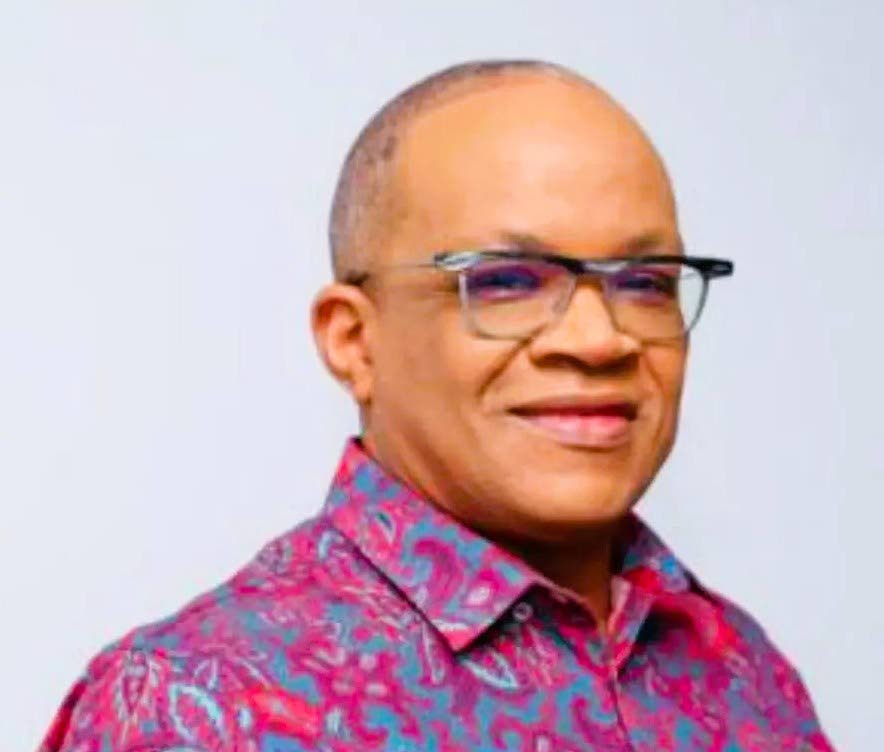 Michael Abrahams
-

France’s Kylian Mbappe (10) celebrates scoring their third goal during the World Cup round of 32 match between France and Sweden in East Rutherford, New Jersey yesterday.
Football (soccer) is celebrated as “the beautiful game” for its universal appeal, ability to unite people across cultures, and the creativity and skill it demands. But there is an ugly side to the sport that has been exposed during this FIFA Men’s World Cup: racism.
One of the most disturbing incidents at this year’s edition of “The Greatest Show on Earth” involved French captain Kylian Mbappé. After France eliminated Paraguay, Paraguayan senator Celeste Amarilla launched a vile racist tirade on X, calling him a “brute”, claiming that he “grew up sucking on coconuts” instead of breastmilk and that chimpanzees were the most educated creatures he had ever heard.
Online abuse has surged during this tournament. FIFA analysed six million social media posts during the group stage and found 89,000 abusive messages directed at players, 13 times more than at the last World Cup in 2022. Racism accounted for the largest share of the abuse although these figures compare a 32-team group stage in 2022 with a 48-team format in 2026.
Black players bear the brunt of the abuse, especially after costly mistakes or underwhelming performances. Mbappé experienced racist abuse, including being called a monkey, after missing the decisive penalty against Switzerland in the round of 16 at UEFA’s Euro 2020. England’s Bukayo Saka, Marcus Rashford, and Jadon Sancho suffered similar treatment after missing penalties in the final against Italy. There was a dispiriting feeling of déjà vu at this World Cup when the Netherlands was eliminated by Morocco in a penalty shoot-out. Justin Kluivert, Quinten Timber, and Crysencio Summerville, who all missed their penalties, were inundated with racist abuse online as was Germany’s Jonathan Tah after he failed to convert his penalty against Paraguay.
For many non-white players representing predominantly white countries, the love, or at least the pretence of it, shown to them is conditional. As striker Karim Benzema, born in France to Algerian parents, said: “If I score, I’m French. If I don’t score, I’m Arab.” Midfielder Mesut Özil, born in Germany of Turkish immigrant parents, echoed similar sentiments a few years later, saying, “I am German when we win, but I am an immigrant when we lose.”
Even success guarantees no protection. When 19-year-old Lamine Yamal, born in Spain and of Moroccan and Equatoguinean descent, scored his first World Cup goal at this year’s tournament and celebrated with a sujud, the Islamic act of prostration, he was subjected to racist and Islamophobic abuse online. Stephen “Kiki” Ramos, the first player of Haitian descent selected for Argentina’s Under-17 team, was racially abused simply because of his selection.
Opposing fans are, of course, frequent perpetrators, particularly in Europe. Black England players were subjected to racist chanting during a Euro 2020 qualifier against Bulgaria, forcing temporary stoppages and resulting in sanctions against the Bulgarian Football Union. Pierre-Emerick Aubameyang, who is French-Gabonese, and Brazilians Dani Alves, Vinícius Júnior, and Richarlison have all had bananas hurled at them while on the pitch. Alves famously responded by picking up the banana, peeling it, taking a bite, and then delivering a corner kick that led to a goal for his club, Barcelona.
Supporters of opposing teams are not immune either. During this World Cup, Cape Verde and Egypt fans reported racial abuse from Argentina supporters. Popular American influencer IShowSpeed was also filmed being racially abused by a female Argentine fan during the Argentina-Cape Verde match, who shouted, “Go cry to the zoo” and “Ne** go home” at him in Spanish, which is ironic, as she was a visitor in his country.
Racism also emanates from players. Uruguayans Luis Suárez and Rodrigo Bentancur, Englishman John Terry and Belgian Dante Vanzeir have all been sanctioned for using racial slurs, and Argentinian Enzo Fernández faced disciplinary action after broadcasting a video of himself and Argentina teammates singing a chant containing racist and discriminatory slurs directed at the French national team.
Prejudice extends to the commentary box, too. Numerous academic studies have found black footballers to be often stereotypically lauded for their physical attributes but not for their intelligence, cognitive abilities, or decision-making skills. For example, during Belgium’s World Cup match against Iran, former Yugoslavia striker and TV pundit Rade Bogdanovic commented on Serbian TV that “Black players lack concentration beyond 60 to 80 minutes”.
Nearly a quarter (23.3 per cent) of players at this World Cup are immigrants to the nations they represent, the highest proportion in the tournament’s history. Only eight squads feature no foreign-born players. As international squads become increasingly multicultural and ethnically diverse, some have reacted with hostility. Research indicates that racism, xenophobia, anti-immigrant sentiment, and hate speech are on the rise globally. Combined with football’s intense tribalism and the anonymity afforded by social media, these forces have created fertile ground for the abuse to thrive. Racism lurks on the pitch, in the stands, in commentary boxes, and on digital platforms, and the abuse takes a toll on the athletes.
In response, FIFA has introduced a series of anti-racism initiatives. A rule prohibiting players from covering their mouths while speaking to opponents, designed to prevent concealed racist remarks, was enforced for the first time at this World Cup. FIFA also introduced the “X” signal, made by crossing your forearms, enabling players and coaches to report racist behaviour by opponents, officials, or spectators. However, during Egypt’s round of 16 match against Argentina, when head coach Hossam Hassan made the signal after reportedly being alerted to racist chants from Argentina supporters, the referee appeared to ignore the complaint and instead cautioned him with a yellow card for angrily protesting a VAR decision.
Despite football’s global appeal, racism remains one of its deepest challenges. The sport may unite billions, but until discrimination is tackled on and off the pitch, the ugly side of the beautiful game will continue to taint it.
Michael Abrahams is an obstetrician and gynaecologist, social commentator, and human-rights advocate. Send feedback to columns@gleanerjm.com and michabe_1999@hotmail.com, or follow him on X @mikeyabrahams.