Lothan Cousins | Coopers Pen and why it matters who governs Jamaica
Loading article...
-
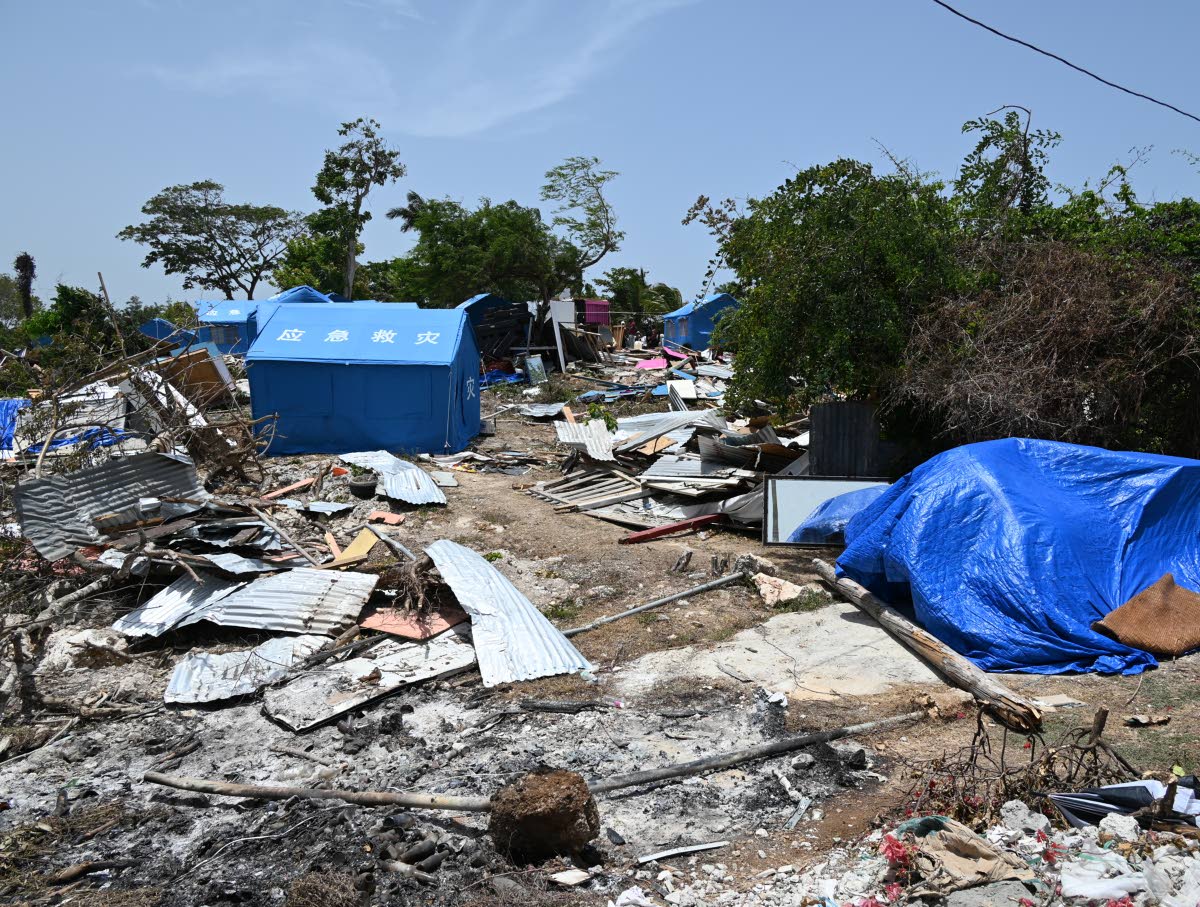 In this photo demolished structures are seen strewn on the ground in Coopers Pen, Trelawny. Photo - Ashley Anguin
-
In this photo demolished structures are seen strewn on the ground in Coopers Pen, Trelawny. Photo - Ashley Anguin
-
 Lothan Cousins. Photo - Contributed
At about three o’clock on the morning of August 11, residents of Coopers Pen in Trelawny woke to find police, bulldozers and the destruction of homes that some families had occupied for decades. By the time the operation ended, approximately 20 houses had been demolished. Residents told The Gleaner that more than 20 men from the community were first detained and removed. Another approximately 40 households now fear that the crew may return.
There are important legal issues here, which should not be distorted for political convenience. The property is privately owned, the landowner has rights, and court orders date back to 2010.
But Coopers Pen is about more than who owns a piece of land. At its heart, this has always been a clash between private property rights and government intervention, and the history is instructive.
WHAT EACH GOVERNMENT DID
In April 2010, while Bruce Golding led the Jamaica Labour Party (JLP) Government, the landowner secured court orders against the occupiers. The JLP remained in office thereafter, under Golding and then briefly under Holness. When the Portia Simpson Miller-led People’s National Party (PNP) administration took office in 2012, it inherited a difficult problem. The landowner’s legal rights had been established, but families were still living on the property, facing displacement.
That Government intervened with a genuine plan. The Minister of Housing entered a notice for compulsory acquisition in the Jamaica Gazette on May 15, 2012, and lodged a caveat against the title to block the families’ removal, declaring the lands an Improvement Area. The plan was to buy part of the property, compensate the owner, Mr Chisholm, in full, and have the Housing Agency of Jamaica subdivide the land and install infrastructure, with occupants paying over time. This is precisely why residents formed a Provident Society: to transition from an informal settlement to lawful, regularised ownership.
That intervention was struck down by the court. The PNP administration appealed in 2014, and the Court of Appeal heard the matter over three days in October 2015, delivering judgment on April 29, 2016, by which time the JLP had returned to Government under Holness following the February 2016 election.
The JLP administration accepted that judgment and did not appeal to the Privy Council, though that was its legal right. What I ask Jamaica to notice is what came next, or rather what did not. That same year, the Holness administration invoked the Local Improvements (Community Amenities) Act to protect and regularise residents at 85 Red Hills Road in St Andrew. Coopers Pen received no such shield. One community is in urban St Andrew; the other is in rural Trelawny. Do rural Jamaicans matter less to this Government?
There is a more important question than who technically ordered the August 11 demolition: What did the Government do about Coopers Pen during the past 10 years?
Our legal strategy had failed. Fine. But the people did not disappear, and neither did the problem. Government could still have negotiated with the landowner or developed a relocation programme. It still had to solve the human problem, and for a decade it did not.
CANNOT BE ABpENT AND PRESENT AT THE SAME TIME
The member of Parliament for Trelawny Northern, Tova Hamilton., says the Government did not initiate the demolition and had no prior notice. She has represented the constituency since 2020, however, and Coopers Pen did not become a dispute on Tuesday. What did she know during those years, and what did she do?
There is a further difficulty with the claim that Government was entirely removed from the matter. The police were there, and the police are the State. The Jamaica Constabulary Force (JCF) owes an explanation of who authorised the deployment and why more than 20 men were detained and removed. If men were taken away while women, children and elderly residents remained to face bulldozers, that deserves serious scrutiny.
We often hear that there is no real difference between the PNP and the JLP, but politics should not be judged by slogans. Look at what governments do when they hold power. At Coopers Pen, two political traditions faced the same problem: a private owner with legal rights and vulnerable Jamaicans facing displacement. We tried to solve it. When that failed, we appealed, and we ultimately lost. I have no difficulty acknowledging that.
The JLP inherited that same file in 2016, chose not to pursue it further and, that same year, found the political will to act for Red Hills Road instead. For 10 years, it has not replaced our failed plan with one of its own. That is the difference. Not who lost in court, but what each side did with the years that followed.
This principle runs through PNP policy on Crown land regularisation and beach access alike.
Nor is Coopers Pen the first such case under this administration, with similar circumstances having arisen at Clifton in St Catherine and Albion in St Thomas. Where is the government before the bulldozer arrives?
The people of Coopers Pen deserve immediate assistance. The threatened demolition of remaining homes should not proceed without urgent engagement aimed at achieving a humane, lawful solution, and police must account for the reported detentions.
It matters who represents you and who governs you. When the people need the government most, the difference between political philosophies stops being theoretical. It becomes the difference between intervention before the bulldozer and assistance after it.
We are not the same.
Lothan Cousins is a member of parliament and opposition spokesperson on land.