Sabrina Barnes | Not all western schools will reopen
Loading article...
-
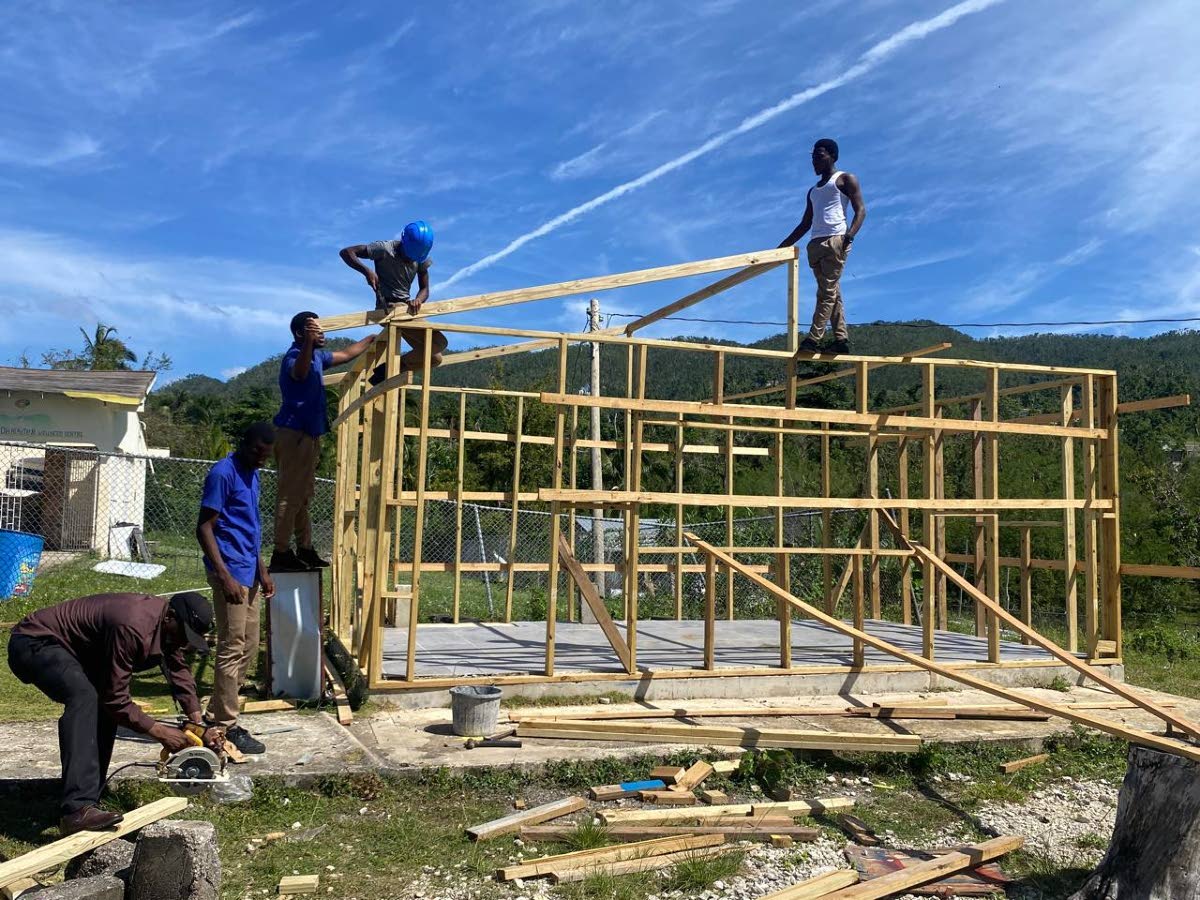 Students and staff at Aberdeen High School in Aberdeen, St Elizabeth, advance reconstruction of the institution’s tuck shop, which was decimated by Hurricane Melissa. Photo - Contributed
-
Students and staff at Aberdeen High School in Aberdeen, St Elizabeth, advance reconstruction of the institution’s tuck shop, which was decimated by Hurricane Melissa. Photo - Contributed
-
 Sabrina Barnes. Photo - Contributed
Education Minister Senator Dana Morris Dixon has maintained that schools across Region Four, namely Hanover, St James and Westmoreland, are expected to reopen today (Monday, September 7).
However, that position is increasingly difficult to defend when schools across western Jamaica remain damaged, under construction, or otherwise unprepared to safely receive students and teachers since Hurricane Melissa. September 7 should not become an administrative deadline that children are forced to meet at the expense of their safety.
It cannot substitute for inspection, engineering review, adequate space, ventilation, sanitation, or basic protection standards. Reopening a school is not the same as determining that a school is ready to receive children.
THE REALITY
Reports about the current state of schools across western Jamaica should concern every parent, teacher and policymaker. In one particularly troubling case in St James, a preparatory school had only a portion of its original structure remaining following extensive damage. The question is, reopen to what?
To classrooms with ongoing construction? To excessively hot learning environments? To facilities that are still being repaired? To schools where there may be legitimate questions about structural safety and capacity?
Students deserve classrooms that are safe, functional and conducive to education. They should not be forced to straddle the line between an unfinished classroom and the grass outside.
MUST HAVE A PLAN
We recognise that the ministry faces an enormous logistical challenge. Hurricane Melissa caused extensive damage and repairing hundreds of schools is not a simple undertaking. The ministry has indicated that temporary classrooms will be provided where necessary and that repair work will continue even as schools reopen. But this raises a fundamental question: Should children be expected to receive instruction on an active construction site?
The answer should be a resounding no.
A school must provide an environment that is safe, conducive to learning and reasonably free from hazards and disruptions. Temporary classrooms may address the issue of physical space, but they do not automatically resolve the risks and distractions associated with ongoing construction, heavy equipment, noise, dust, restricted areas and workers moving throughout a school compound while classes are being conducted.
We routinely recognise the importance of protecting proceedings from unnecessary disruption. At courts, signs are placed outside directing drivers to maintain silence because noise can interfere with the administration of justice.
If we can take measures to ensure that court proceedings are not disrupted, why should children be expected to receive their education while being given the short end of the stick?
The solution cannot merely be to place temporary classrooms on a compound and continue construction around children as though learning will proceed unaffected. If repairs must continue during the school term, the ministry must demonstrate how construction will be physically separated from students, how noise and other disruptions will be controlled, and how the safety of children and staff will be maintained throughout the process.
DESERVE CONSIDERATION
The Jamaica Independent Schools Association has also raised concerns about financial assistance and the lack of clarity surrounding the distribution of school-repair funds to private institutions affected by Hurricane Melissa.
A child does not lose his or her right to a safe and suitable learning environment simply because he or she attends a private school. Yet, there remains an unfair stigma that children attending private institutions should be considered last because their families are presumed to be “rich” and therefore better able to absorb the impact.
Hurricane Melissa did not check bank accounts before devastating communities. It did not distinguish between rich and poor, public and private. It damaged homes, schools and communities wherever it passed.
Recovery efforts must reflect that reality. Children attending private schools should not be pushed to the back of the repair queue or excluded from meaningful assistance simply because of the type of institution they attend.
CANNOT BE PUT ON HOLD
There is also a larger principle at stake. The right to education cannot be separated from a child’s right to safety, dignity and protection. We sometimes speak about children’s rights as though they are lofty principles reserved for international conferences and policy documents. But children’s rights are also tested in ordinary decisions, including whether a child should be sent into a school building that is not yet ready for him or her.
The Convention on the Rights of the Child (CRC) requires the best interests of the child to be treated as a primary consideration. That principle should have practical meaning in Jamaica. It is important to note that delays in reopening schools also have psychological and psychosocial impacts on children. Additionally, they place children at a disadvantage compared with their peers in other parishes. The Ministry of Education has the responsibility to find a model in which children from the west do not have to compromise their safety for an education.
Western Jamaica has already endured enormous disruption. These repair projects will extend beyond September, whether the ministry agrees or not. Our children should not have to face the consequences of both a disaster and a slow response.
Every child deserves a school that is ready for him or her, not a construction site on which he or she is expected to learn.
Sabrina Barnes is Fi We Children Foundation youth policy committee chair. Send feedback to info@fiwechildren.org.