Mickel Jackson | Restoring decorum, fairness and trust in Gordon House
Loading article...
-
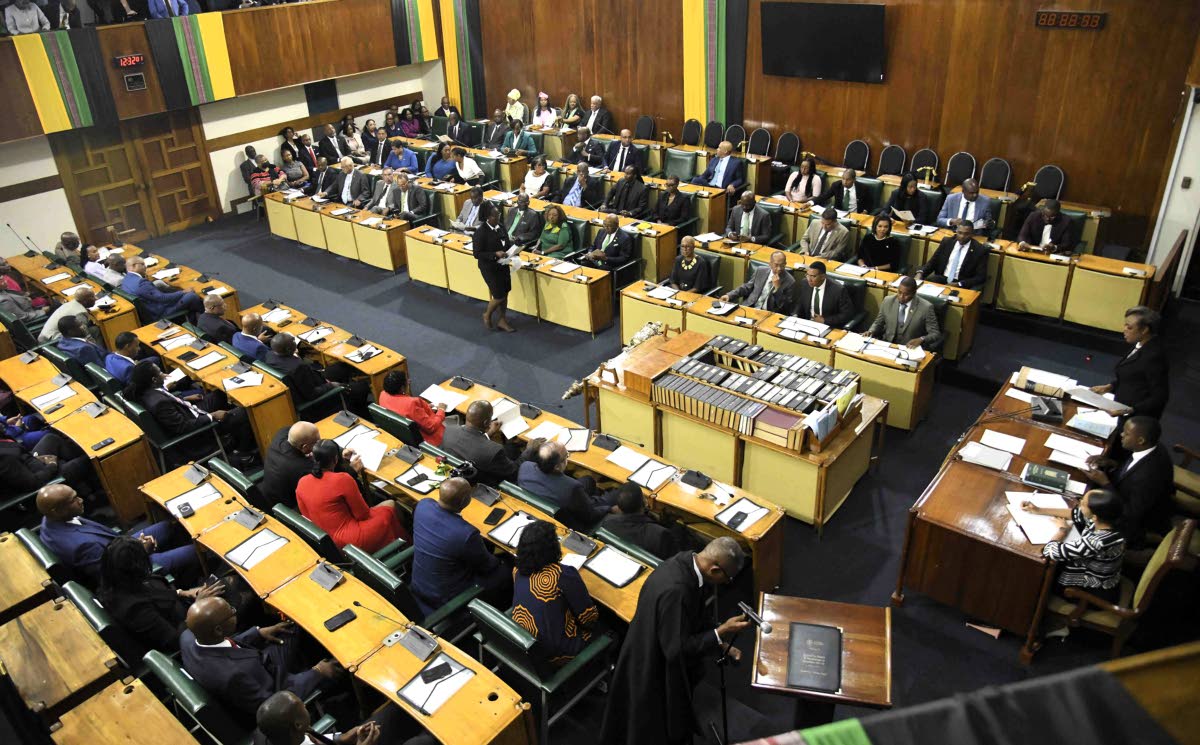 Members of Parliament before at the swearing-in ceremony for members of the upper and lower houses of Parliament held on September 18, 2025 in Gordon House. Photo - File
-
Members of Parliament before at the swearing-in ceremony for members of the upper and lower houses of Parliament held on September 18, 2025 in Gordon House. Photo - File
-
 Mickel Jackson, Executive Director of Jamaicans for Justice
Parliament is one of the highest institutions in the land. Those who are elected to serve in it are entrusted with a solemn responsibility and should regard the office with the prestige that it commands. Recent scenes in the House of Representatives have fallen well below that standard.
On November 3, video showed MP Mikael Phillips using expletives and moving aggressively toward a government member after criticism of the Speaker, requiring restraint by members. Phillips has since apologised. When members resort to shouting, aggressive physical approaches, or confrontations, it is nothing short of disgraceful.
Equally unacceptable are misogynistic or gendered comments directed at the Speaker, whether made inside the chamber or outside it. Criticism of rulings is legitimate; gendered insults and personal disrespect are not.
Conduct that brings the House into disrepute must be condemned and censured. At the same time, lasting public trust also requires that the rules themselves protect minority rights and that the Speaker is seen to stand as an independent arbiter. Both order and fairness are necessary.
Concerns raised about procedures in the House, and about how the minority conducts itself when it believes its rights are being constrained, remain deserving of conversation.
The Opposition has raised legitimate questions about procedural fairness. Recently, the Leader of Government Business, Floyd Green, invoking Standing Order 38, moved to close debate on the Opposition’s censure motion, a formal expression of disapproval calling on the House to censure the Government over its handling of Jamaica’s UN abstention on the Cuba embargo.
Under that Order, the Speaker must immediately put the closure motion to a vote unless it appears that doing so would abuse the rules or infringe the rights of the minority of members present. Opposition members protested that the early closure, given it was done after only two contributions, oppressed the minority on a motion they had themselves brought, cited the protection in the Order, and called for a division. Whether the Speaker’s decision to accept the closure was the correct exercise of discretion is a matter on which reasonable people can differ.
When the Chair is perceived as an extension of the majority, even procedurally grounded rulings can appear partisan, especially when the justification for the exercise of that discretion remains unclear. The exercise of discretion is bounded by law and standing orders, but also by the duty of procedural fairness.
How, then, can the Opposition meaningfully protest perceived unfairness without being disruptive? The Standing Orders supply several orderly avenues. Points of order under Standing Order 34 remain the primary, immediate tool. Standing Order 26 on Privilege Motions gives precedence to matters that appear to affect the privileges of the House; referring concerns to the Committee of Privileges (Standing Order 72) is another orderly route. Calling for a division forces a recorded vote.
Jamaica does not have the structured Opposition time or same-day urgent-question mechanisms found in the United Kingdom, though Standing Order 88 allows resort to Commons practice in matters not otherwise provided for.
While these tools exist, their practical limitations must be acknowledged. Substantive motions to challenge rulings rarely succeed against a clear majority. Many private members’ motions linger on the Order Paper for extended periods. The Thursday evening slot set aside for private members’ business under Standing Order 20 does not reliably produce timely debate. The absence of guaranteed Opposition time or a robust urgent-question procedure leaves the minority with fewer high-visibility options. This is not an argument for disorder; it is a recognition that rules alone do not guarantee balance when the majority controls the House and its agenda.
BROADER REFORM
First, the handling of private members’ and national-issue motions under Standing Order 26A should be reviewed so that Opposition and backbench initiatives receive more predictable and adequate time. Second, Jamaica could usefully consider allocating a modest number of guaranteed Opposition days, modelled on the United Kingdom’s Standing Order No. 14. Third, clearer guidance or thresholds for the acceptance of closure motions under Standing Order 38 would strengthen the Chair’s duty to protect minority rights. Fourth, the Committee of Privileges and the Standing Orders Committee could be strengthened. Further consideration could usefully be given to how the Speaker’s role as an independent arbiter can be strengthened so that the Chair is more clearly seen to stand above the majority and minority alike.
There have also been concerns about the muting of microphones. The Speaker’s authority to mute microphones when members are out of order is an established tool for maintaining decorum in Westminster-style parliaments. The Speaker’s general power under Standing Order 41 permits it. However, concerns usually arise from how and when the power is used, and whether it is being evenly applied. Greater clarity on the circumstances in which the power should be exercised would help ensure consistency and reinforce confidence that the tool is used only to protect order rather than to limit legitimate debate.
Some of these ideas are not new. In 2007, then Prime Minister Bruce Golding called for a comprehensive review of the Standing Orders and advocated changes so that backbenchers could be heard more readily without always having to table private members’ motions and wait for them to be reached. He also argued that the right to make statements should not be confined to ministers. The broader Standing Orders reforms he proposed were never fully enacted. Those proposals, made by a Jamaica Labour Party administration, remain relevant to the present discussion.
Beneath the immediate controversies lies a deeper question: Is the House operating in a balanced way, and is the Speaker functioning as a truly independent arbiter? Or is the Opposition simply being unduly disruptive? Both sides have responsibilities. The Government must not use its majority to foreclose meaningful debate. The Opposition must not treat disorder as a legitimate form of protest. The Speaker must apply the Standing Orders consistently, protect minority rights, and enforce the rules against grossly disorderly conduct without fear or favour.
Conduct of the kind recently displayed should be censured under the Standing Orders and party leaders should sanction the offenders. At the same time, the structural pressures that make orderly protest feel inadequate must be addressed through reform of the rules, as well as the exercise of procedural fairness. Only then can public trust be restored.
Mickel Jackson is the executive director of Jamaicans for Justice. Send feedback to communications@jamaicansforjustice.org.