The cello and guitar: An appreciation of the virtuosic life of ‘Cat’ Coore
Loading article...
-
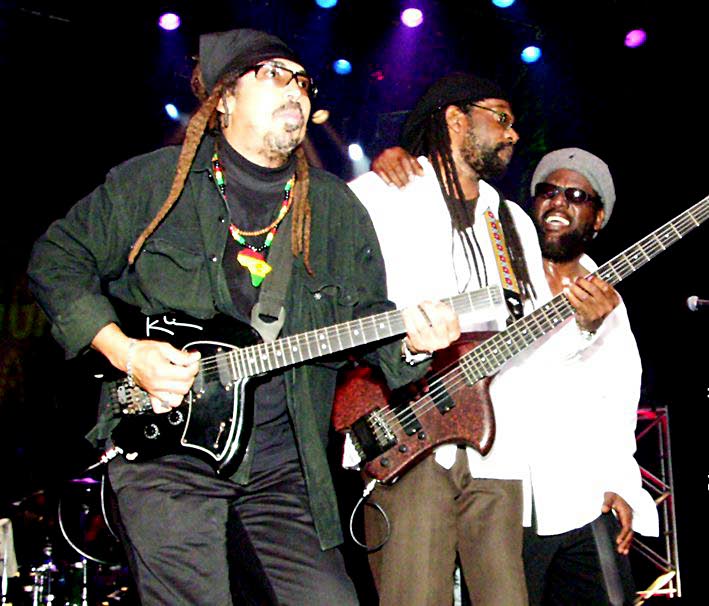
Original Third World members, Stephen ‘Cat’ Coore (left), Richard Daley (centre) and William ‘Bunny Rugs’ Clarke, in performance.
-
 Freddie McGregor (right) in performance with ‘Cat’ Coore at his virtual concert and birthday party, held at Tru Tone studio, Red Hills Road on Saturday, June 27, 2020.
-
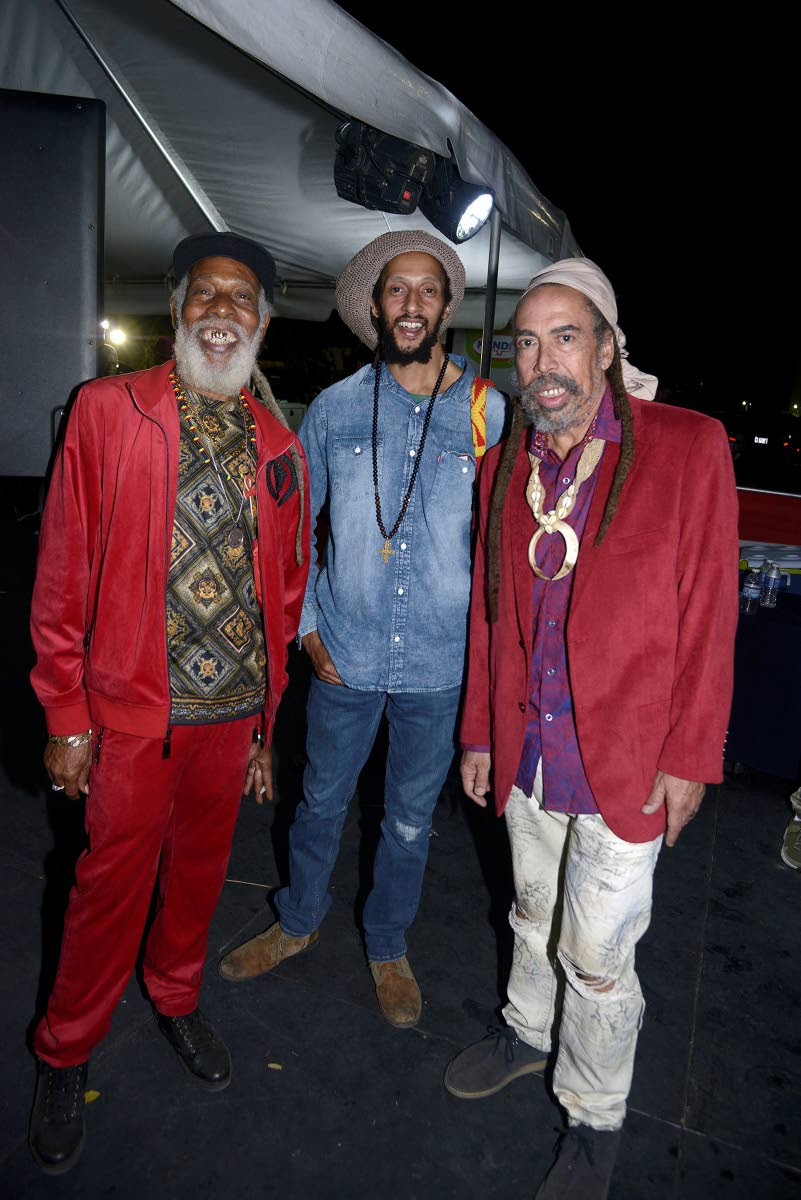 From left, Big Youth, Julian Marley and Cat Coore hold a reasoning at the February 2020 edition of Red Rose For Gregory.
-
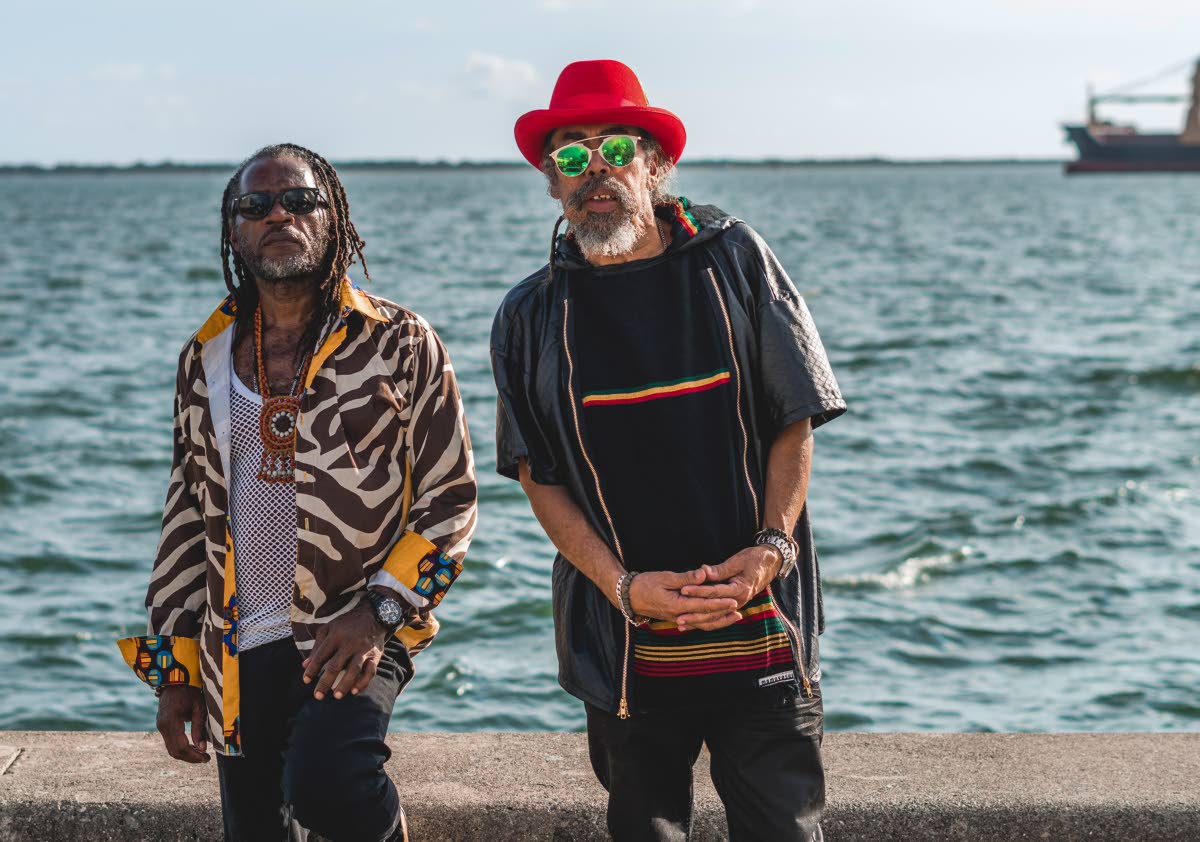 Tony ‘Ruption’ Williams (left) and Stephen ‘Cat’ Coore.
-
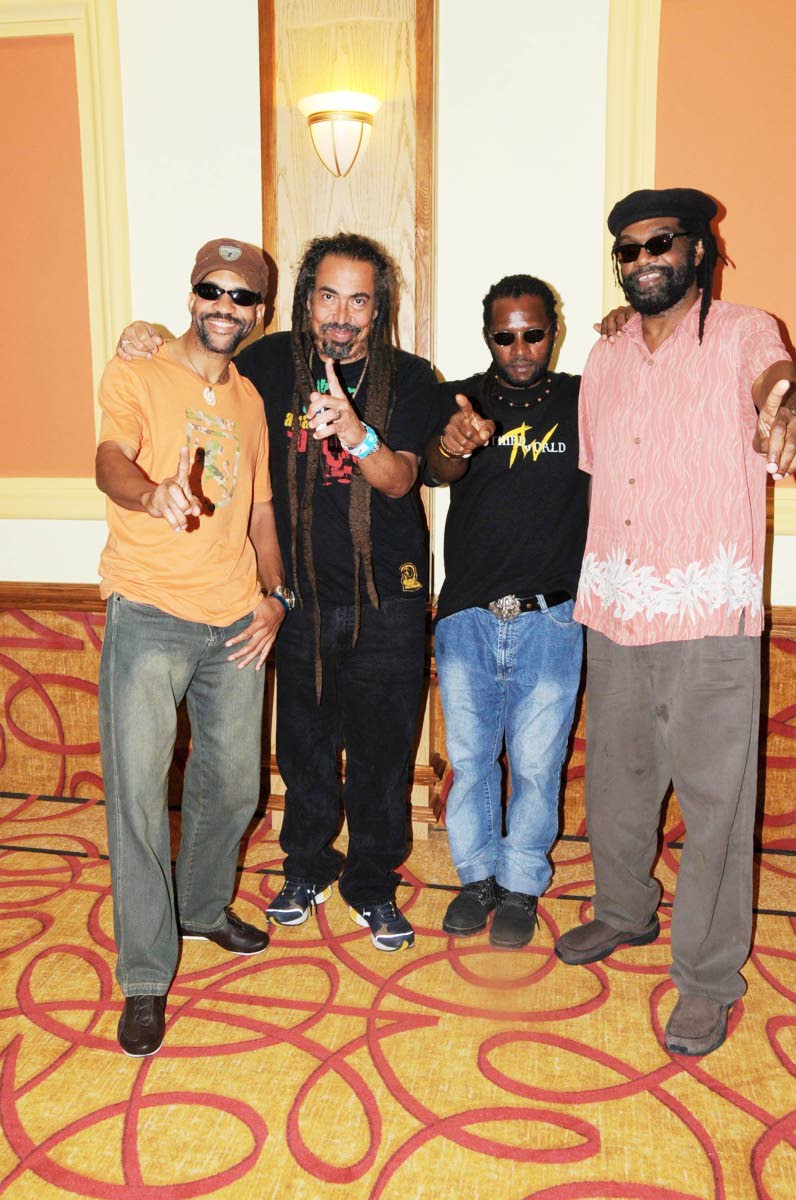 In this January 2010 file photo, Third World band members at their press conference at RIU Resort in Montego Bay (from left ) Norris Webb, Cat Coore, Tony ‘Ruption’ Williams and Ritchie Daley. Missing from the photo are William ‘Bunny Rugs’ Clarke and Herbert ‘Herbie’ Harris.
-
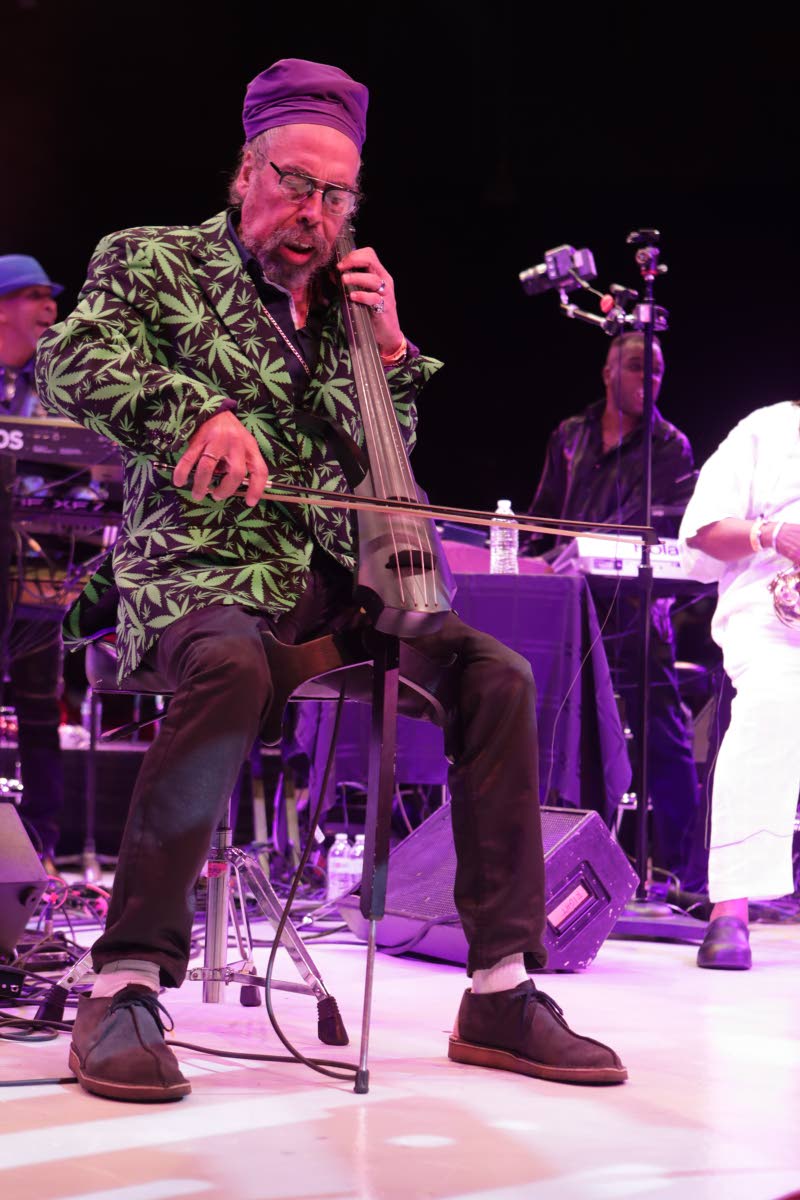 Cat’ Coore plays the National Song For Schools on his cello in honour of his late friend, broadcasting theatre titan, Leonie
Forbes.
Cat’ Coore plays the National Song For Schools on his cello in honour of his late friend, broadcasting theatre titan, Leonie
Forbes.
-
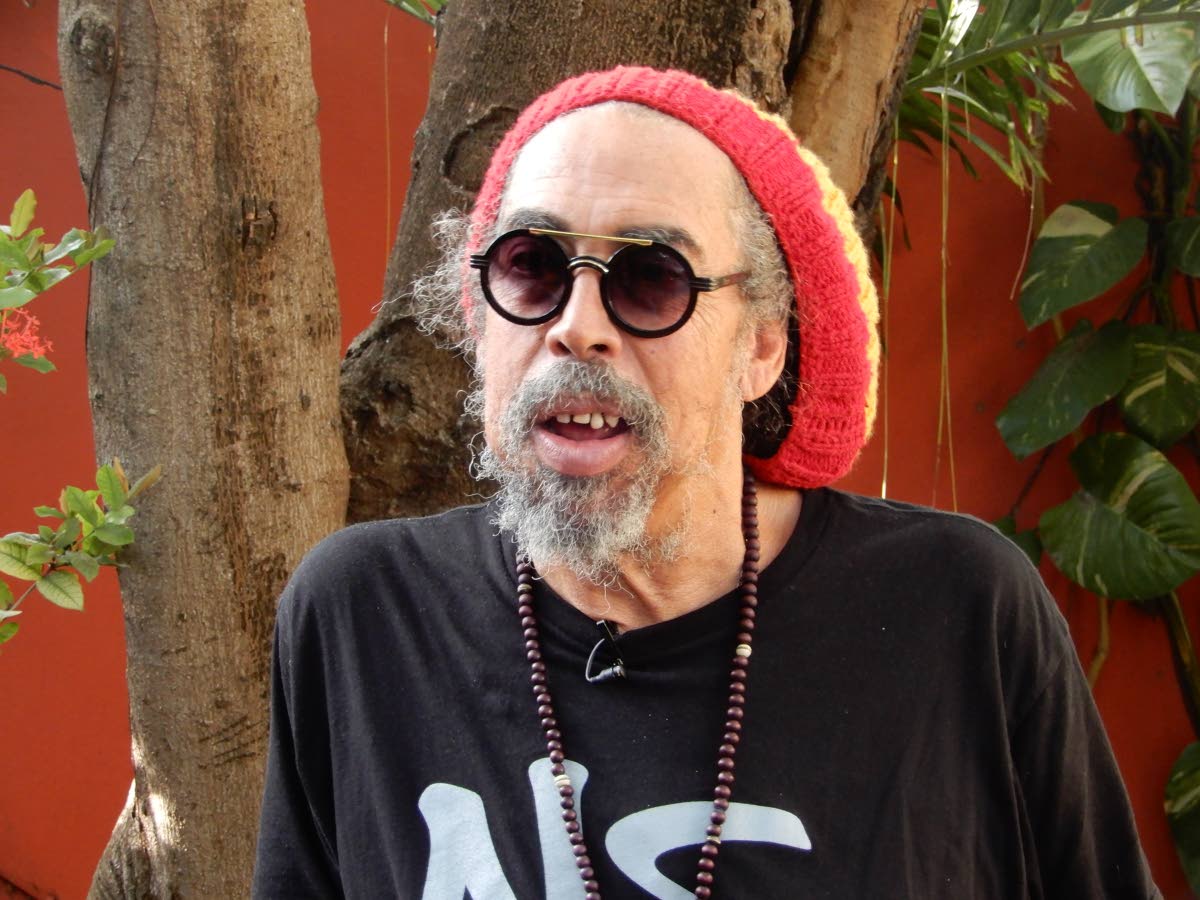 Right: Stephen ‘Cat’ Coore championed a new era of reggae that influenced countless musicians’ sounds and approaches.
Monday, January 19, 2026 is a sombre day for the global reggae community and the nation of Jamaica. The island’s emotive strings are stilled. The passing of Stephen ‘Cat’ Coore marks the end of an era for one of the most sophisticated and influential sounds in Caribbean music history. And Jamaica has lost more than a guitarist; we lost a visionary who proved that reggae had no boundaries.
In honouring the late cellist and guitarist par excellence, we must examine the lineage of eminence that shaped his hands. Long before he was a cornerstone of the Third World Band, Stephen was a child prodigy, a cellist whose talent defied his years. His mother provided a musical foundation built on the quintessential beauty of classical music. He didn’t just play by ear, he applied a rigorous, multi-instrumental logic to every riff.
Cat Core’s genius was rooted in a home of high discipline and social consciousness. He was the son of Rita Coore, the celebrated music educator, and David Coore, the esteemed attorney and progressive political figure who was also minister of finance and deputy prime minister in the 1970s. From his father, he inherited a sense of civic duty and the quiet dignity of a statesman; from his mother, he received the gift of absolute musical literacy, an unmistakable textural essence associated with the global identity of the Third World band.
Before the global ascent of the Third World band, both Cat and his friend Michael ‘Ibo’ Cooper were foundation members of the Inner Circle band. Cat’s founding of Third World in 1973, alongside Cooper, launched a new musical dialect. Third World arrived on the scene just after ska and rocksteady had laid the groundwork, and amid the flourishing of roots reggae. This timing allowed them to build upon these foundations, crafting a sound that transcended traditional roots reggae.
Ibo brought a masterful, jazz-inflected piano and keyboard language, while Coore responded with a guitar syntax that was equally complex and expressive. In addition to his guitar, he famously integrated the cello into live reggae performances. With that infusion, he didn’t just play music; he bridged worlds.
SPIRITUAL EXPERIENCE
Seeing Cat on stage, eyes closed, drawing a bow across the strings to create a haunting, soulful reggae melody, was a spiritual experience for fans from Kingston to London to Tokyo. During this creative period, Third World produced classics like 1865 ( 96 Degrees in the Shade) and Now That We Found Love. Their live performance of Try Jah Love, co-written with Stevie Wonder, was particularly iconic and showcased Cat’s incredible guitar prowess.
Cat Coore represented the ‘uptown’ sophistication of reggae, proving the genre was as much a erudite art form as it was a heartbeat of the streets. His style was a testament to the negotiation of class and diaspora, seamlessly blending ‘uptown’ sensibilities with deeply rooted downtown reggae rhythms. In doing so, he contributed to broader conversations about black transnational identity, illustrating how cultural mission and musicianship can converge to create a sound both locally grounded and globally resonant. As he once said, “ Music is a spiritual thing. It’s a gift from the Almighty, and we are just the vessels.” – The philosophy Cat lived by.
Cat’s genius was a deliberate fusion of heritage, discipline, and global inspiration. He spoke every language of the instrument. He blended the searing, improvisational melodic “cry” of Carlos Santana with the psychedelic bravery of Jimi Hendrix in his lead solos. Like them, he treated the guitar as a lead voice capable of deep emotional expression. At his core, he remained a devotee of “local hero” Ernie Ranglin. He captured and balanced the clean, organic, and almost “jazzy” fluidity of Ranglin, switching from a searing rock solo to the light, precise percussive rhythmic “skank” and melodic variation that grounded his most technical solos in authentic Jamaican roots.
When the world’s critics eventually caught up to what Jamaica already knew, Cat was famously ranked at #91 on Rolling Stone’s 250 Greatest Guitarists of All Time, a list where he stood alongside his heroes Hendrix, Santana, and Ranglin. The magazine noted that Coore “ practically redefined the heights that reggae guitar could soar to,” specifically citing his work on Try Jah Love as a masterclass in lead playing.
Through his work, Stephen Coore championed a new era of reggae that influenced countless musicians’ sounds and approaches, leaving an indelible mark on bands such as Chalice, Skool, and Kotch.
To fully appreciate Cat’s contribution through Third World’s sound, it’s crucial to recognise the elements that constitute their reggae fusion, a dynamic blend of reggae’s defining offbeat rhythms with the diverse instrumentation and complex structures borrowed from jazz, funk, and classical music. The lyrics often transcend pure reggae themes, embracing universal messages and narratives that resonate across cultures.
RESPECT
Stephen ‘Cat’ Coore’s mantle was heavy with global respect. His biography details 50 years of hits, nine Grammy nominations, the United Nations Medal of Peace and the Order of Distinction by the Jamaican Government. He received Keys to the Cities of Brooklyn and Atlantic City to the National Black Arts Awards at the Kennedy Center, and even in 2024, his impact remained vibrant, with performances at the White House and the Icon Award at Jamaica’s 62nd Independence Grand Gala.
To truly understand Cat’s genius, we invite you on a journey through some of his most essential recordings. The masterpiece, 96 Degrees in the Shade, demonstrates that in some cases, less is more; Lagos Jump is the definitive example of his Afrobeat and High-life guitar synthesis; Try Jah Love showcased Cats’ global, pop-adjacent technical lead, while Redemption Song (Live Cello Solo) served as a spiritual hallmark, with Core transforming the concert stage into a cathedral. Addressing his formative years honing his skills and his success, Cat remarked: “ One of the biggest lessons I’ve learnt is that hard work and dedication are what you really need in anything that you do.”
Stephen ‘Cat’ Coore was an artiste of extraordinary ability, a cultural emissary, and a brethren. He proved that you could be a child of the classical greats and a champion of the Rastafarian heartbeat at the same time. During a three-week tour of Japan, where I served as tour manager, aside from his playing, it was his intellectual hunger that struck me most. Not only did we spend time reasoning with the Japanese-Jamaican Rastafari families, but as we explored traditional Japanese culture, I remember vividly watching Cat as he demonstrated a startlingly quick adaptation to the basics of the multi-stringed Japanese instrument, the Koto. It was a testament to his “quick study” nature; Cat didn’t just see a new culture, he sought to play its pulse.
As a musician and humanitarian, Cat embodied a “virtuosic syntax” not just as a musical style but a way of life. As a musical celebrity, he remained a voice and personality entirely his own, proving that one could be a citizen of the world, a student of cultures, while remaining a son of Jamaica. He didn’t just play Third World music; he invited the whole world to listen to the heights reggae could reach.
Stephen ‘Cat’ Core’s strings, like the spirit and voice of ancestors, will vibrate in the heart of the universe forever, immortalising him as the real Reggae Ambassador Extraordinary.
entertainment@gleanerjm.comHerbie Miller is director/curator of the Jamaica Music Museum