‘Dead Lef’ wars tearing reggae music families apart - Minister Chuck urges Jamaicans to make wills
Loading article...
-

Morna Dodd
-
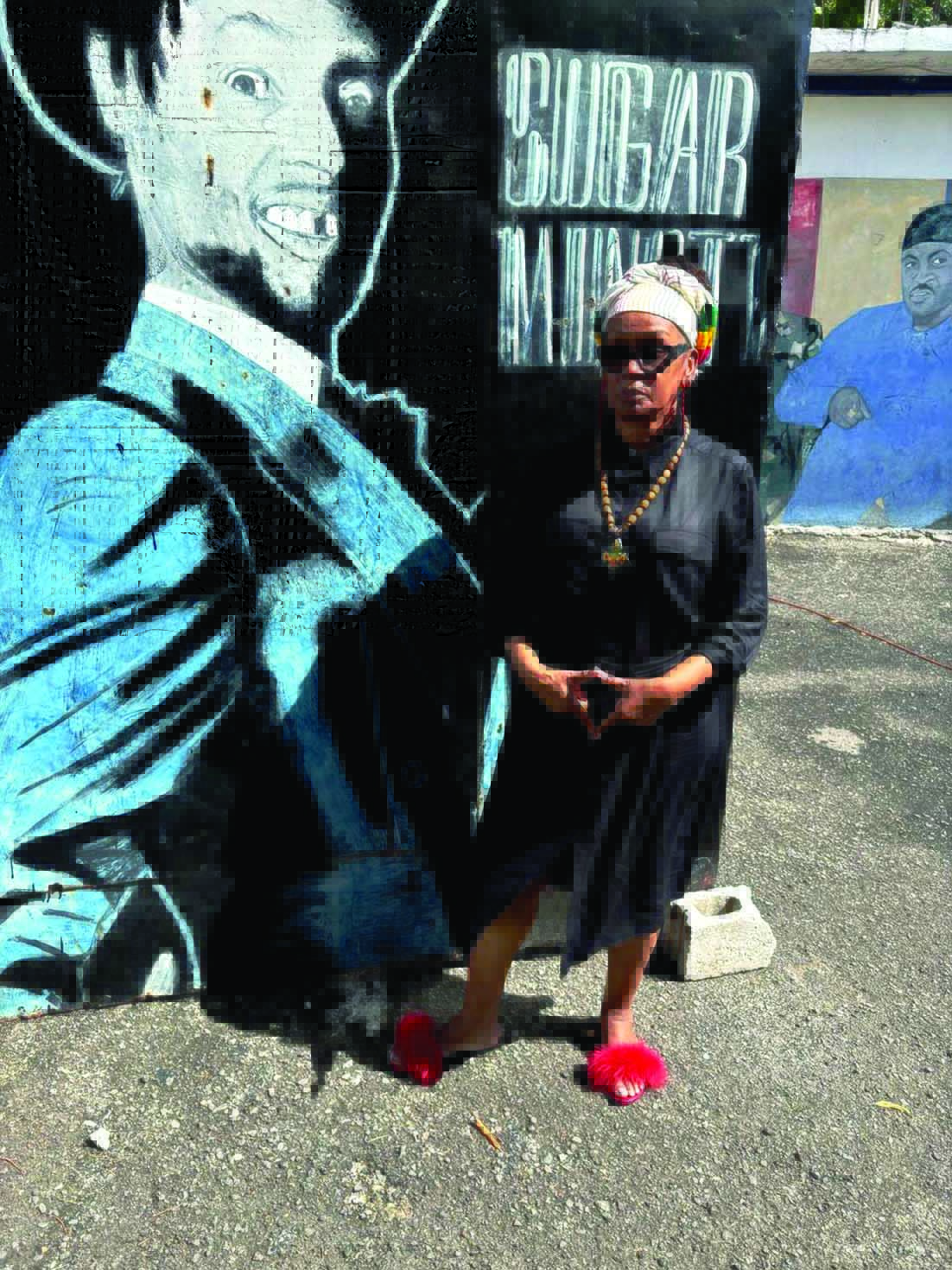
Maxine Sugar
Justice Minister Delroy Chuck has issued a stark warning to Jamaicans about the growing chaos surrounding inheritance battles, urging citizens to embrace estate planning and alternative dispute resolution to prevent families from descending into bitter “dead lef” wars after loved ones die intestate.
Speaking at a regional Alternative Dispute Resolution Policy Development and Estate Planning Forum at the Ocean Coral Spring Resort in Trelawny, Chuck lamented the mounting burden being placed on Jamaica’s justice system by unresolved estate disputes.
“The administrator general comes under the Ministry of Justice and Constitutional Affairs, and I would like to get rid of that department, but the way to get rid of the department is that everybody needs to make a will,” Chuck declared.
He noted that the administrator general disposes of hundreds of cases every year “but the more they dispose of cases, the more cases come in”.
The minister’s remarks touched a nerve in a country where inheritance disputes have become notorious for splitting families, paralysing estates and dragging through the courts for decades.
Among those speaking candidly about the crisis was Maxine Stowe, widow of late reggae icon Lincoln ‘Sugar’ Minott, whose estate became mired in complications after the singer died intestate. Stowe described her experience as emblematic of the uniquely tangled realities surrounding Jamaican music estates.
“Artistes had children across multiple households. Women often served simultaneously as spouse, manager, caretaker, road manager, financier, archivist and emotional stabiliser. Business arrangements were informal and intellectual property was poorly understood for decades,” Stowe explained.
Her comments painted a vivid portrait of Jamaica’s music industry culture, where family structures, personal relationships and business affairs often overlap in deeply informal ways that become combustible once money, royalties and property enter the equation.
“In our culture, some people inherit blood. Others inherit responsibility. Others inherit the burden of preservation. And often, those three realities do not align,” Stowe said.
DYNASTIES
Stowe’s own life has intersected with several of reggae’s most influential dynasties, including the Dodd family of Studio One. She recalled that after the death of legendary Studio One founder Clement ‘Sir Coxsone’ Dodd, familiar and painful questions immediately surfaced.
“Which children? Which house? Which beneficiary? Which will? Which entitlement?” she asked.
Dodd’s British-born daughter, Morna Dodd, said she had spent more than two decades trapped inside a “nightmarish” inheritance battle, although her father left a will when he died in 2004. Sir Coxsone, one of the architects of Jamaican music, built a vast catalogue of approximately 6,000 recordings through Jamaica Recording and Publishing Company Limited, with an estate reportedly valued at US$12 million.
Yet, 22 years later, his estate remains deadlocked amid competing claims from potential heirs, with the Administrator General’s Department (AGD) ultimately taking control. The legal warfare has spilled from Jamaican courts into London’s High Court as Morna Dodd fights for her “rightful inheritance”.
Dodd said she initially believed the cordial relationship she shared with her siblings would have made the transition easier after her father’s death, but that was not to be. And, she believes that the minister is being disingenuous because the problems run far deeper than simply dying intestate, as even properly drafted wills often fail to protect beneficiaries from prolonged family warfare.
“It is who controls the bank account when the principal person dies who is in control,” she said.
Even now, Stowe remains entangled in court disputes involving Sugar Minott’s tapes, master recordings, archives and the exploitation of his music catalogue.
“Music estates are not ordinary estates,” she observed. “What exactly is being inherited? Is it merely royalties already collected?”
Her remarks underscore the increasingly complex value of intellectual property within reggae music, where ownership of publishing rights, masters and archives can stretch across generations and jurisdictions.
Bunny Wailer's daughter, Ngeri Livingston, believe that several factors are to be blamed for the imbroglio she has found herself in with her father's estate.
"It’s not about what’s in the will, or trust in our case, it’s about the money trail. Who has access to the money at any given time. Realistically, all of the beneficiaries should have some access to finances, or at the very least, information regarding their inheritances. I can’t blame the government solely," she reasoned, adding, however, that “that the slow working ruminations of the justice system doesn't help beneficiaries”.
Livingston noted that First World countries deal with the estate matters with more alacrity and transparency. She believes that only a "logical legal framework" can solve the problem, or else there may be mass exodus of music estates from the non-functioning system that at present holds sway in Jamaica.
Under Jamaican law, the Administrator-General’s Department manages estates where individuals die without valid wills, particularly protecting the interests of minors and beneficiaries. The department currently oversees more than $50 billion in assets.
Efforts to get a comment from the AGD proved futile as all correspondence has to be directed to a designated Access to Information officer and would not be ready in time for the purposes of this article.
entertainment@gleanerjm.com