Theresa Rodriguez-Moodie | Disaster debris isn’t just garbage
Loading article...
-
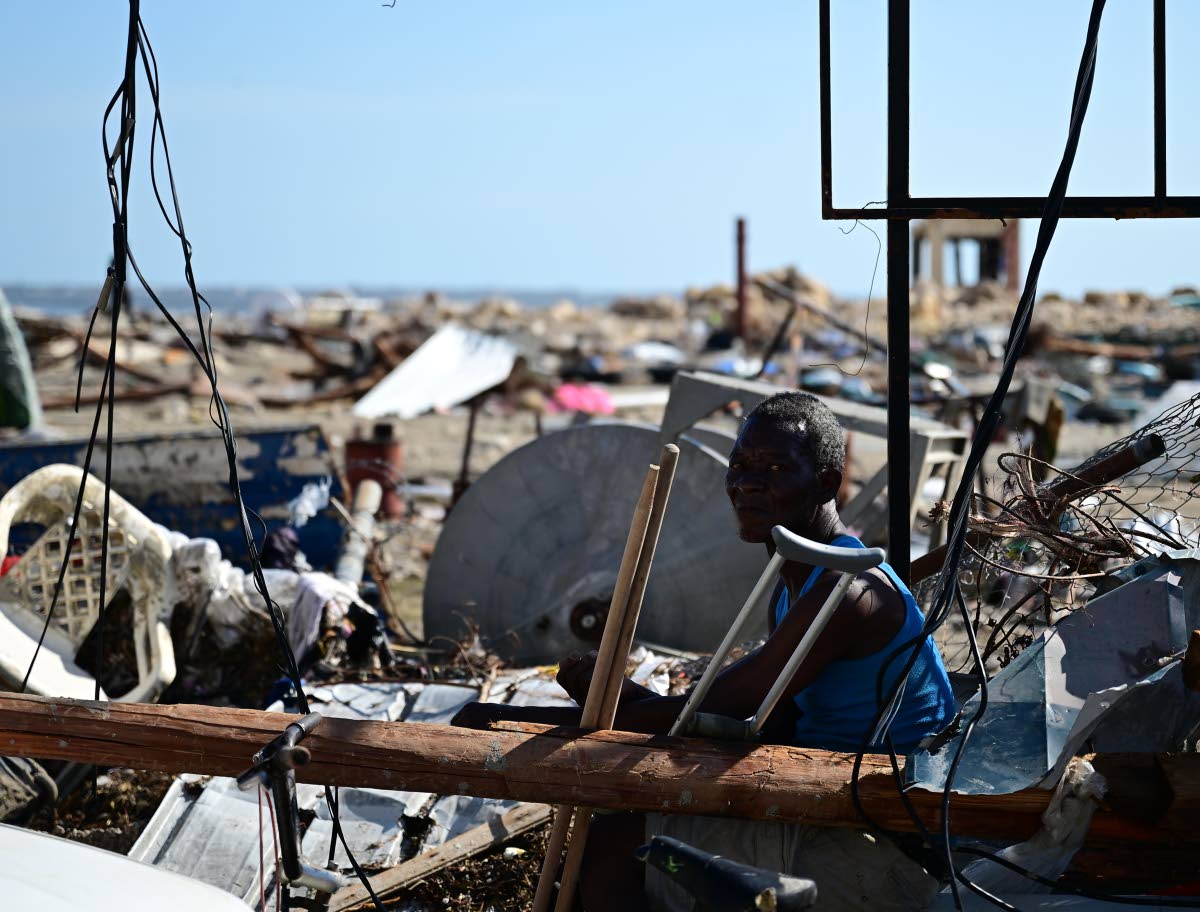 In this October 30 photo a man is seen sitting by the roadside on High Street, Black River, surrounded by debris of structures damaged by Hurricane Melissa. Photo - File
-
In this October 30 photo a man is seen sitting by the roadside on High Street, Black River, surrounded by debris of structures damaged by Hurricane Melissa. Photo - File
-
 Dr Theresa Rodriguez-Moodie.
Drone footage and satellite images taken after Hurricane Melissa revealed a landscape littered with wreckage - trees stripped bare, vegetation ripped from the ground, roofing sheets, doors, windows, furniture, bedding, and every possible object once kept inside people’s homes.
A November 6 report from the United Nations Development Programme estimated that Hurricane Melissa generated about 4.8 million tonnes of debris. Some doubt the precision of that figure but, whether it is exact or not, a massive amount of waste was generated. That number will likely rise as Jamaicans keep cleaning, repairing, and rebuilding their homes, schools, churches, and community facilities. For context, Jamaica typically produces 1.5 million tonnes of waste per year. We are now facing almost three years’ worth of garbage all at once, waste that must be managed urgently to prevent serious public health impacts.
To date, there has been little clarity about how this debris will be handled. Daily household and commercial waste continue to pile up as usual and the relief effort is itself generating large amounts of waste.
UNANSWERED QUESTIONS
From media reports, the Jamaica Environment Trust (JET) understands:
• Audley Gordon, head of the National Solid Waste Management Authority (NSWMA), has pleaded for patience. He has explained that the agency was behind on regular collection before the hurricane and had been trying to implement special operations, three daily trips in some areas, extended landfill hours, when Hurricane Melissa hit.
• Prime Minister Dr. Andrew Holness, speaking on November 19, said the Government is examining all options, including recycling, wood chipping, and structured scrap-metal recovery. The first priority, he said, is simply removing debris from where people live. But it will still have to be taken somewhere.
• The Works Minister Robert Morgan has recently promised that major towns in the hardest-hit parishes will be free of garbage by Christmas.
• The Government announced a national clean-up programme which it officially launched in Darliston, Westmoreland, on December 5. Minister of Local Government Desmond McKenzie described it as a coordinated, multi-parish and multi-constituency response to accelerate clean-up and rehabilitation in the communities most severely impacted by the Category 5 hurricane. He said the programme is not simply about sweeping streets, but about cleansing communities, restoring livelihoods, and reinforcing the social fabric that makes Jamaica strong. The programme is valued at $1 billion, covers 16 constituencies across five parishes, and is being implemented over a four- to six-week period.
Taken together, these statements signal effort, urgency, and goodwill, but not a coherent debris management strategy. There is no explanation of where the millions of tonnes of waste will go, how it will be processed, who is responsible at each stage, or what happens after the initial clean-up ends. What has been announced so far sounds more like crisis response than a structured plan for managing disaster debris on the scale Jamaica now faces.
SHOULD HAVE BEEN READY
Given Jamaica’s long history with hurricanes, JET wonders why the country was not prepared for a known consequence of disasters. Jamaica has struggled with a chronic solid waste management problem for decades. While solutions have been announced and discussed, political delays, inadequate funding, and shifting priorities have resulted in repeated failure to take effective action.
Historically, storm debris was sent to disposal sites or used as construction fill. Given the scale of the current problem, that is no longer a viable option. Jamaica needs a coordinated, national post-disaster debris management strategy.
LESSONS FROM OTHER COUNTRIES
If Jamaica does not yet have a clear plan, and there is little evidence that it does, we can draw on approaches used elsewhere:
• Japan: Concrete from earthquake-damaged buildings was crushed and reused for roadbeds and temporary housing foundations.
• Nepal: After the 2015 earthquake, debris was repurposed into bricks and blocks to rebuild schools and homes.
• Philippines: Post-typhoon recovery efforts turned waste wood and biomass into fuel briquettes for displaced communities.
• Haiti: After the 2010 earthquake, community groups ran debris-sorting sites, creating jobs while separating reusable materials from hazardous waste.
• Sri Lanka: Flood-recovery efforts supported recycling cooperatives that turned plastics and metals into new products.
• Indonesia: Salvaged wood and other materials were used to support small enterprises producing furniture and household items.
Jamaica should implement reuse and salvaging operations. Designated sites could accept debris, sort materials, and sell usable items, similar to the second-hand car parts sector. This could not only create income opportunities but would make low-cost rebuilding materials available. Tree waste could be chipped and turned into mulch or compost, which, in turn, could be used in farming.
Disaster debris is not just garbage, it is a potential resource. But using it well requires planning, innovation, coordination, and strong political leadership. Without these, uncollected debris becomes a multiplier of suffering.
MISSED COMMITMENTS
The situation is especially frustrating because Jamaica’s own Comprehensive Disaster Risk Management Policy (2020–2040) anticipated this challenge. One of its early action items was the development of a National Debris Management Plan by Year 3. Year 3 has passed, and it is unclear whether this plan exists, and, if it does, it is certainly not being activated.
The deeper question is why debris management is still being treated as a new concern. Prior to the CDRM Policy, no national plan existed for how to deal with disaster waste. Hurricanes, flooding, landslides, and storm surges are part of Jamaica’s reality. Even if no past disaster matched Melissa’s scale, we have long known that major storms are followed by a massive cleanup challenge. A post-disaster debris management framework should already have been in place.
If “building back better” is to mean anything, effective debris management must become a national priority now.
Theresa Rodriguez-Moodie, PhD, is an environmental scientist and chief executive officer of Jamaica Environment Trust. Send feedback to columns@gleanerjm.com