Aubrey Stewart | Body-worn cameras record violence, they do not prevent it
Loading article...
-
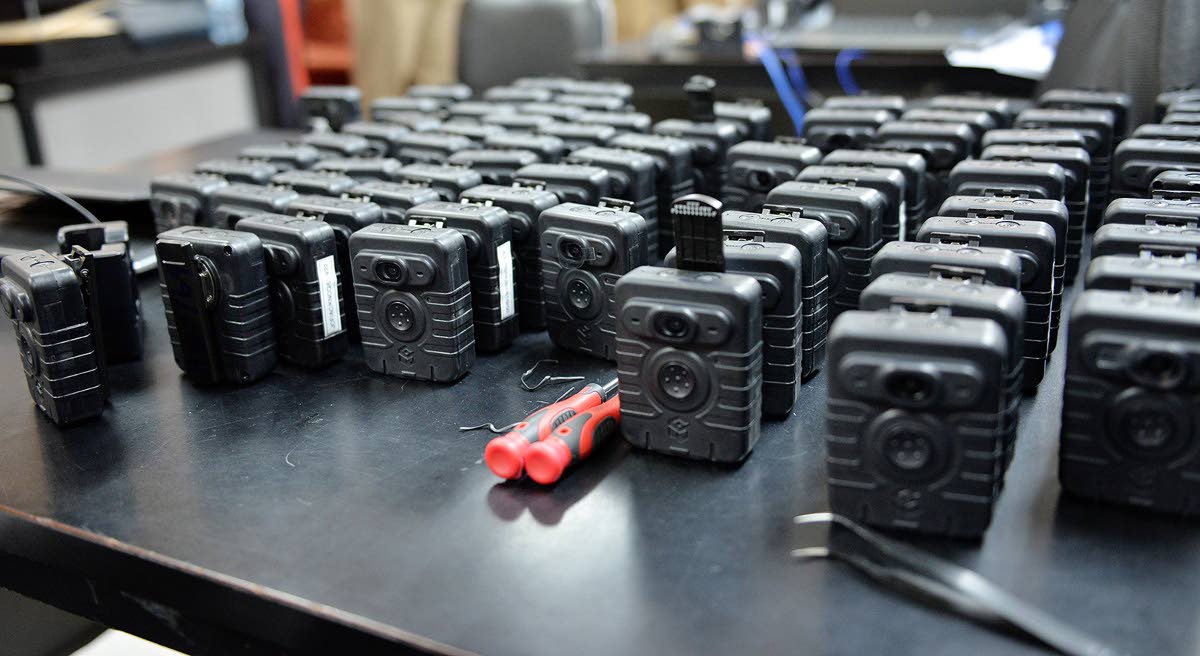 Kristen Gyles writes: All Jamaicans want is a reasonable explanation as to why officers who are engaged in planned operations are not being outfitted with BWCs. And why should they not get one?
-
 Aubrey Stewart
As Jamaica intensifies its crackdown on crime, confrontations between the police and criminal suspects have become more frequent.
These encounters, often unfolding in high-risk and highly visible circumstances, have sharpened public concern about the use of force and police accountability, leading citizens and advocacy groups to call for police officers to use body-worn cameras (BWCs), especially during security operations. At the same time, the government has stated its intention to expand the Jamaica Constabulary Force’s (JCF’s) use of BWCs.
BWCs are widely regarded as a baseline standard for transparency and objectivity in modern policing and are thought to represent an improvement over systems that rely solely on verbal accounts and written reports. The expectation therefore is that, if police actions are recorded, officers will be held more accountable, be less likely to act extra-judicially or with uncalled-for force, and that abuse would decline.
International evidence, however, suggests that these expectations are unrealistic when cameras are treated as a stand-alone solution. BWCs can support better policing, but they do not reliably reduce police use of force, nor do they automatically produce accountability. Their effectiveness depends heavily on how they are embedded within policy, the quality of supervision, and the existence of meaningful institutional oversight.
WHAT GLOBAL EVIDENCE TELLS US
BWCs are among the most heavily researched police technologies in the world. Evidence from 70 empirical studies in jurisdictions facing challenges similar to Jamaica’s shows that while officers and citizens largely support camera use, effects on officer behaviour and use of force are inconsistent. Early studies suggested dramatic reductions in force after cameras were introduced, helping to fuel rapid adoption. As research expanded and methods improved, those effects proved difficult to replicate. More rigorous studies found no statistically meaningful difference in the use of force between officers wearing cameras and those who did not.
These mixed findings reflect a central reality: because most police–citizen encounters do not involve force, incidents of force represent a small share of total interactions, making it difficult for studies to consistently detect changes following the introduction of cameras. More importantly, cameras do not address the underlying drivers of violent encounters, such as training quality, command culture, stress, unclear use-of-force rules, or weak supervision.
Research also shows that how cameras are used matters more than whether they are worn. When officers are given discretion over when to activate cameras, use of force can increase, this means that mandatory activation rules must be applied. Yet, even with strict policies, cameras alone do not reliably produce better outcomes.
COMPLAINTS AND ACCOUNTABILITY
One of the most consistent findings in research on body-worn cameras is a reduction in citizen complaints against officers who wear them. This is often interpreted as evidence that cameras improve policing, but the evidence suggests a more cautious interpretation. Complaints may decline for reasons unrelated to changes in officer behaviour, including shifts in reporting patterns or the informal resolution of disputes once video footage is available. As a result, fewer complaints do not necessarily indicate fewer instances of misconduct, since complaints are relatively rare events and an imperfect measure of police behaviour.
BWCs show their clearest benefits in criminal investigations of civilian suspects, not in restraining police use of force. Research from jurisdictions with widespread camera adoption shows that footage is far more likely to be used to prosecute civilians than police officers. Prosecutors report that footage strengthens evidentiary records, increases guilty pleas, and improves conviction rates, particularly in domestic violence cases where victims may be unwilling or unable to testify and video evidence can substitute for witness accounts.
This pattern clarifies what cameras can and cannot do. They document violence but do not interrupt it. They capture criminal acts, their aftermath, and the police response, but cannot prevent a robbery, shooting, or assault, nor eliminate the need for split-second judgement when officers confront serious threats. In many encounters, police are reacting to violence that has already occurred or is actively unfolding. Cameras therefore create a record for later review, but cases against officers rarely hinge on this material, contrary to public expectations that cameras will principally discipline police behaviour.
WHAT THIS MEANS
Many Jamaicans understand and appreciate the sacrifices made by members of the security forces in the interest of public safety. They recognise that officers operate under difficult and dangerous conditions and are grateful for recent improvements in national security outcomes, which have contributed to Jamaica being safer than it has been in decades.
At the same time, many Jamaicans are rightfully concerned about the high number of persons killed by the police in operations. The evidence is clear that expanding the use of BWCs may improve documentation and evidence quality, but will not, on its own, reduce police killings or enhance public trust. Overreliance on cameras also risks diverting attention from deeper reforms required to achieve those objectives.
Notwithstanding these limits, cameras have been demanded, procured, and are set to be rolled out imminently. Their deployment must be accompanied by a strong accountability framework, including clear, mandatory, and enforced activation rules with meaningful consequences for non-compliance. Independent oversight bodies must have prompt and guaranteed access to footage in all police-involved shootings. Data retention and public release policies must protect privacy while preventing selective transparency.
Where BWCs can contribute to reducing police-violence is through their integration into training and supervision. A systematic review of recorded encounters can identify poor tactics, escalation patterns, and missed opportunities for de-escalation. This requires investment in supervision and training systems, not just equipment.
The argument, therefore, is not against BWCs, but against the unwarranted belief that technology alone can deliver outcomes that depend on leadership, culture, and accountability. The evidence is clear: cameras alone will not solve police or criminal violence. Accountability comes from rules, supervision, training, independent oversight, and political will. Technology can assist those goals, but it cannot substitute for them.
Aubrey Stewart, PhD is a public policy researcher and consultant who evaluates the effectiveness of government policies and programmes. Send feedback to aubreymstewartiv@gmail.com or astew055@fiu.edu