Allan Bernard | Why Jamaica must count all its dead
Loading article...
-
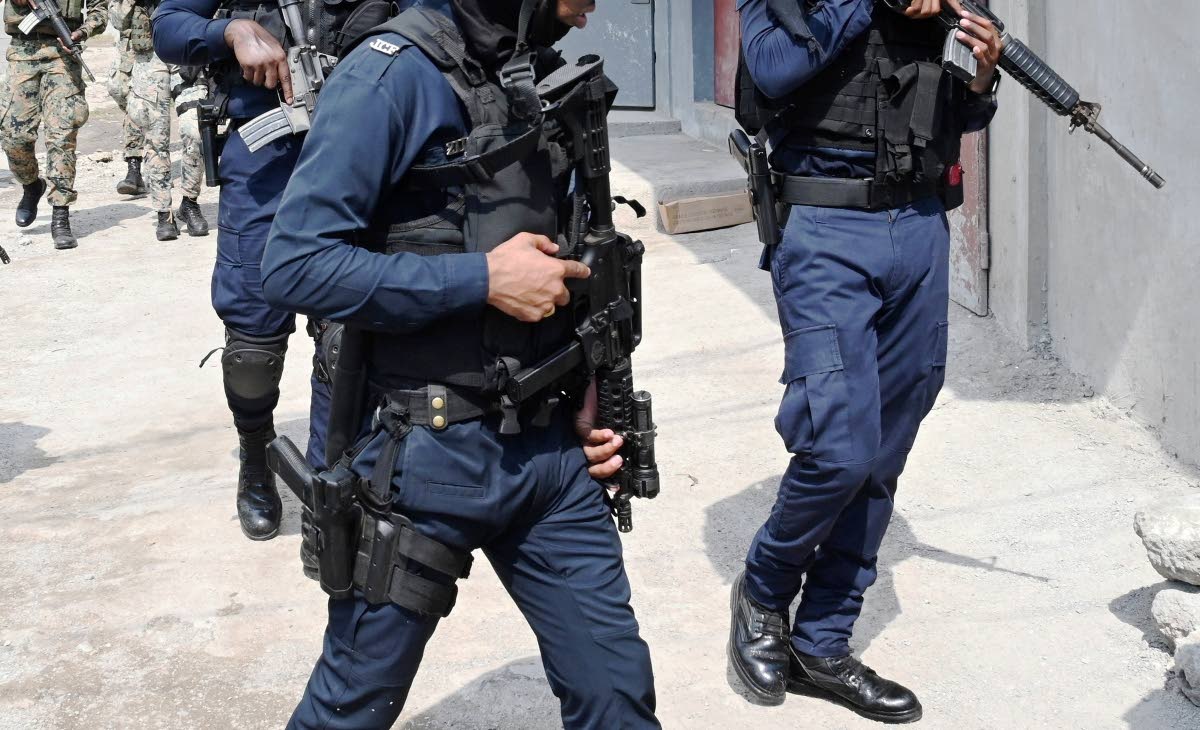
File Allan Bernard writes: When police killings approach a third or more of total violent deaths ... it becomes a question of strategy, proportionality, and legitimacy.
-
 Allan Bernard
The reduction in Jamaica’s murder rate in 2025 is a development that warrants careful attention. Recording 673 murders, the lowest figure in more than three decades, represents a notable departure from recent trends and offers an opportunity to assess what has changed in the country’s approach to violence.
Any movement away from persistently high homicide levels carries real social significance. However, headline improvements alone are not sufficient; they must be examined in context to determine whether they reflect a durable reduction in violence or a more temporary and narrowly defined form of crime control.
What is conspicuously absent from the official narrative surrounding the 2025 figures is any serious engagement with the scale of state-involved lethal force. In the same year that murders fell below 700, security forces were responsible for 311 fatal shootings. That single statistic fundamentally alters the story being told. It forces an uncomfortable but necessary question: are we witnessing a genuine reduction in lethal violence, or a redistribution of who is doing the killing?
For years, commentators have described Jamaica’s struggle with homicide as a descent into “near civil-conflict” conditions, often citing 800-plus murders as a threshold beyond which the State’s capacity to maintain order becomes strained. By that logic, falling below 840 homicides is framed as a return to a “policeable” society. But, if the price of crossing that threshold is that the State itself becomes responsible for a significant share of violent deaths, then we have not resolved the crisis, we have merely changed its form.
QUESTION OF STRATEGY
Democracies are not designed for the State to compete in killing. The monopoly on the use of force exists to protect life, not to normalise lethal outcomes as an everyday tool of crime control. When police killings approach a third or more of total violent deaths, the issue is no longer about individual incidents; it becomes a question of strategy, proportionality, and legitimacy. A public safety model that relies heavily on fatal encounters may suppress violence temporarily, but it does so by eroding the moral and constitutional foundations on which democratic policing rests.
The argument that “hundreds of lives were saved” in 2025 must therefore be treated with care. Lives saved from criminal violence cannot be counted in isolation from lives lost at the hands of the State. For families in communities already marked by poverty, marginalisation, and distrust of authority, the distinction between criminal and state violence often offers little comfort. The social trauma is cumulative, not categorical.
There are also serious operational risks in sustaining such a posture. Policing at this level of lethality imposes enormous psychological strain on officers, increases the likelihood of errors in judgement, and undermines professionalism over time. International experience shows that forces operating in highly lethal environments struggle with burnout, desensitisation, and declining public trust, factors that ultimately weaken crime control rather than strengthen it.
Equally troubling are the broader social signals being sent. When young people repeatedly see disputes resolved through lethal force, whether by gangs or by the State, it risks reinforcing the idea that killing is an acceptable means of resolving conflict. This is particularly dangerous in communities already grappling with weak educational outcomes, limited economic opportunity, untreated trauma, and fragile social institutions. Violence, in these contexts, becomes learned behaviour rather than an aberration.
DEDICATION
None of this is to deny the dedication or sacrifice of the men and women of the security forces, nor to dismiss the importance of intelligence-led policing, improved technology, or inter-agency coordination. Enforcement matters. But enforcement-heavy strategies, especially those reliant on lethal outcomes, are at best emergency measures. They may stabilise a crisis for a year, perhaps two, but they cannot form the backbone of a sustainable violence-reduction strategy.
True national reckoning requires honesty about trade-offs. If 2025 represents a turning point, then the next phase must involve a deliberate pivot away from suppression as the dominant tool and toward the harder work of prevention and institutional reform. That means investing seriously in education and skills training, addressing inequality and exclusion, expanding access to healthcare, particularly mental health and trauma services, and rebuilding community-based institutions that can interrupt pathways into violence before police intervention becomes necessary.
It also means greater transparency and accountability around police use of lethal force. Clear rules of engagement, independent and timely investigations, public reporting, and meaningful consequences for misconduct are not anti-police measures; they are pro-democracy safeguards. Without them, public confidence erodes, international scrutiny intensifies, and the legitimacy of the entire crime-fighting effort is placed at risk.
Jamaica should welcome the decline in murders in 2025, but it must not confuse silence in the morgue with peace in the society. If the State’s response to violence increasingly mirrors the violence it seeks to suppress, then the apparent gains will be fragile and short-lived. Turning the tide on crime requires not only fewer murders, but a recommitment to the principle that the preservation of life, all life, is the true measure of national security success.
Allan Bernard is a senator of the People’s National Party. He is the deputy spokesperson on social protection and social transformation. Send feedback to columns@gleanerjm.com