Jalil Dabdoub | Mandela’s warning: Colonialism, leadership, and the cost of selective principles
Loading article...
-
 AP
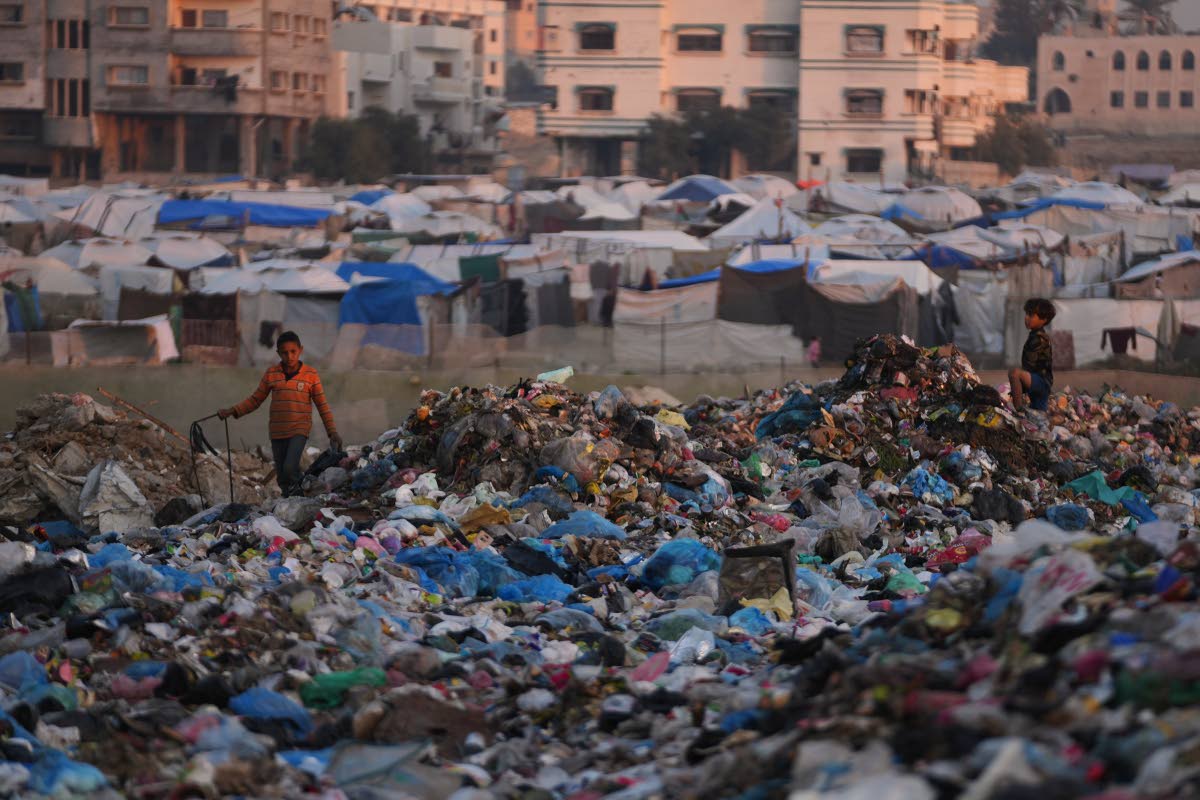
Children sort through trash at a landfill in al-Bureij camp, in the central Gaza Strip. Photo - AP
AP
Children sort through trash at a landfill in al-Bureij camp, in the central Gaza Strip. Photo - AP
-
AP
Children sort through trash at a landfill in al-Bureij camp, in the central Gaza Strip. Photo - AP
-
 Jalil Dabdoub. Photo - Contributed
There is an irony in watching the United States revive the language of territorial ambition toward Denmark, while Europe gasps in horror.
For centuries, Europe refined colonial violence into policy, doctrine, and law. It normalised dispossession, racial hierarchy, and occupation across Africa, Asia, the Caribbean, and the Americas. Today, when the imperial logic turns even slightly towards Europe, sovereignty and international law become paramount and sacred.
The current situation sits within a long period of European colonial history. One that is brutal, enduring, and global in reach and amid its unwavering political, military, and moral support for the Zionist colonial project in Palestine.
That support has been sustained and ideological. Europe gave birth to the Israeli colonial project out of its own unresolved crimes and anti-Semitism. This was evident in the Balfour Declaration and the post WWII political arrangements that prioritised European guilt over Palestinian rights. A project rooted in the same logics of settlement, displacement, ethnic cleansing and racialised control that defined European colonialism elsewhere. It then legitimised the Israeli entity, and continues to shield it diplomatically as Palestinians endure occupation, apartheid, and mass violence. Colonial brutality, it seems, is only unacceptable when the victims are European.
For Palestinians, colonialism, imperialism and apartheid are not abstract theories. It is daily life. It is extrajudicial killings, ethnic cleansing, demolished homes, apartheid, mass graves, living under siege, together with a legal system that privileges one ethnic/religious group over others. It is the West speaking the language of human rights while arming, funding, and diplomatically shielding a settler-colonial project that enacts daily brutality and ethnic cleansing. Europe knows this script well; it authored it centuries ago.
But the indictment does not stop in Washington, London, or Paris. It extends to Kingston.
Jamaica, born of plantation slavery and anti-colonial resistance has increasingly adopted positions that mirror western power rather than legal principle. On Palestine, Jamaica’s posture under the current administration has been timid at best and complicit at worst.
MORAL CLARITY
This retreat from principle is evident in Jamaica’s reluctance to speak with moral clarity. Jamaica does not deny the facts of occupation, settlement expansion, or apartheid, yet it refuses to call them out. Instead, statements are cautious, language is sanitised, and solidarity is replaced with “balance,” as if occupation, ethnic cleansing, and resistance exist on equal moral footing. It is a false equivalence that breaches the principles of international law, particularly a people’s right to resist occupation. It represents moral evasion, collusion, hypocrisy and a slap in the face of our ancestors who fought for freedom.
The contradiction is glaring. One cannot invoke the crimes of colonialism and imperialism when seeking justice, then avert your gaze while contemporary colonialism takes place in Palestine. One cannot claim a tradition of anti-colonial struggle while refusing to stand clearly with the colonised.
This position is especially indefensible given Jamaica’s own reliance on international law when required. Jamaica invokes international law when demanding reparatory justice for slavery, when asserting maritime rights, and when defending the sovereignty of small states against powerful actors. Yet when international law is weaponised daily against Palestinians, through ethnic cleansing, illegal settlements, annexation and collective punishment, Jamaica suddenly discovers restraint. This selective invocation of law screams of hypocrisy.
Prime Minister Holness’s recent speech at the Stock Exchange Conference dismissing “ideological fantasies” cannot excuse non-compliance with international or constitutional law, nor can it serve as a shield for silence in the face of human-rights violations. Prudence is not the same as principle, and neutrality is not what he is practising when Jamaica cosies up to Israel (an entity ideologically grounded by its ethno-national laws), while professing commitment to a Caribbean Zone of Peace and avoiding moral clarity on Palestine.
TARNISHING LEGACY
As Nelson Mandela warned, “For anybody who changes his principles depending on whom he is dealing with, that is not a man who can lead a nation.” By switching principles to suit geopolitical convenience, Holness risks tarnishing his legacy by trading statecraft for selective morality.
The danger is also internal. When a post-colonial state normalises colonial violence abroad, it dulls its capacity to recognise injustice at home. Colonial logic does not remain neatly contained within foreign policy it also shapes how power is exercised domestically, how dissent is treated, and whose lives are deemed expendable. In essence, it tests the limits of democratic rights at home.
The dark irony today is that the knife now pressing on Europe’s own skin is not about revenge. It is exposure. Empire reveals itself most clearly when its logic is turned on those who believed they had outgrown it. And when Jamaica aligns itself reflexively with imperial power, it exposes how thoroughly colonial thinking still disciplines post-colonial states and their leaders; exposing what Bob Marley called mental enslavement.
Palestine remains the moral litmus test of our times. Not because its suffering is unique, but because it is unmistakably colonial, unmistakably violent, and unmistakably defended by the very powers that claim to uphold human rights. Jamaica’s failure to take a principled stand is not accidental, it is political. It reflects fear, dependency, and a lingering colonial mindset.
The situation may appear ironic, even laughable. But there is nothing funny about a world where former colonies forget the meaning of solidarity, and where colonialism continues unchallenged, rebranded and protected by silence.
But that is precisely the point. Colonialism is not wrong to Europe because it is immoral; it is wrong when it is inconvenient, destabilising, or threatens the balance of power among the already powerful. Jamaica does not have to share that moral bankruptcy, but under the current administration, we increasingly do.
The knife cuts both ways. History always remembers who held it and who knelt, complied, and looked away.
Jalil S. Dabdoub is an attorney-at-law. Send feedback to columns@gleanerjm.com