Mark Shields | Stop reinventing the wheel, start issuing tickets
Loading article...

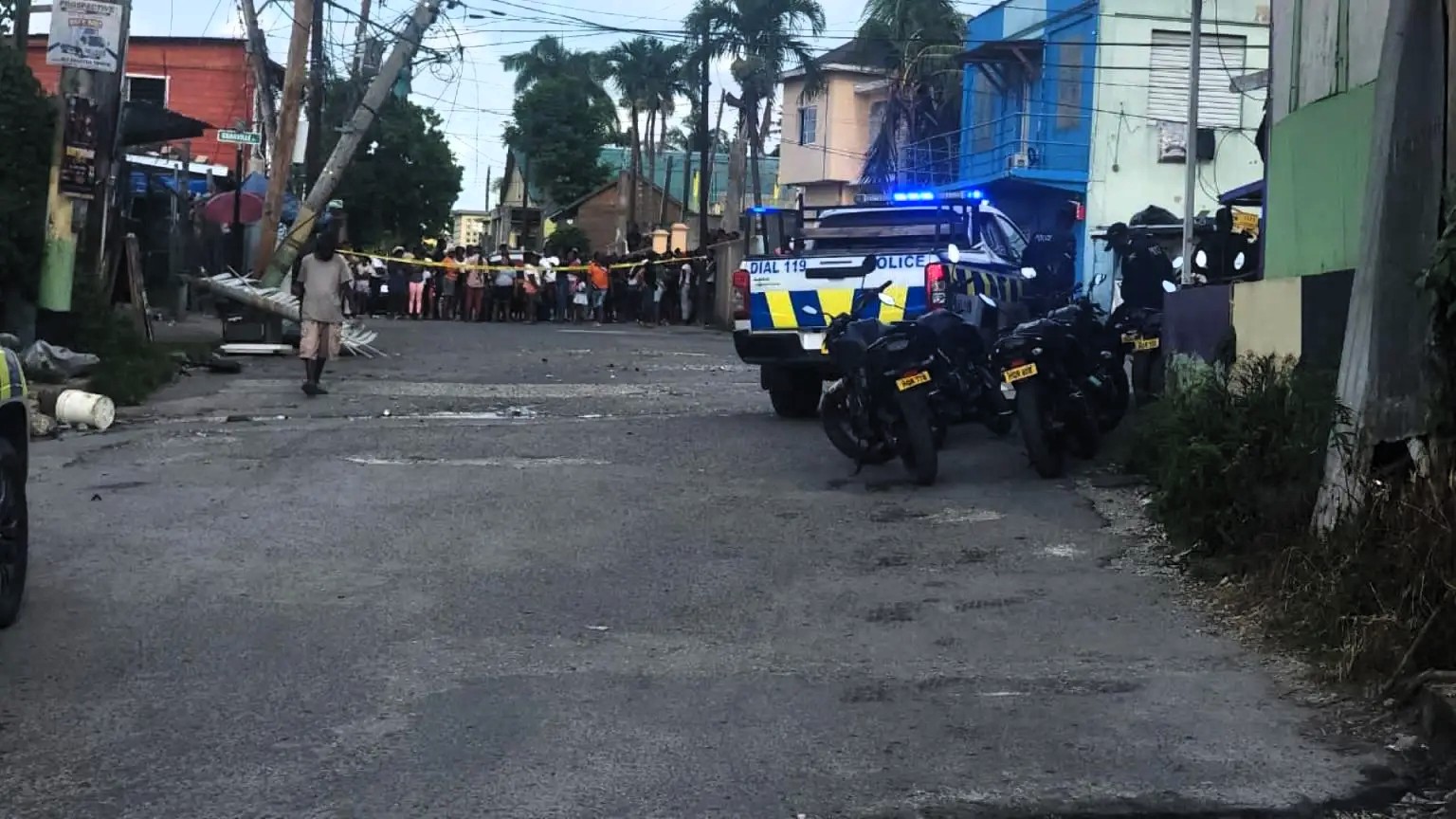
Latoya Bulgin is dead. Her body was handled by the men sworn to protect her with a callousness that shocked the nation. Days later, Prime Minister Andrew Holness stood before the 91st Staff and Junior Command Course graduation and delivered what was, in effect, a technology briefing.
It was detailed, measured, yet it was completely inadequate to the moment.
The prime minister told us that approximately 1,000 body-worn cameras are currently deployed in the JCF. That another 1,000 are in procurement. That phased rollout is under way.
That broadband infrastructure, data-storage frameworks, and evidentiary management systems must all be in place before universal deployment can proceed. That a modern C5-type command centre is being developed. That JamaicaEye is expanding. That in-car patrol vehicle cameras are coming.
All of it connected, interdependent and apparently — waiting on all of it. This is an alibi dressed as architecture.
WHAT IS HAPPENING ON ROADS
While the planners plan and the architects architect, step outside and look at the roads.
Drive to any signalised intersection in Kingston at peak hour. Watch drivers run red lights as a matter of routine as a calculated daily choice made with the quiet confidence of people who know that nothing will happen to them.
Watch the taxi operators swing into the right-turn lane at the front of a queue, use it to bypass 50 waiting vehicles, and force their way back into traffic. Watch the minibuses doing 60 in a 30 zone on Washington Boulevard, on Constant Spring Road, on the highways.
This is not a traffic problem in the technical sense. It is a social contract that has broken down entirely. The law exists, the offences are visible, but the enforcement is absent. And hundreds of Jamaicans die every year as a direct consequence.
Road deaths in Jamaica have remained high for years, and serious injuries number in the thousands each year. Yet when public concern is at its peak and a minister is asked what is being done, the response is a briefing on C5 command centres and broadband infrastructure.
The people dying on our roads do not need a command centre. They need a speed camera and a ticket.
ART OF BUILDING IN DELAY
There is a particular skill in Jamaican public administration that deserves its own study. It is the ability to present inaction as complexity. To take a straightforward problem, attach it to an ambitious framework, and then explain — with great sincerity — why the framework must be completed before the problem can be addressed.
Body-worn cameras do not require a C5 command centre. A chest-mounted device that records officer interactions needs a battery, a storage card, a docking station, and a policy. Countries with a fraction of Jamaica's institutional capacity have deployed BWCs at scale within 18 months. They did not wait for integrated surveillance networks. They bought cameras. They trained officers. The activated them.
INDECOM's data shows that in 2025, security forces shot and killed 311 people, yet not a single body-worn camera was deployed or activated in any of those incidents. This is a compliance problem — and no amount of C5 infrastructure will change a culture in which cameras are simply not turned on.
The prime minister's speech did not address that. It addressed bandwidth.
CASE STUDY IN GOING NOWHERE
The Road Traffic Bill was first proposed in 2014. It was passed in 2018. It could not commence because the regulations were not ready — Parliament had been asked to pass a law the Government freely admitted it could not yet operate.
Four more years passed before the regulations were tabled. They finally commenced on February 1, 2023. Nine years after first proposed. Five years after passage.
Within 18 months, the Government was back at the table. The demerit system had been so poorly calibrated that 23,243 licences were technically eligible for suspension on commencement day. The Reprieve and Nullification Act had to be passed in 2024 to clean up the mess.
The act had been operational for 16 months. The Government was already rewriting it.
That is 12 years of work, the standard of planning we are now asked to trust with body-worn cameras, enforcement cameras, and a national C5 command centre.
$21 MILLION FOR CAMERAS THAT CANNOT ISSUE A TICKET
In February 2026, the NWA announced its Video Detection System — a $21.3 million rollout of cameras at signalised intersections along Washington Boulevard, Constant Spring Road, Marcus Garvey Drive, New Kingston, and Waterloo Road. The announcement was framed as a significant step forward for road safety. It is nothing of the sort.
The NWA's system is designed to replace electromagnetic field sensors that detect vehicle presence and regulate signal timing. The cameras watch traffic, they count it, manage flow, but they cannot issue a single ticket or record a speeding offence. They cannot prosecute a driver who runs a red light at the very intersection where one of these cameras is mounted. Twenty-one million dollars and not one fine.
There is, as of today, no functioning automated traffic enforcement camera network in Jamaica. No speed cameras issuing tickets. No red-light enforcement. No automated prosecution. Twelve years after the Road Traffic Bill was first conceived, we are spending millions on cameras that watch lawbreaking without the ability to punish it.
Meanwhile, on every major road in this country, drivers run red lights, taxis jump queues through right-turn lanes, and speeders are governed by nothing but their own judgment. Every single day. Without consequence.
SIMPLE SOLUTIONS, CONSISTENTLY IGNORED
The frustrating truth is that practical, proven answers have been on the table for years. They have been raised by road-safety advocates, by transport professionals, and by law-enforcement practitioners. They have been acknowledged, filed, and set aside in favour of something more ambitious — and, therefore, more perpetually incomplete.
There is a system called Startrack. It is used in countries across multiple continents. It handles fixed-point speed detection, mobile enforcement, red-light camera integration, and it produces court-admissible evidence in the format required for ticketing and prosecution. It does not need to be invented. It does not need to be customised. It needs to be procured, installed, and activated.
What does a functional traffic enforcement camera system require? Three things. A legal framework enabling automated ticketing — which exists, imperfectly, in the Road Traffic Act 2018. A processing centre to match plates to registered owners — which the Tax Administration Jamaica database already supports. And cameras on the roads with enforcement capability — not cameras that merely observe.
A red-light enforcement camera at Half Way Tree does not require a C5 command centre. It requires a pole, a power supply, a camera with enforcement capability, and the political will to prosecute the first thousand offenders publicly and visibly. The deterrent effect would be immediate. The revenue would be substantial. The deaths would be reduced.
Instead, we get a $21.3 million system that watches the same red lights being run, records nothing evidentiary, issues nothing actionable, and will be followed — in due course — by another announcement, another consultation, and another framework. Meanwhile, the taxi continues to jump the queue, the light continues to be ignored, and the next family continues to bury someone who did not have to die.
WHY DOES JAMAICA KEEP DOING THIS?
The honest answer is that grand architecture is safer than straightforward delivery. A large integrated system is difficult to evaluate. No one can say it has failed because no one can agree on when it was supposed to be finished. Milestones shift. Definitions broaden. Budgets expand. And when the public asks what has been done, there is always another component in procurement, another consultant engaged, another framework under development.
Simple projects are dangerous precisely because they are measurable. A traffic-ticketing system either works or it does not. Either tickets are being issued or they are not. Either compliance is rising or it is not. There is nowhere to hide in that kind of accountability.
Complex integrated systems, by contrast, are accountability-proof by design. And the Road Traffic Act's history — from 2014 to the Reprieve Act of 2024 — is the clearest possible evidence that this is not an accident. It is a pattern. An expensive, deadly, self-perpetuating pattern. Twenty-one million dollars spent on cameras that cannot enforce. Twelve years spent on legislation that still cannot be fully implemented. And the roads remain exactly as anarchical as they were the day the bill was first proposed.
With respect to the office, the speech delivered by the prime minister was the wrong one for this moment.
The right speech would have acknowledged the institutional failure that Latoya Bulgin's death represents. It would have committed to a specific activation mandate for the 1,000 BWCs already in the field — with a named officer responsible and a quarterly compliance report to Parliament. It would have set a hard date for the 1,000 units in procurement to be deployed and active. And it would have separated the body-worn camera programme entirely from the C5 ambitions, the JamaicaEye expansion, and the in-car camera rollout — not because those are unimportant but because bundling them guarantees that none will be completed on any predictable timeline.
On traffic enforcement, the right speech would have named a specific system with enforcement capability, a specific procurement date, and a specific target — 50,000 tickets issued within the first twelve months of activation. That is a number you can measure. That is accountability.
Phased rollouts with no phase dates are postponements.
PATTERN MUST BE BROKEN
Jamaica is not a poor country that cannot afford basic enforcement technology. Jamaica is a middle-income country that consistently chooses comprehensive transformation over incremental competence — and then wonders why nothing changes.
We do not need to reinvent traffic enforcement. Proven systems exist. Buy one with enforcement capability. Deploy it. Issue tickets. Review compliance in 12 months. Adjust. That is how functional states operate.
We do not need a new architecture for body-worn cameras. We need to require officers to use them and turn them on.
Every day that passes without enforcement cameras on our roads is another day our drivers learn the same lesson they have been learning for 12 years: that the rules do not apply to them. Every red light run without consequence, every queue jumped without a ticket, every kilometre over the speed limit without penalty — these are not trivial infractions. They are a civic education in lawlessness delivered by the State's own inaction.
We have spent 12 years on a Road Traffic Act that still does not enforce itself. We have spent $21.3 million on cameras that cannot issue a fine. We have spent years announcing body-worn cameras while officers kill people with none activated. At what point does the pattern become the policy?
Technology is not the problem. The will to implement it — simply, directly, and with consequences attached — is the problem. Until that changes, no C5 command centre will make us safer. And Jamaicans will keep dying on roads where the law is optional, policed by no one, and enforced by nothing.
Mark Shields is a former deputy commissioner of police of the Jamaica Constabulary Force and managing director of Shields Crime & Security Consultants.