Sweet relief as water flows
Loading article...
-
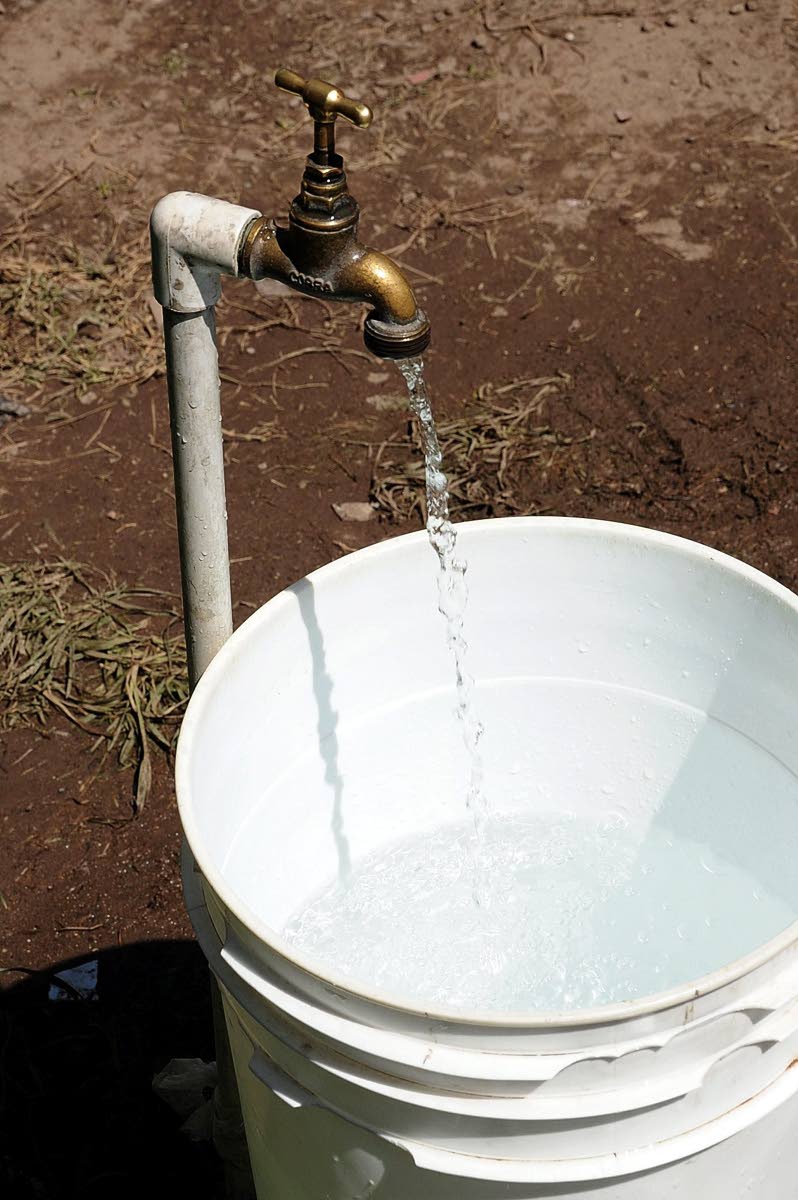 The NWC says it will continue to operate these distribution points until piped water supply is restored to all communities. -File photo
-
 File
File
Residents of the Pridees Housing Scheme in Milk River, Clarendon, breathed a collective sigh of relief earlier this week, as water once again flowed through their pipes. It was a welcome return to some semblance of normality after days of disruption caused by Hurricane Melissa which added to the already existing water woes in some sections of Milk River.
Lothan Cousins, member of parliament (MP) for Clarendon South Western, said plans are under way to improve infrastructure and water reliability across the constituency.
In the aftermath of the storm, the community endured several tense days without running water, as supply systems were severely impacted. That hardship eased earlier this week, thanks to what residents described as the swift and compassionate intervention of Cousins, who spearheaded the restoration effort. Through his family’s business, Cousins Construction Services, he mobilised a generator to power the National Water Commission’s (NWC) facility, restoring much-needed water to residents.
The gesture, residents say, not only revived their supply but also their spirits.
Beverly Boothe, president of the Milk River Community Development Committee (CDC), explained that water challenges have long plagued the area, with residents receiving supply on a rotational schedule.
“We get water on a schedule, one community for two days, then another community for two days, and so on,” she shared. “Our MP has always come through for us, so it was no surprise he sent a generator to help with us getting water. He did it in [Hurricane] Beryl, and he came around and did it this time again. Even though we’re still without electricity, water is the commodity we can’t do without, so we are grateful to God,” Boothe told The Gleaner on Thursday.
Boothe said that before the passage of Hurricane Melissa, Cousins had partnered with the NWC to end the longstanding intermittent system, and improve the consistency of supply. However, with the recent disruption and reliance on generator power, the community has had to temporarily revert to the rotational schedule.
“Even though we’re back on the two-day rotation for now, we’re still very grateful,” she added.
Boothe praised Cousins’ brand of leadership, describing it as dynamic and people-centred – a stark departure from what residents had grown accustomed to over the years.
“He is having to work extra hard, but he’s working,” she said. “He’s a different breed of politician, but he is who he is because of his parents. They are community people who are always lending a hand and assisting.”
The Gleaner also spoke with Dr Sandra Smith, principal of Rest Primary and Junior High School in the area, who expressed heartfelt gratitude for the restoration of water.
“I screamed and said, ‘Thank you, Jesus!’ “ she recalled with a laugh.
However, while water has returned to her home, Smith shared that the low pressure has prevented the supply from reaching the tanks at her school, further delaying its reopening. Schools were shuttered on October 23, as the country braced for the Category 5 system. Some Clarendon institutions have since opted for a phased reopening.
Determined not to have her students left behind, Smith said the school has reopened its doors to its grade-six cohort in preparation for the Primary Exit Profile (PEP) examinations, while alternative strategies are being used to reach other students.
“Because we are still without electricity and water, we cannot accommodate all our students,” she said. “So, while grade six is here, we’ve prepared worksheets for the others, who are able to come in and collect them. For those who can’t, we take the worksheets to them,” Smith said on Thursday.
Community pastor Geta Simms also expressed her appreciation for the restored supply.
“I am very grateful,” she said. “I had to talk about it in devotion this morning (Thursday).”
As of Friday, the pump at the facility was scheduled to resume normal operations following the restoration of electricity to the area, The Gleaner understands.
When asked about long-term plans to strengthen the water system’s resilience and reduce dependence on emergency interventions, Cousins explained that the NWC currently operates two pumping stations in Milk River – Pridee and Rest.
“For several years, Milk River only had one pumping station. Rest was commissioned in September this year and, since then, residents have experienced more consistent and reliable water delivery,” he explained. “Those who used to get water only two to three times per week for several years are now receiving water every single day.”
He added that the pump at the Rest facility is smaller than the capacity approved by the Water Resources Authority, but that plans are under way to install a larger pump.
“Once the larger pump is installed and both stations – Rest and Pridee – are merged, every resident should receive water 24 hours a day, every day of the week,” Cousins said. “That will be a far cry from what they have been experiencing for several decades.”
Addressing his wider strategy for improving basic infrastructure and water reliability across Clarendon South Western, Cousins said his focus is on fairness and efficiency.
“The strategy is to deliver quality services to all constituents,” he noted. “We opted against trucking because of its inherent flaws and the likelihood of the appearance of political victimisation. With this approach, every single resident will receive water in their pipes.”
Attempts to get a comment from the NWC on the challenges in the area were unsuccessful up to yesterday.
olivia.brown@gleanerjm.com