Defamation damages dumped
Loading article...
-
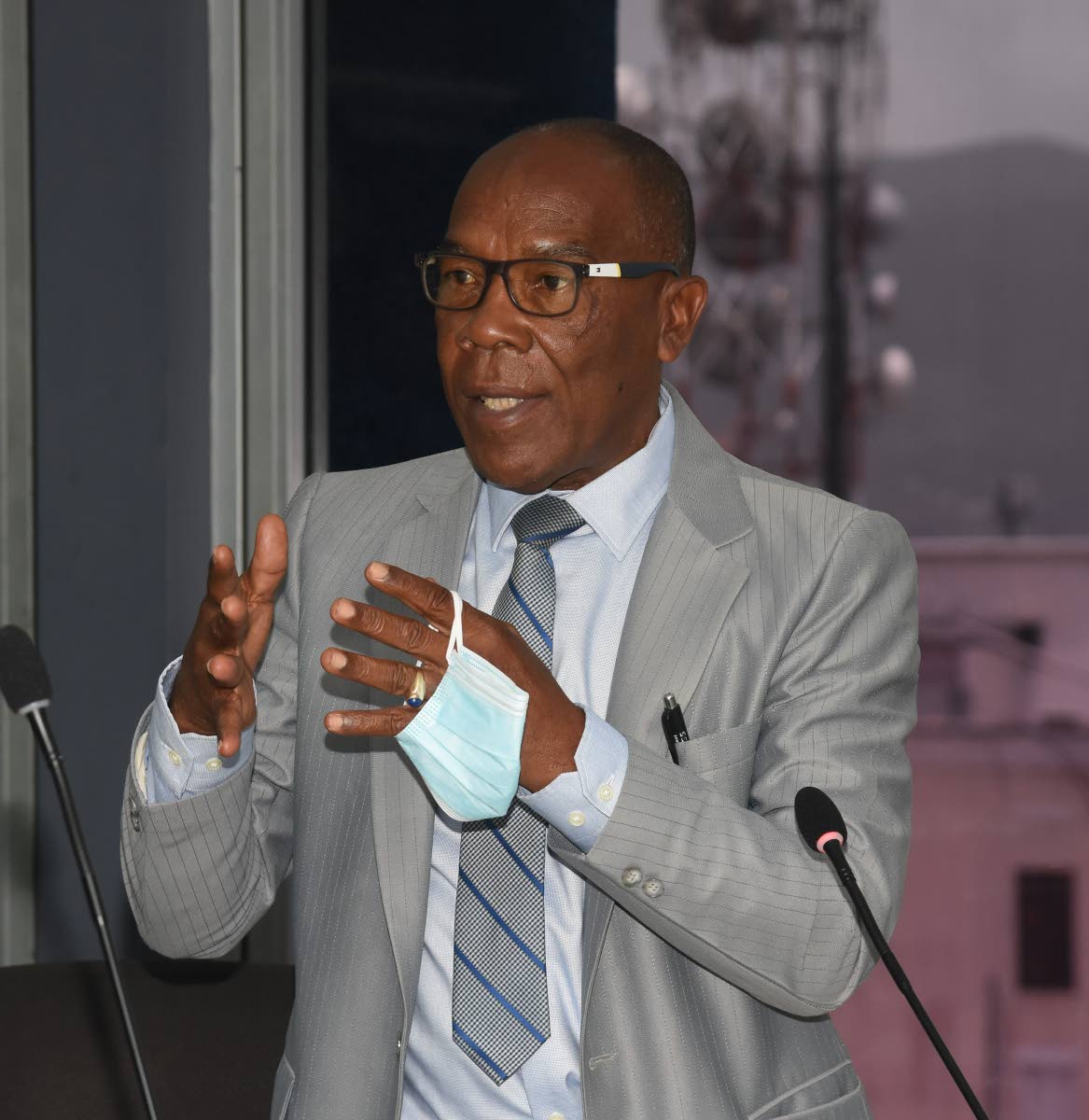 Troupe
-
 Councillor Sylvan Reid.
-
 The RJRGLEANER Communications Group’s corporate headquarters at Lyndhurst Road in St Andrew. TVJ is a member of the multimedia group.
The Court of Appeal has overturned multimillion-dollar defamation awards against Television Jamaica (TVJ) and CVM, ruling that the broadcasters did not defame St James councillors Michael Troupe and Sylvan Reid in their coverage of a 2012 police operation in St James.
TVJ is an arm of the RJRGLEANER Group.
The appellate judges found that the trial judge erred in rejecting the media houses’ defence of Reynolds privilege, a special kind of responsible journalism, which protects reporting on matters of public interest.
Court of Appeal President Justice Marva McDonald Bishop, who wrote the judgment, noted that the defence relied on “a careful balance between freedom of expression and the protection of reputation, governed by the standard of responsible journalism”.
“The authorities require a practical, flexible, and fact-sensitive approach that accounts for the realities of news gathering and reporting on public-interest issues. In this case, the learned judge’s application of the Reynolds principles was unnecessarily rigid and imposed requirements not supported by the facts or the law.
“The requirement for the respondents to comment or provide their side was impractical and unnecessary at the relevant time,” said McDonald Bishop.
The judge also found that the broadcasters were not motivated by sensationalism but by their public-interest value, and that the urgency of the publications was not inconsistent with proper editorial judgment or discretion.
The ruling, delivered by a panel, which also included justices Nicole Simmons and Kissock Laing, allowed appeals in part filed by both broadcasters against a Supreme Court judgment of Justice Audre Lindo on December 13, 2019. That judgment had awarded Troupe $11 million and Reid $8.5 million in defamation damages.
Malicious prosecution
Troupe, councillor for the Granville division in St James, was awarded $11 million in damages for defamation, while Reid, from the Salt Spring division in the parish, was awarded $8.5 million in defamation damages. Reid was also awarded a further $1.05 million and $2.45 million, with interest, for false imprisonment and malicious prosecution, respectively.
In the lawsuits filed in November 2012 and June 2013 against the attorney general; then Police Commissioner Owen Ellington; Senior Superintendent of Police Leon Clunis, then head of the Anti-Lottery Scam Task Force; Television Jamaica; and CVM Television, the men claimed that they were “falsely and maliciously arrested”.
They also claimed that certain untrue words were spoken by the superintendent and the police commissioner, which were broadcast by both free-to-air television stations.
The men’s lawsuits stem from their arrests on the morning of July 18, 2012. On the day in question, the task force, led by Clunis, raided Troupe’s Granville home. Reid was also arrested in one of several simultaneous raids across several St James communities.
Footage of the police operations, including Troupe’s arrest and images of Reid, was broadcast by TVJ and CVM the same day. CVM reporters Fabia Phillips-Lawrence and Kerlyn Brown introduced the reports in Midday News and News Watch 8, while TVJ aired Clunis’ statements on Prime Time News.
Reputations
Statements by Clunis and Ellington described the raids, referencing “top-tier actors” in the lottery scam and outlining the police operations. Troupe and Reid contended that the broadcasts falsely linked them to criminal activity and damaged their personal and professional reputations.
Justice Lindo had concluded in the lawsuit that the Government, TVJ, and CVM TV “failed to show any justification for the words spoken or broadcast”. Nor did they show that “the words complained of were fair comments on a matter of public interest”.
She further said: “The statement was not based on correct facts and the [media houses] have failed in their duty to verify the authenticity of the information stated in their broadcast.”
Dissatisfied with the ruling, both media entities filed notices of appeal on December 17, 2019, and January 17, 2020, respectively, asserting 22 grounds of appeal, seeking to have the learned judge’s findings on liability, the award of damages for defamation, as well as the costs awards, set aside.
In allowing the appeals, the court found that the trial judge had erred in rejecting the defence of Reynolds privilege.
“It was unreasonable and erroneous for the learned judge to require the appellants to take steps to verify whether the respondents were involved in lottery scamming, or charged with lottery scamming, as this was not demanded by law on the facts of this case. There was no information shared with or by the appellants that the respondents were charged,” said McDonald Bishop.
Press freedom
“Demanding verification as to what charges were laid against the respondents in these circumstances would threaten press freedom to an unjustifiable extent in a free and democratic society,” she added.
The judges emphasised that the broadcasts were neutral reportage of statements made by public officials, not assertions of guilt by the media houses.
“The absence of charges or the respondents’ later exoneration cannot retrospectively establish defamation,” the court said, stressing that liability must be assessed based on the facts known at the time of publication.
While the court upheld the finding that the words broadcast were defamatory.
CVM, in its lone challenge to the ruling that the impugned words were defamatory, argued that the report it broadcast was an accurate representation of what was happening in relation to the police investigation. Consequently, CVM further contended that the learned judge should not have concluded that the words complained of were defamatory.
The former councillors, in contrast, highlighted that it was the state parties that raised the defence of justification, and that none of the parties had led any evidence to establish that the respondents were engaged in lottery scamming. They argued that this failure weakened the claim that the words complained of were true, and therefore undermined the argument that they could not be defamatory.
But while CVM had relied on the accuracy or truthfulness of the information contained in the broadcast, the Court of Appeal found that the learned judge was correct, based on the relevant principles, and rejected the appeal against the impugned words being defamatory.
Fair comment defence
Regarding the fair comment defence, the appellate judges found that CVM partially succeeded in relation to statements made by one of its anchors, which were factual commentary rather than assertions of criminal conduct. However, the defence did not apply to all other statements, including those by TVJ, which had failed in its defence of fair comment.
Both entities had also appealed against the award of damages, arguing that the judge had erred both in fact and law in granting the order. The court accepted that the learned judge had erred on liability, which would also affect her apportionment of costs. Consequently, the costs orders made against the broadcasters were set aside, and the respondents were ordered to pay the media houses’ costs in the court below, as well as 75 per cent of the costs of the appeal, unless an application is made within 14 days for a different cost.
The stay of execution that had been granted pending the appeal was also discharged.
Attorney Nigel Jones and Jovell Barrett, instructed by Nigel Jones and Company, appeared for CVM, while Television Limited was defended by Georgia Gibson-Henlin KC, Stephanie Williams, and Ariana Mills, instructed by Henlin Gibson Henlin. Troupe and Reid were represented by attorneys Leonard Green and Sylvan Edwards, instructed by Chen Green and Co.
tanesha.mundle@gleanerjm.com