Bog Hole’s green basket under strain
Loading article...
-
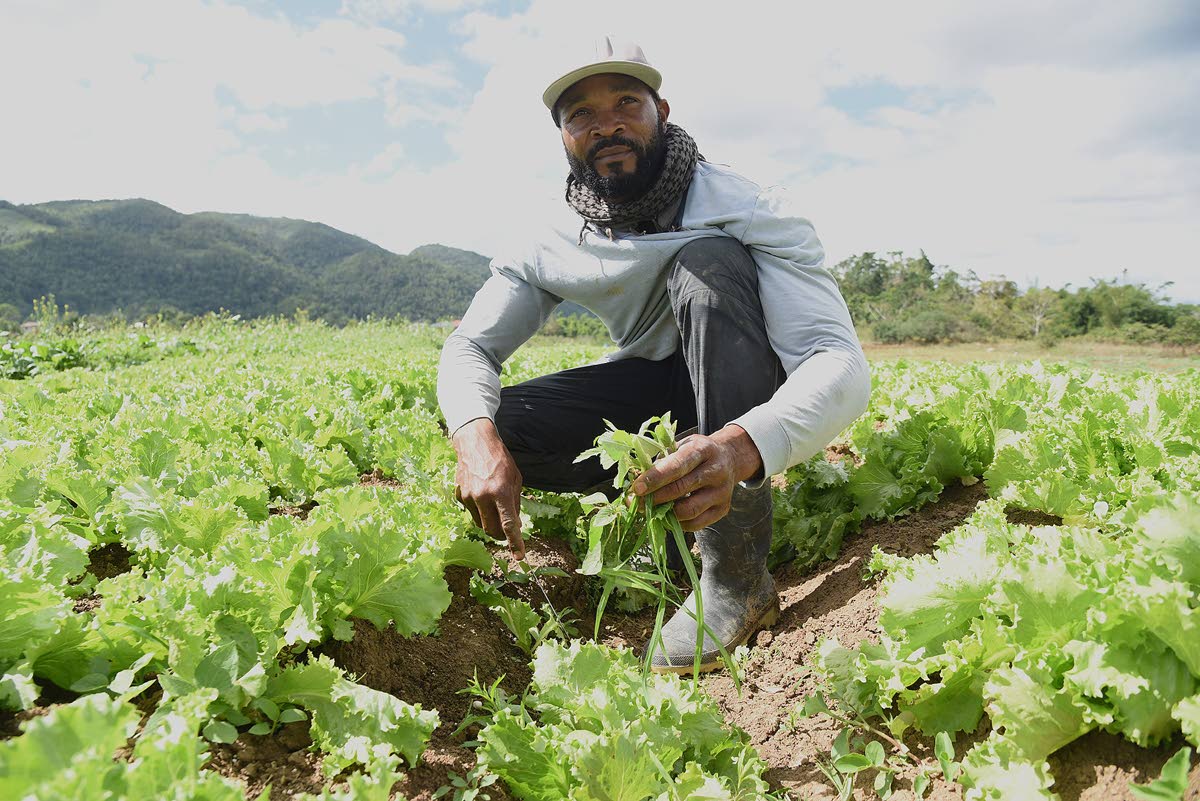 Third-generation farmer Carlington McCook, who is also a police officer with the Jamaica Constabulary Force, told The Sunday Gleaner that he lost approximately $1 million worth of lettuce, pak choi, and cabbage to Melissa’s fierce winds and flood rains.
-
 Patrick Blair said that along with green, leafy vegetables, he lost an acre and a half of dasheen and an acre of sweet potatoes, along with two greenhouses. He is now rebuilding his greenhouses and has also pivoted to other crops.
-
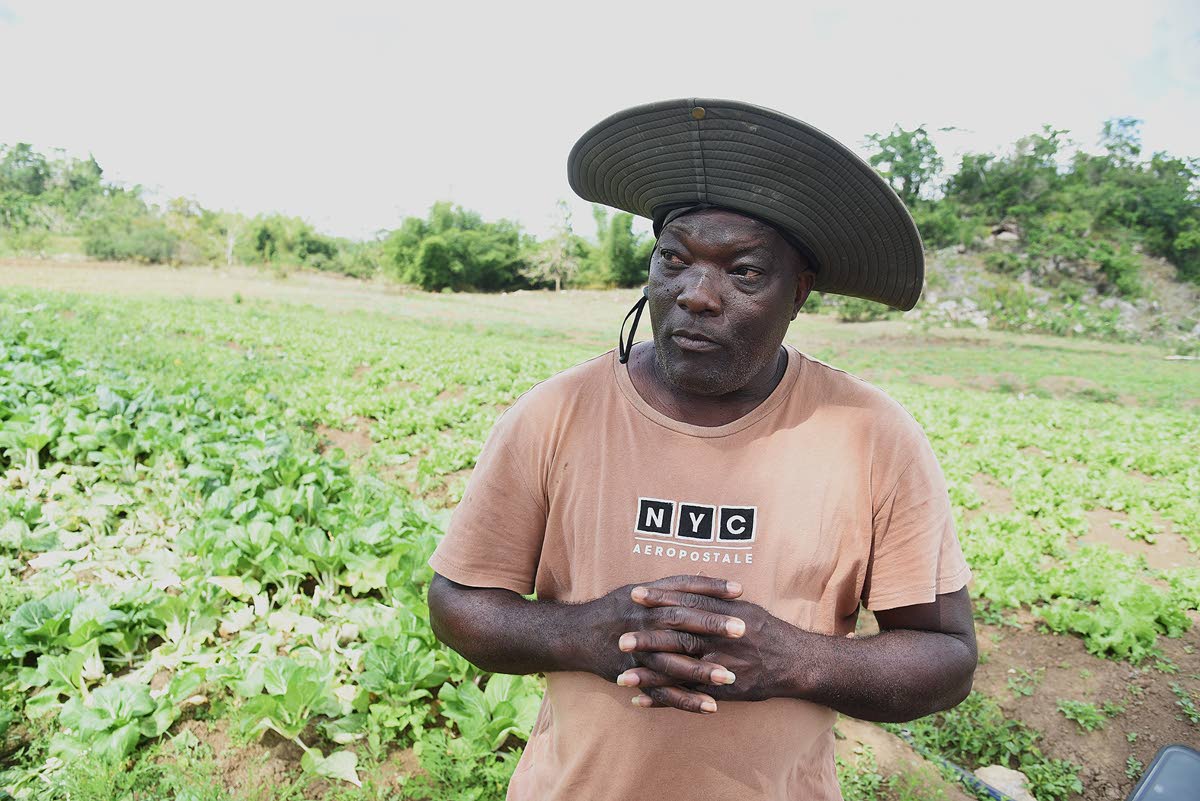 Patrick Blair, a farmer in Bog Hole, Clarendon.
-
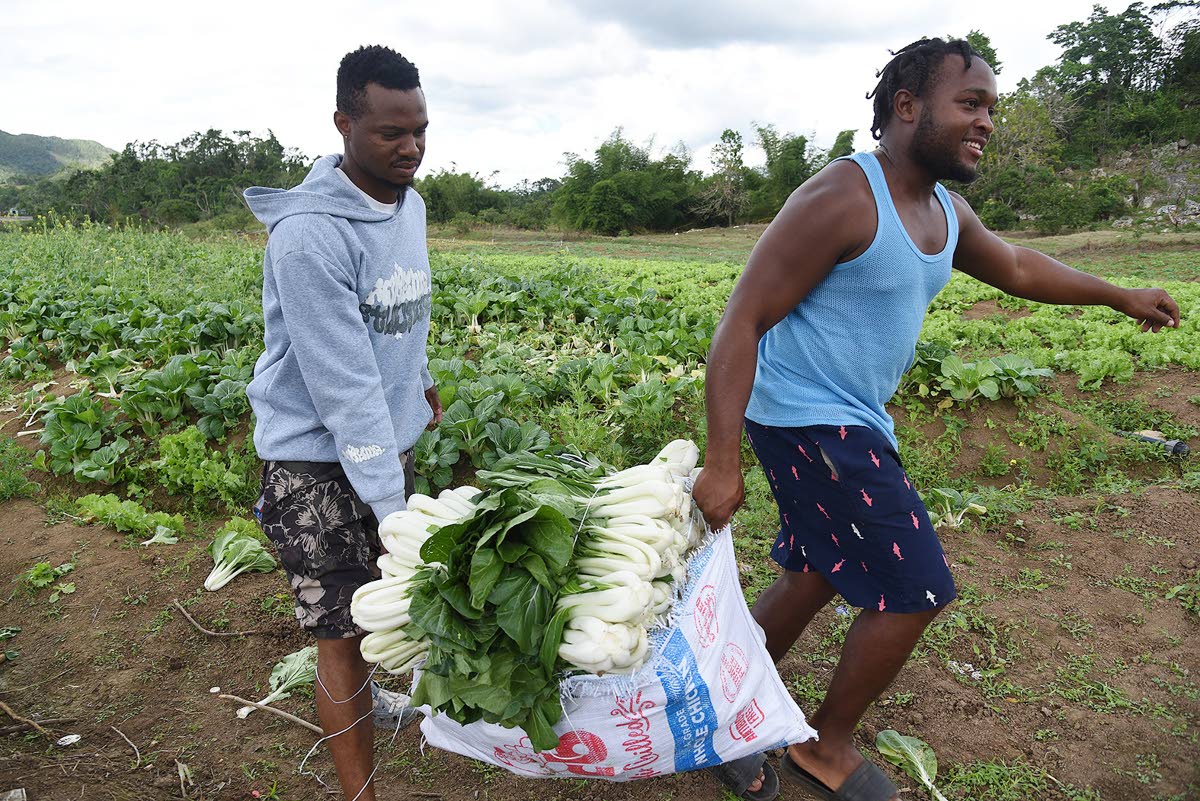 Pak choi being carried from a field in Bog Hole, Clarendon, ready for the market.
If you enjoy green, leafy vegetables, chances are some of what is on your plate came from Bog Hole, a farming community near the St Ann-Clarendon border, home to farmers spanning generations.
Located as it is in a basin, water from higher elevations, including the Manchester hills, dumped thousands of gallons on the community during the passage of Hurricane Melissa last October, wiping out fledgling crops.
Now the farmers are fighting back, replanting their acreages while looking to venture into other crops to meet changing needs and challenging circumstances.
Third-generation farmer Carlington McCook, who is also a police officer with the Jamaica Constabulary Force, told The Sunday Gleaner that he lost approximately $1 million worth of lettuce, pak choi, and cabbage to Melissa’s fierce winds and flood rains.
However, with these crops maturing quickly and several farmers planting seeds at the same time, another problem is arising.
“We were well energetic and ready for the farm, but putting in the crops, everybody started doing the same thing – lettuce, pak choi, cabbage, cucumber, string beans, which are pretty fast. With everybody doing the same thing right now, we are experiencing a glut. The market cannot take the produce, the volume, so that poses a challenge. It makes the recovery process even harder in terms of funding crops that we would want to go forward with,” McCook revealed.
It is part of why he now has to pivot.
“I’m looking into unique crops, like celery, cilantro, parsley. Right now, I’m trying out celery. I’ve planted some already. They are still in a seedling stage as I only recently planted it, and there is already a local buyer for it. Our biggest challenge around here is marketing because we tend to plant and a hope seh di market comes. When the market really comes, you know di ting is in great demand. [But] when everybody have it, a man can just go any and everywhere and just, you know, get whatever they need, so I am also eying doing my own marketing.”
The Bog Hole farming community is served by a large pond with an irrigation system, the envy of other farmers beset by drought.
“Trust mi, that is one of our greatest assets, you know, resources around here, because it’s right there, and there are drains which lead into it, so we always have it. It’s always there,” said McCook.
Another farmer, Patrick Blair, told The Sunday Gleaner that along with green, leafy vegetables, he lost an acre and a half of dasheen and an acre of sweet potatoes, along with two greenhouses.
Having secured material from the Rural Agricultural Development Authority (RADA), he is now rebuilding his greenhouses and has also pivoted to other crops.
“I planted melon for the first time, just a little as a trial, and the yield was good, and it was sweet and the fruit was large, so I’ve just planted some more.”
Unexpected windfall
Blair also had an unexpected windfall from the lost dasheen, which he would be reaping at the end of January.
“The only good thing from it is that I am getting back some suckers (young plants), so I don’t have to buy any suckers because they are selling suckers very expensive. The water took it, but the fruit itself pushed up suckers.”
He admitted that picking up the pieces has demanded mental fortitude.
“Let me tell you something, it is very, very hard. ... The minister came and he said what he had to say, and in terms of aid, we got some seeds and the machine (hand-operated tracker) on loan to help to do the grading of the farm, but it hard, very hard. Financially speaking, you nuh have nothing to reap to help so any likkle saving that was there, everything gone.”
The farmers also bemoaned the poor state of the access roads to their farms.
“The road damage, damage. Some farmer have hell fi carry dem crop because what has happened when dem come to dig the roads to put in the pipe, it damage, and they came back and they did little bit a covering on it, but it wanted more because as you can see, when we have rainfall the place is damaged.”
Blair also believes Bog Hole deserves more respect in the national conversation about food security.
A major source of income
“This area is a farming area, but to be honest, I don’t think Bog Hole get the treatment that it suppose to get in terms of being recognised [as a major supplier of food]. Every other person is a farmer, but I am not sure how many are registered, but for every other person, it is a major source of income.”
Agriculture Minister Floyd Green told The Sunday Gleaner that the Government was aware of the glut being experienced by some farmers.
“The solution is twofold. We have activated RADA’s marketing services, so those farmers are to contact their marketing officer for the parish because part of what we are doing is looking into areas that they still have shortage. Sometimes they have distribution challenges where we might have a significant supply in an area like Bog Hole, but when you go into an area like Portland, they are still in need, so our marketing services have been activated in that regard also to work with some of our agro processors to see if these are crops that they can do further processing of.”
According to Green, Bog Hole is one of the areas earmarked for a storage facility where 40-foot containers powered by renewable energy are installed.
“The longer-term, medium-term solution because this is not a Hurricane Melissa challenge. This is a challenge that has bedevilled our agriculture sector for a few years, has to do with storage. Because what happens is that when all of these crops come in at the same time, they also go out at the same time and then you move quickly from oversupply to shortage, so what we are looking to do is to establish storage areas in key production zones.”
The agriculture minister also acknowledged the problems with road access:
“We have two projects that we are working on in Bog Hole, and those projects are in relation to an irrigation system which will help them get water on a more consistent basis and also farm road network on the farm. I know there are complaints about getting into the community, and I will continue to make representation for them in that regard.”
karen.madden@gleanerjm.com