UNDP EYES CHANGES FOR THE FUTURE
Organisation pivoting strategies, preps for post-Vision 2030 era
As it marks 50 years of partnership in Jamaica today, the United Nations Development Programme (UNDP) is citing its work in climate resilience and justice reform as pillars of its local legacy. However, with less than five years to go to the...
As it marks 50 years of partnership in Jamaica today, the United Nations Development Programme (UNDP) is citing its work in climate resilience and justice reform as pillars of its local legacy.
However, with less than five years to go to the Vision 2030 deadline, the organisation has also paired this commemoration with a candid look at developmental gaps, and said it is pivoting its strategies to address the emerging issues of a post-Vision 2030 era.
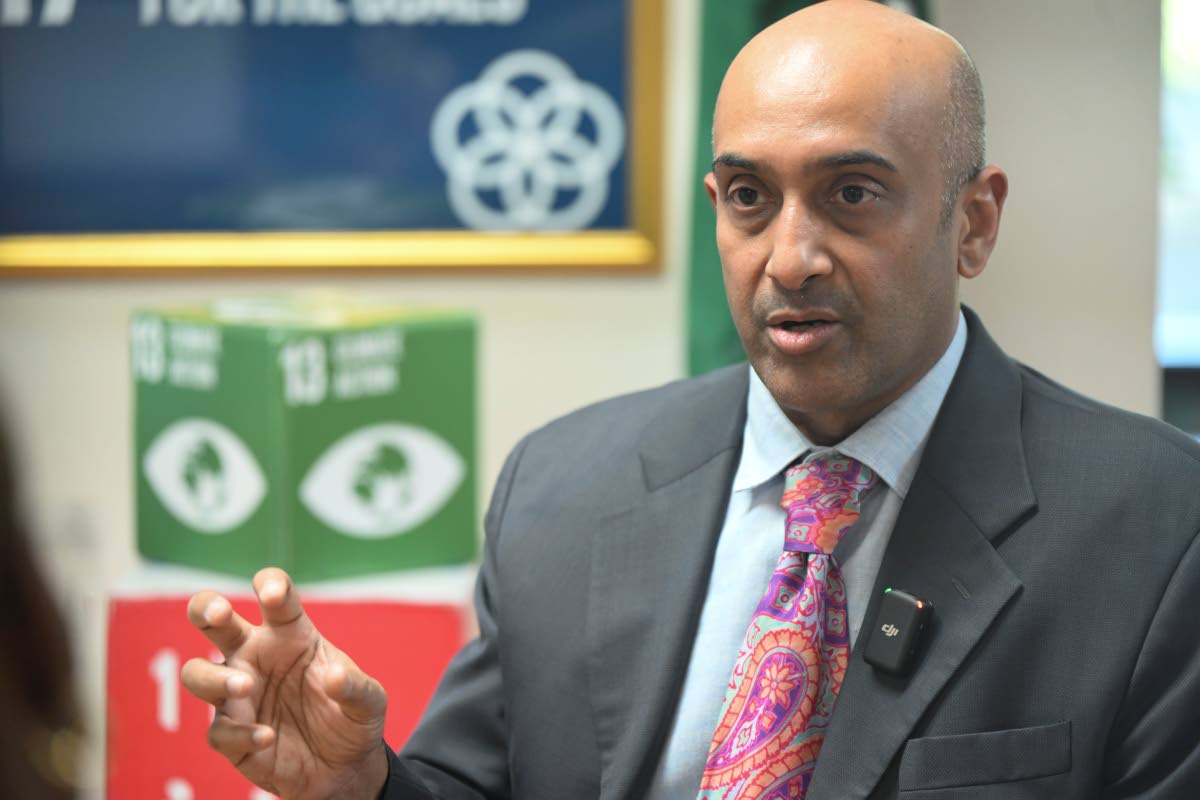
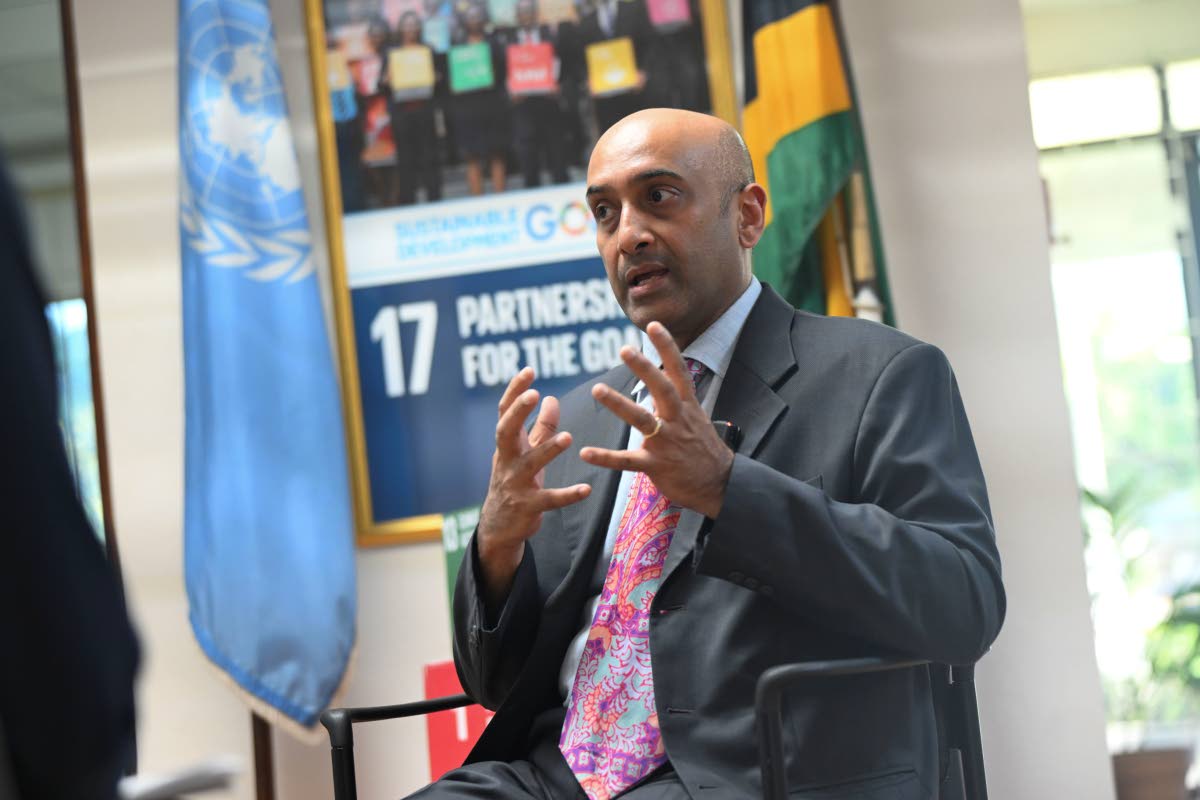
“Unfortunately, we see such a complex development agenda and a complex environment ahead of us if we look ahead,” Dr Kishan Khoday, UNDP resident representative, said during an interview with The Gleaner.
“We do many analyses on the future of development and so, looking ahead, it’s really important to build on that kind of multi-dimensional risk approach to development policy and planning going forward.”
Vision 2030 is Jamaica’s first long-term national development plan, from 2009 to 2030, and is aimed at transforming Jamaica into a developed country, making it the “place of choice to live, work, raise families, and do business”.
It aligns with the UN’s Sustainable Development Goals, adopted in 2015 as a universal call to action to end poverty, protect the planet, and ensure that by 2030 all people enjoy peace and prosperity.
Khoday highlighted Jamaica’s progress in reducing violent crime as a major development achievement, one he said was supported by UNDP’s justice reform efforts, while noting that significant work remains in the area of environmental sustainability.
Jamaica recorded 673 murders in 2025, the lowest number in over three decades and the first time the annual figure has fallen below 700 since 1994.
Khoday, noted that the organisation has been engaging the youth who are working to develop new technologies and approaches to tackle future challenges. Communities and policy makers have also been sought out to participate in that “visioning exercise” of the future, he said.
“If we look ahead, again, using a long-term perspective, not just looking back 50 years, but looking ahead to, let’s say, 2050, what are the visions from the next generation?” he quizzed.
This adjustment is a continuation of the UNDP’s role evolving to meet the shifting needs of the Jamaican society, as its multi-country office has, over the decades, led the delivery of UNDPs local services to the island as well as The Bahamas, Bermuda, The Cayman Islands and the Turks and Caicos Islands, Khoday noted.
In Jamaica, he said focus has been placed on how “poverty, environment, justice, gender, disaster risk reduction and recovery efforts all intermingle and all are part of the solution to actually achieve those 2030 goals”.
‘Challenges on the horizon’
While lauding the Jamaican Government and people for progress in building resilience into the development system that exists, he stated that the UNDP “sees a lot of challenges on the horizon”, and its current country programme is focusing on some key aspects of those risks and fragilities.
“One is on taking action to mainstream climate change adaptation into key elements of the economy and the development trajectory. So key parts of the economy such as tourism, such as agriculture, are really affected by climate change increasingly. And so having climate resilient nature-based development pathways going forward is a key pillar of our programme in Jamaica,” he noted.
To this end, he said UNDP has been partnering with non-government organisations and community-based associations to build climate change resilience and inspire citizens “to really take action on climate change in their daily lives and their small enterprises locally”.
“Our experience is that climate action here is really about taking the next step, for example, on water security, climate resilient water systems, for example, to make water access more resilient to a changing climate,” Khoday stated.
“So it’s about modernisation and technology, to increase access to water given the changing climate. But it’s also on modernising, for example, energy access, as well the expansion of solar systems, decentralised, localised power, often for development ... social services, such as for schools, for hospitals, for agriculture production and various small and medium-sized enterprises,” he added.
The challenge of climate change and disaster risk reduction and recovery is an issue that has been a priority for UNDP’s work in Jamaica over the past five decades, Khoday stated.
Efforts have been concentrated on building institutional capacities for early warning systems, integrated policymaking across sectors, and sustainable finance solutions so that “Jamaica now really stands forward across many countries in having many good systems in place”.
Reflecting on the devastation caused by Category-5 Hurricane Melissa which struck the island in October last year, Khoday said UNDP’s response was multi-dimensional.
Scaling up assistance
He noted that the organisation provided community-based assistance by clearing debris, restoring solar systems, and restoring livelihoods by providing support to small and medium-sized enterprises. It was also central in giving support on recovery planning and governance.
“Going forward, we’re very much focusing on scaling up assistance to actually achieve results on recovery in key sectors, such as recovery in the tourism sector by bringing in new sustainability measures as it builds back,” he said.
The UNDP has also been offering key support in restoring critical ecosystems in the most severely hit parishes, he said.
Khoday also highlighted the UNDP’s work in applying digital solutions to climate change issues to understand what Jamaica may look like in the future as it faces the climate crisis.
“Another great example I think is the work that we’re doing with communities to integrate digital solutions into justice processes, access to justice through digital apps for communities to be able to access the justice process more smoothly and effectively through the use of digital solutions for case management in the judiciary to be able to again effectively manage cases through the process,” he said, in underscoring the UNDP’s efforts to apply new technologies to solve issues in Jamaica.
As the UNDP continues to advance sustainable and inclusive development in Jamaica, Khoday noted that it is doing so amid a volatile development-financing environment. However, he said it is mobilising integrated packages of diverse financing while simultaneously pushing efforts to build capacity and modernise institutions.
However, most importantly, as it looks to the years ahead, he said faster action on the pillars of Vision 2030 will be central to its cooperation going forward.
“What we would see is basically eradicating poverty,” he said. “Closing the gaps in terms of rural and urban, rich and poor and bringing down levels of inequality. Advancing that sustainability agenda. So rapid acceleration of action on things like climate change, environmental sustainability, which can have broad-based benefits for livelihoods, for key sectors of the economy, for withstanding the impacts of escalating, accelerating disasters,” he added.