BRACE FOR New taxes
Loading article...
-
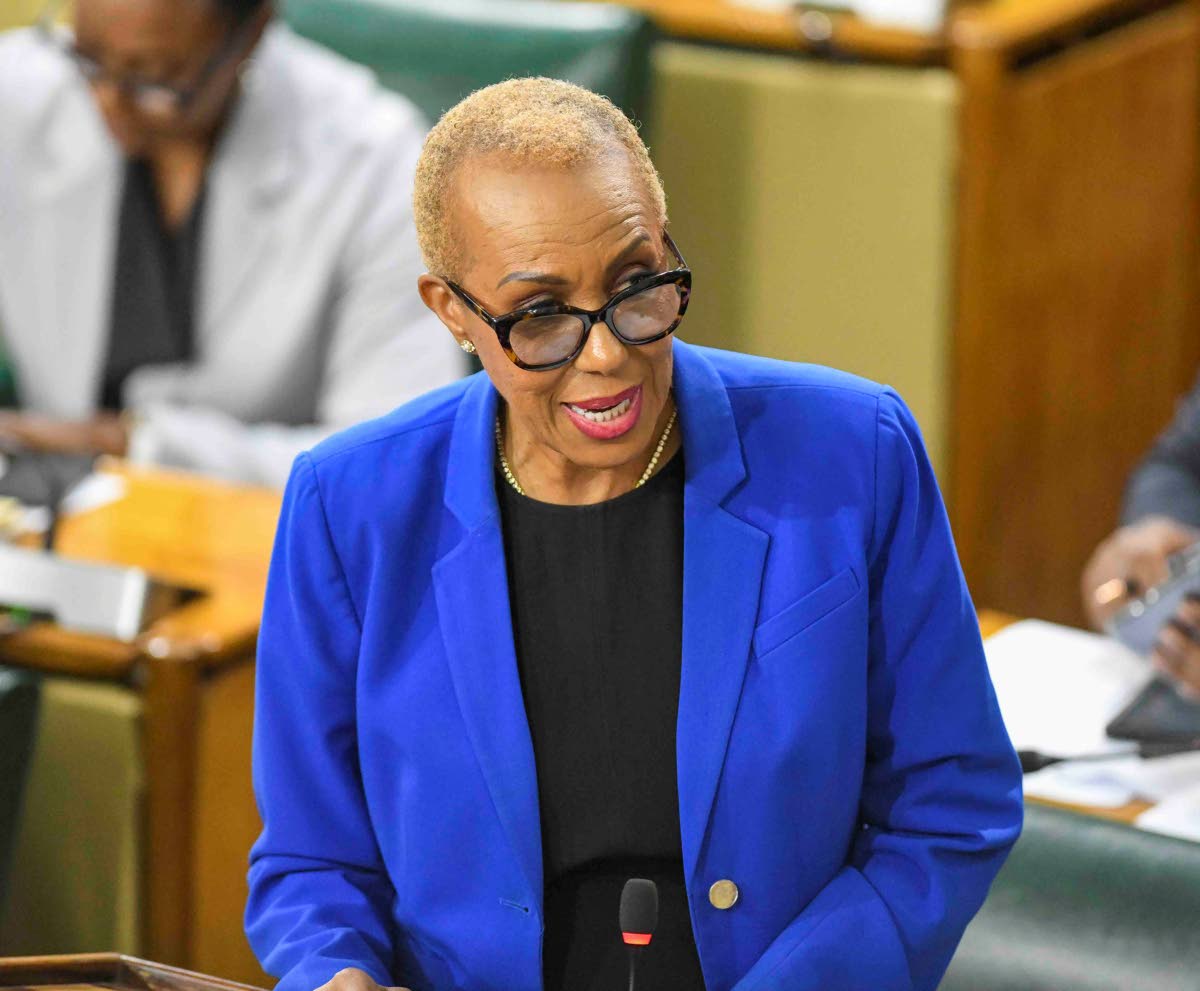 Fayval Williams, minister of finance and the public service.
-
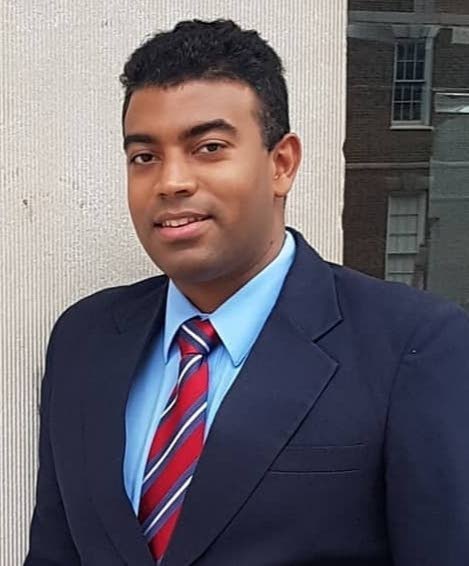 Keenan Falconer, economist.
Economist Keenan Falconer says he was not expecting the administration to introduce new tax measures at this time, arguing that the conventional approach in the aftermath of a crisis is to either reduce or remove some taxes to spur economic activity and accelerate growth.
According to Falconer, by taking this approach the Government would pave the way for gross domestic product (GDP) growth and output that would result in a return to pre-crisis levels in the shortest possible time, allowing tax revenues to rebound.
He was reacting to a statement released last night by Finance and the Public Service Minister Fayval Williams who put the nation on notice that it should brace for new tax measures in the upcoming Budget as a result of Hurricane Melissa which ripped through the island in October last year.
“It must be noted that the impact of the hurricane has reduced our revenue, as economic activity slowed in certain sectors,” Williams said in her statement.
“That creates a fiscal gap that we cannot ignore. As a responsible Government, we must now take measured steps to close that gap – and that will include new revenue measures.”
While introducing the measure in the 2026-2027 Budget, Williams said the Government would be protecting the vulnerable from the tax take.
However, Falconer said the Government should divulge which activities would be subject to new or higher taxes, as well as explain what effects the measures would have on growth projections in the near term.
“While I cannot predict what taxes will be applied, it is best if the Government chooses activities that are relatively inelastic and least sensitive to taxation where changes in tax rate don’t significantly dampen demand,” he told The Gleaner.
He cautioned that some taxes are more growth inhibitive than others, adding that the Government must now determine what is the optimal tax mix.
At the same time, Opposition Spokesman on Finance Julian Robinson said yesterday that he was not surprised by the planned imposition of new taxes, as revenue intake had been falling gradually over the last two fiscal years.
He said the impact of Hurricane Melissa would worsen the situation as it triggered significant shortfalls in tax revenues.
Robinson is urging the Government to heed the advice of the fiscal commissioner by tabling simultaneously the Estimates of Expenditure and the revenue measures today, after the ceremonial opening of Parliament.
In her statement last night, Williams said “plainly and directly” that new revenue measures are coming in the Budget.
Noting that recurrent expenses must be financed by taxation revenue, the finance minister said the Government is reviewing anomalies in the tax system and ensuring that the burden is shared fairly.
“The most vulnerable will be protected. The measures will be calibrated, balanced, and sensitive to the realities facing households and businesses,” Williams said.
Discussing the current economic plight, post-Hurricane Melissa, Williams noted that the Economic and Fiscal Assessment Report indicated that the natural disaster caused an estimated US$8.8 billion in damage, which is about 41 per cent of Jamaica’s GDP.
Despite the extraordinary demands which the hurricane has imposed, Williams said the administration must continue the normal business of government, such as road and bridge repairs, restoring schools and sustaining hospitals, supporting farmers and small businesses and strengthening critical infrastructure.
Williams said that while the Government could have chosen to finance the entire deficit through borrowing, the country had travelled that path previously with negative outcomes.
However, Falconer argued that the current situation is different as the Government has access to funds at more concessionary rates than two decades ago.
“Government has increased access to more preferential terms for borrowing such that whatever it chooses to borrow and whatever it has to repay would not be as overly burdensome as it would be in the past,” he argued.
However, Williams said Jamaica has lived through the debt trap before with decades of high debt, high interest payments, and limited fiscal space.
“Over the last several years, through discipline and shared sacrifice, we have reduced our debt and restored credibility.
“We will not recklessly undo that progress. Borrowing will play a role, but it must be strategic – directed towards capital investments that build resilience and expand our productive capacity: infrastructure, agriculture, logistics, digital systems,” she said.
edmond.campbell@gleanerjm.com