
Of Easter and traditions in Jamaica
Published:Sunday | March 30, 2025 | 12:09 AMPaul Williams - Contributor
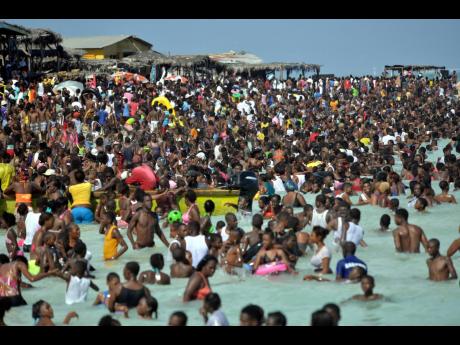

“Under missionary influence, Good Friday came to be set aside in many communities as a day on which no work should be done, no food cooked or fires lit and servants should be freed from task. Attendance at a three-hour service … was obligatory,” Olive Senior writes in E ncyclopedia of Jamaican Heritage.
The main food allowed was Easter bun and cheese, which could be discreetly munched in church during the long service. Those who went to the beach on Good Friday or Holy Saturday or even on Easter Sunday were viewed with disapproval by religious Jamaicans, though nowadays many treat the entire long weekend as a secular holiday.”
It is true, for several decades now, at Eastertime, Jamaicans seem to look forward to the eating of bun and cheese, and beach trips, more than to the rehashing of, and the reflection on the meaning of the Resurrection story, which is fundamentally what Easter is about. Even non-practising Christians believe in that story, and the message of redemption that it brings, but it might have lost its power.
EASTER BUNS AND CHEESE
Yes, there is not much fuss about the redemptive message and its impact. Yet, there is much ado about the size, taste, texture, moisture-level, fruit content, and, of course, the price of Easter buns, and cheese, which seem to be encapsulated in an eternal marriage. In families, and among associates, fuss and tension have been created over Easter buns and cheese for myriads of reasons, including the aforementioned factors. Some blood might have even been spilled. The irony.
“Even before African and black Creole Jamaicans had created their own Easter traditions the irreligious pirates and planters of white 17th-century Jamaica held holidays on the two great festivals, Christmas and Easter. Easter was one of the few times that some churches opened their doors for the year,” Senior says.
The tradition of observing Easter and eating Easter bun and cheese during the season in Jamaica goes way back to slavery days, though the enslaved did not know it to be Easter. It was called ‘Pickney Christmas’, since Christmas was the bigger of the two Christian holiday seasons. It was a time of great ‘freedom’ and wild abandonment, bearing in mind that it was back to the grind after Christmas.
“So, during the centuries of slavery the enslaved share the three days’ holidays of Christmas, as well as ‘pikni Christmas’, the name they gave to the one-day holiday at Easter which seemed a small or ‘child’ holiday,” Olive Senior writes.
“Easter falls during crop time when the sugar cane is reaped and factories operated at full blast, so time-off would have been the bare minimum. The holiday probably did not become generally known among the slaves as Easter until well into the missionary era in Jamaica, perhaps by the beginning of the 19th century.”
JAMAICAN EGGNOG
And though the drinking of eggnog was a Christmas tradition, it was once a feature of the Easter season. The ingredients of the Jamaican eggnog gave it a distinct flavour as against the America and European flavours.
One online site, named ‘Jerk Tavern’, says, “Jamaican eggnog is a sweet, creamy beverage, deliciously thick with spicy overtones. You will enjoy the balance in flavours, as well as the high-spice notes. Jamaican eggnog is made from eggs, and milk spiced up with nutmeg, cinnamon, and can't forget rum, traditionally served during the holidays.”
Egg is an Easter symbol as it represents new life, rebirth and redemption. Just as Jesus was resurrected from the tomb, according to the Resurrection story, the egg symbolises new life emerging from the shell. In some orthodox traditions, eggs are painted red to symbolise the blood that Jesus shed on the cross.
Up to about 25 years ago, in Jamaica, there was a practice of putting the white of an egg into a glass of water on Holy Thursday night, and placing it at a spot where the morning sun would strike it. By that time the albumen would take a particular shape, such as that of a ship, an airplane, a baby, a wedding ring, a house, et cetera, that would portend the setter’s fortune.
People would pull the glass close to their eyes, trying to figure out what the future held for them. They were sometimes disappointed because what they saw in the glass was not what they had desired. Interestingly, there was no particular shape that was pronounced; what they saw was just a figment of their imagination.
That tradition seems to have died, as well as the drinking of eggnog at Easter. And, though the eating of Easter bun and cheese is no longer a big deal for many people, it is for many others, some of whom are already soaking their fruits in some liquour or the other, in the spirit of Easter bun and cheese, but not in the spirit of Easter.
Send feedback to columns@gleanerjm.com