Trelawny yam farmers face ruin after Melissa
Loading article...
-
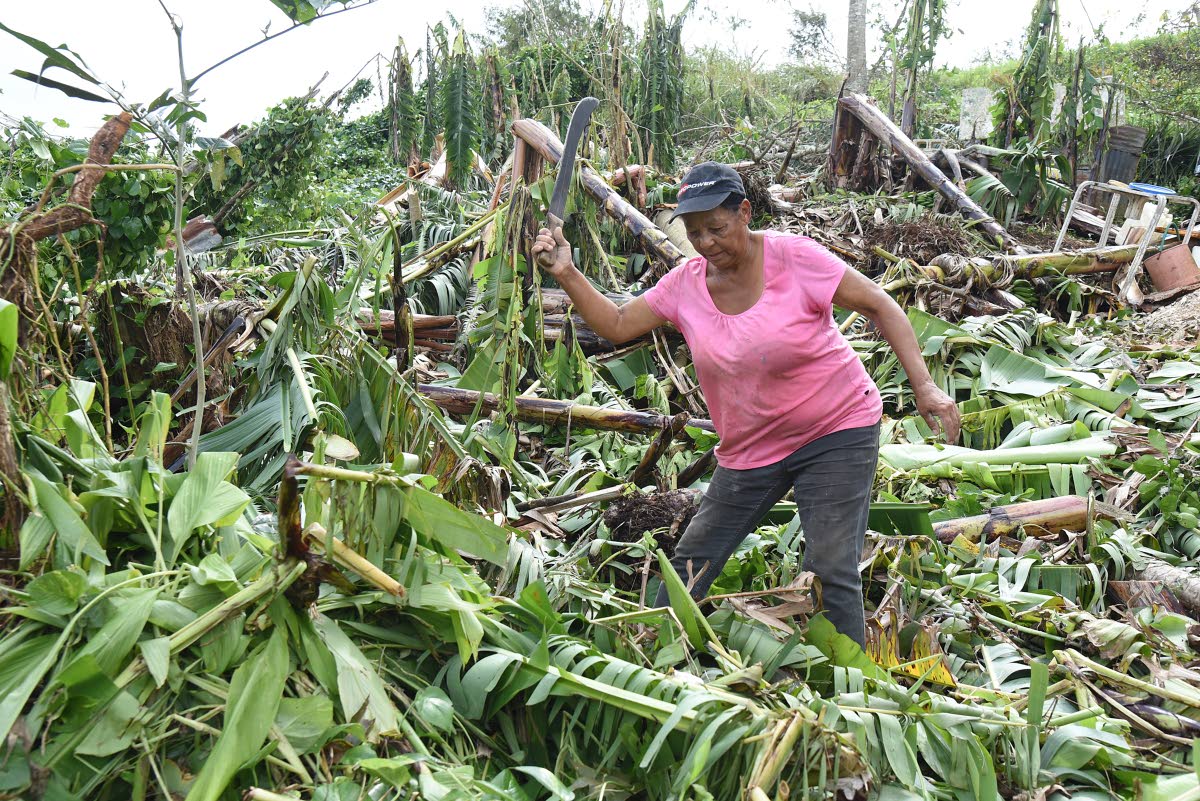 Cynthia Watt, from Lorrimers, Trelawny, chops fallen banana trees in her field that were blown down during the passage of Hurricane Melissa. Photo - Ian Allen
-
Cynthia Watt, from Lorrimers, Trelawny, chops fallen banana trees in her field that were blown down during the passage of Hurricane Melissa. Photo - Ian Allen
-
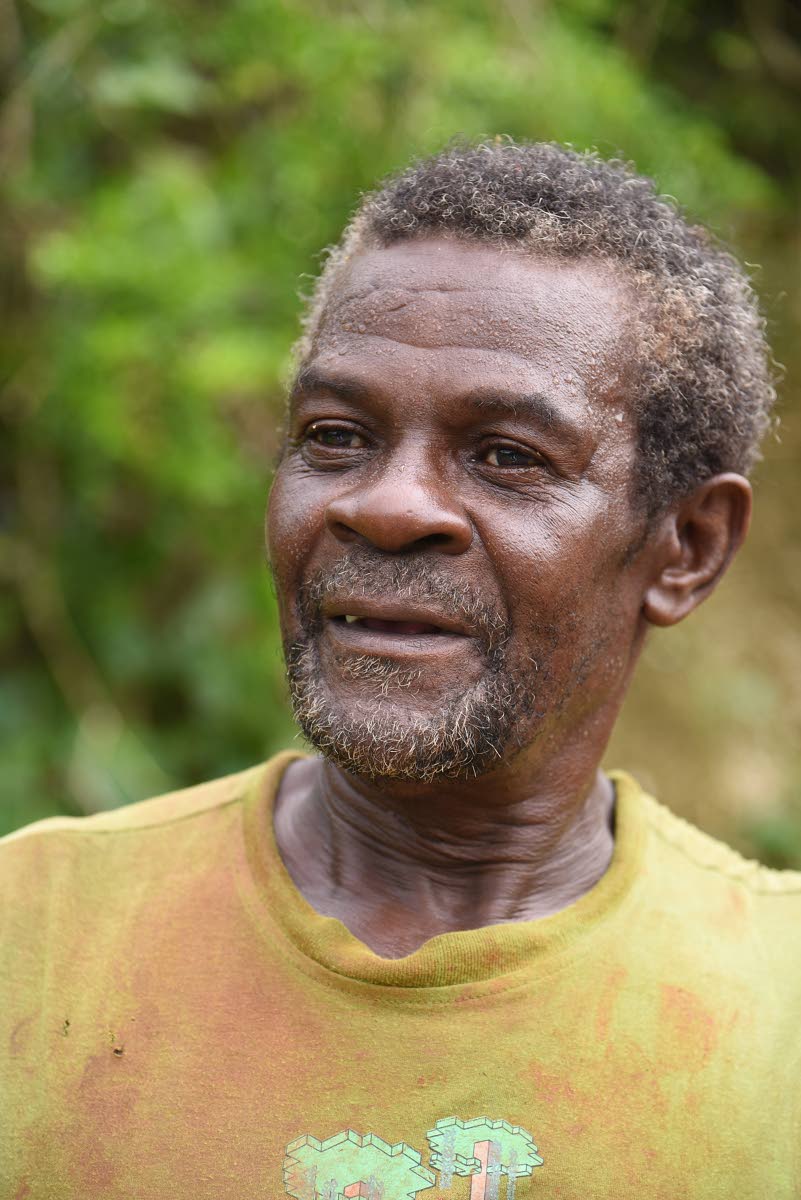 Above: Yam farmer Eli Wallace, of Mahagony Hall, Trelawny, believes will take at least nine months before the sector fully recovers from Hurricane Melissa. Photo - Ian Allen/Photographer
-
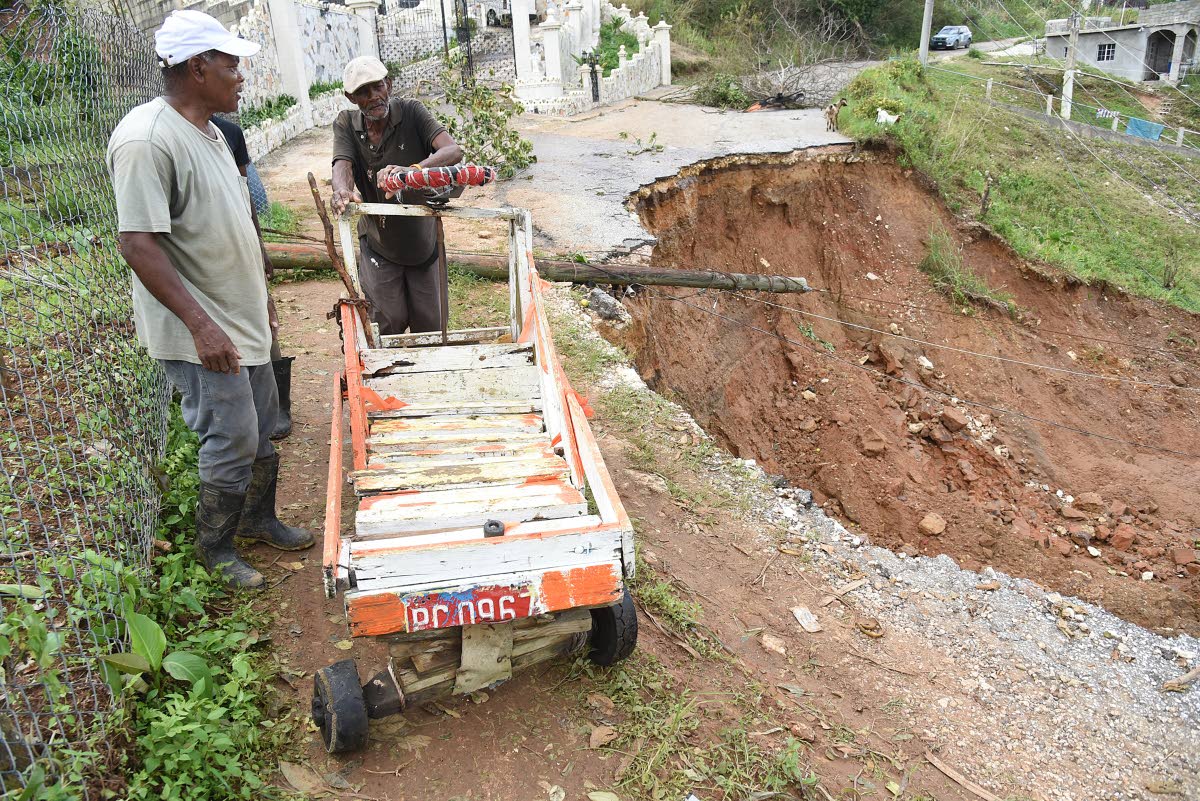 A man pushes a cart across a slither of roadway left in a section of Lorrimers, Trelawny, after a major breakway was triggered by Hurricane Melissa. Photo - Ian Allen/Photographer
-
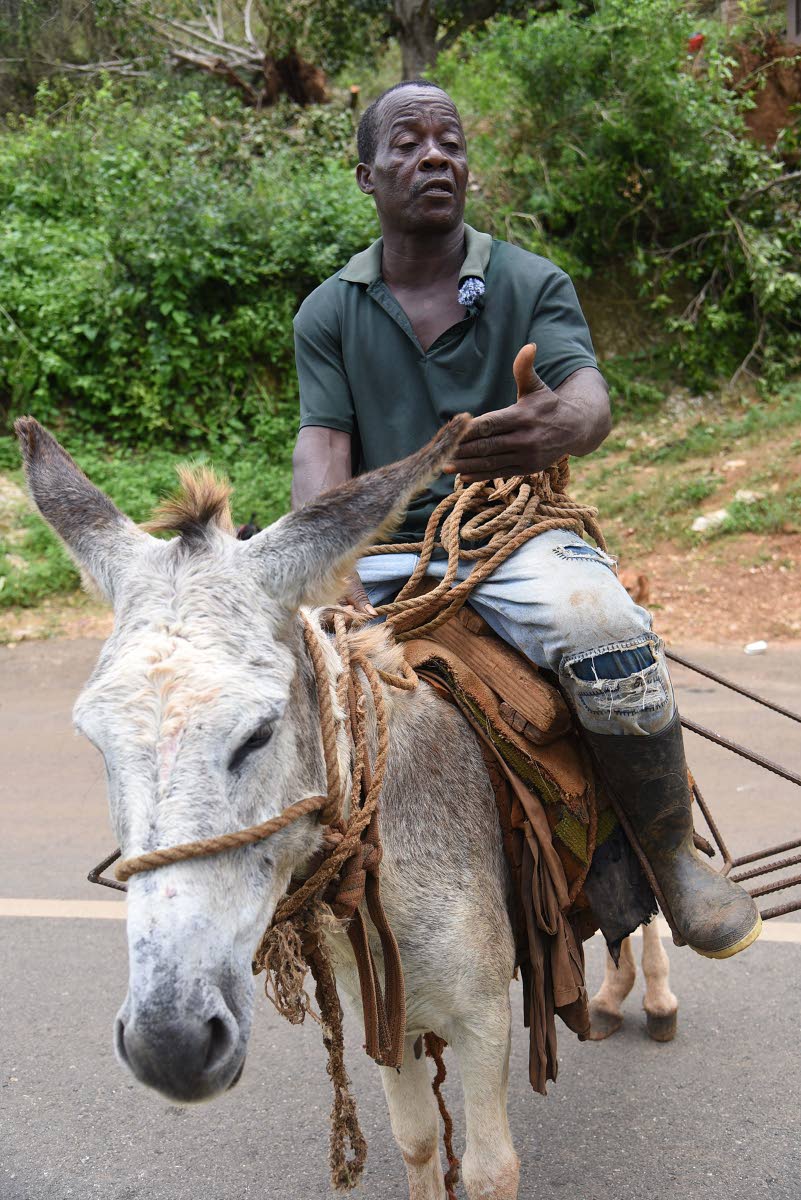 Michael Blake, a yam farmer from Mahagony Hall, Trelawny, says food will be scarce in the coming months as the country recovers from the devastation of Hurricane Melissa. Photo - Ian Allen/Photographer
A distraught Cynthia Watt stood with arms outstretched, mourning the ruins of her once-thriving yam farms surrounding her home in Lorrimers, Trelawny.
The 73-year-old farmer’s property was among many left flattened as Hurricane Melissa tore through the parish on Tuesday.
“Mi nuh know how mi a guh manage, God know. Jesus, help wi!” she cried.
Watt said she lost nearly 4,000 yam heads across her three farms, spanning six acres – an estimated $1 million in damage. The Category 5 storm also flattened her banana plants, pear trees, ackee trees, and peas.
“This storm is the worst I ever experience. It damage me up bad, bad, bad,” she told The Sunday Gleaner.
A short drive away in Mahogany Hall, Eli Wallace, a farmer of over 40 years, echoed her despair.
“Everything flat. Everything blow down. No banana – not even a fruit tree left. Down to cocoa root out a grung,” he said.
Wallace lost more than 2,000 yam heads, a blow he estimates at $2 million.
For these farmers, the losses extend beyond her crops, their homes have also been damaged, and many are losing hope that help will arrive soon.
Wallace, 58, said his roof was torn off, forcing him to flee during the storm to a neighbour’s house.
Watt worries that a massive road breakaway at her gate may soon collapse entirely, cutting off access to her home.
Wallace, who supplies market vendors and exporters, predicts that consumers will feel the impact with higher prices soon as a result of the losses suffered by him and other farmers across the island.
Wallace said aid must be quick and transparent, but based on his experience in the aftermath of Hurricane Beryl last year, he is a little doubtful that this will be the case.
“It’s a disaster but we cya stop it, suh wi haffi just gwaan and see if we can survive back again, if we get help, wi tek it,” he said.
Watt shares that skepticism.
“A mi haffi a push through everything so mi know how it a guh work out. Mi not getting no help from no Government. Even di last storm did come, Beryl and Gilbert – nothing mi nuh get. Mi join di RADA (Rural Agricultural Development Authority), not even a bag a fertiliser mi nuh get. Nothing,” she told The Sunday Gleaner.
After Hurricane Beryl in July last year, Agriculture Minister Floyd Green estimated it would take $10 billion to rebuild the sector. By December, Green reported that 2,819 hectares of crops – including 20 hectares of yam – had been restored. He said approximately $182 million was spent procuring 27,579 units of assorted seeds that were distributed to farmers across Manchester, Clarendon, St Elizabeth, Westmoreland, Trelawny, St Catherine and St Ann.
But on Friday, during a tour of St Elizabeth, Green admitted th yam production had taken a “major blow” from Melissa.
“Unfortunately, the storm walked through our major yam-producing areas between Trelawny and Manchester. Almost 90 per cent of Jamaica’s yam comes from there,” he said.
Green also warned that the fallout could be felt both locally and abroad as yams remain Jamaica’s number-one agricultural export.
Jamaica’s yam exports comprise approximately 22.2 per cent of the global market. In 2022, Jamaica’s total yam production surged to an impressive 207,500 tonnes. In 2023, Jamaica earned US$42.6 million from yam exports.
The minister said the Government has already activated its Agricultural Recovery Task Force and will meet in the coming week to decide the next steps.
But already, Lloyd Levermore, a yam farmer in Stewart Town, Trelawny, is seeing the ramifications.
“What [yam] survive gonna sell fi a high cost. Up to this morning mi buy yam [for] $400 a pound and di storm just blow,” he told The Sunday Gleaner, stating that it cost $300 per pound days earlier.
The 68-year-old farmer said his farm was left “unrepairable” by the hurricane. This is especially heartwrenching, he said, as he had spent up to $350,000 preparing and planting 1,800 yam hills, sweet pepper and Irish potato, and was looking to reap soon.
“Nothing nuh left. Mi nah go get nothing. Not a ting nuh left,” he said. “Mi feel upset, but mi cya do nothing. A God, wi haffi respect God, a God dweet. If a did man, mi nuh know what would happen, but something would happen.”
He said he made more than one million from his yam crop last year, and is frustrated at how much the hurricane’s devastation has pushed him back.
“Di yam head dem good as all dead. Mi not even sure if mi a guh get back yam fi plant. Mi might haffi go buy again fi plant, ” he said.
Like the other yam farmers, Levermore is concerned about how he will be able to fund his recovery, and is not at all hopeful about aid reaching him.
“Mi nuh have di nuff money again fi go plant it back and from Beryl blow, dem promise mi money, mi nuh get none,” he said. “Mi nuh know if wi go get no help again, mi nuh know, it rough, really rough.”
But Eric Belford, a farmer from Mahogany said although his three acre farm sustained damage during the hurricane, his strategy of planting his crops in batches will help him recover faster from the destruction.
“Some a it mi reap already, mi nuh plant it one time. Mi plant some March, May, June and July so mi still have yam deh weh fi reap still, and yam weh nuh go pon stick,” he told The Sunday Gleaner.
Meanwhile, Michael Blake, a yam farmer and vendor from the area, urged collective action to prevent further loss.
“We all have to get together, and get out the crops dem out of the earth before dem spoil, because next couple weeks from now, everything mash up, so we all have to see said.
sashana.small@gleanerjm.com