Ghana follows up on hurricane aid, seeks closer partnership
Loading article...
-
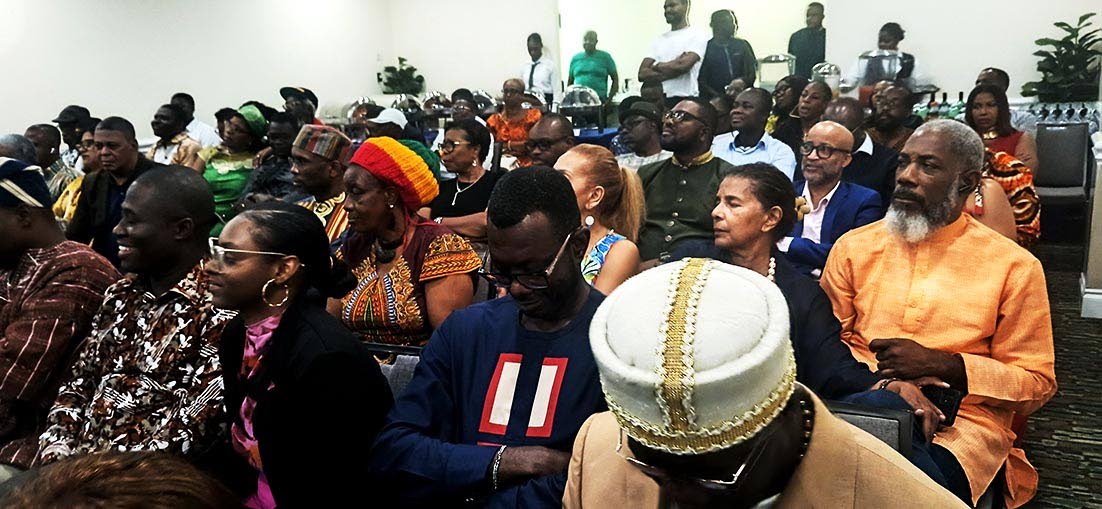 Attendees at a Ghana Association in Jamaica town‑hall meeting at the Somerset Suite of Courtleigh Hotel and Suites in New Kingston on Saturday. Photo - Photo by Paul H. Williams
-
Attendees at a Ghana Association in Jamaica town‑hall meeting at the Somerset Suite of Courtleigh Hotel and Suites in New Kingston on Saturday. Photo - Photo by Paul H. Williams
-
 King Kwasi Kyei Darkwah, special envoy to the Caribbean for Ghana’s president. Photo - Photo by Paul H. Williams
-
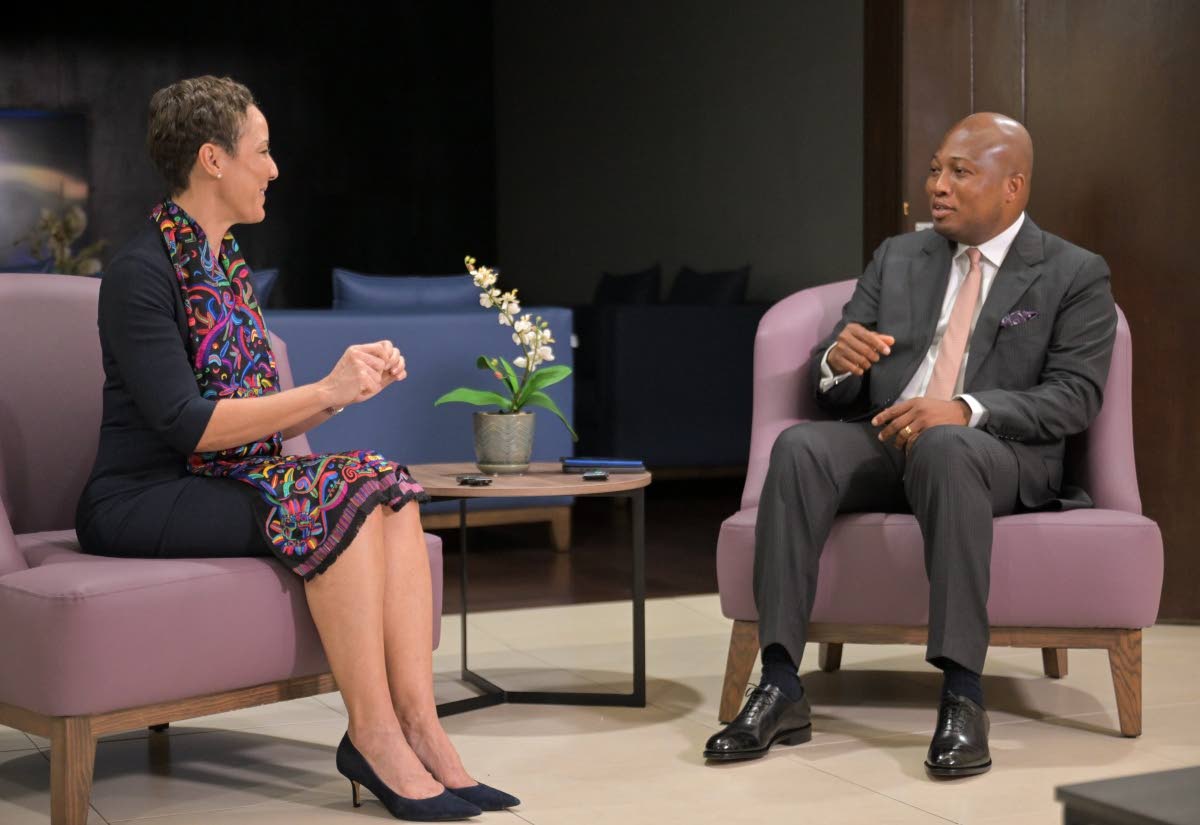 Minister of Foreign Affairs and Foreign Trade Kamina Johnson Smith (left) in conversation with Minister of Foreign Affairs of the Republic of Ghana, Samuel Okudzeto Ablakwa, following his arrival at the Norman Manley International Airport on Saturday. Photo - Contributed
Ghana has sent senior officials to Jamaica to review its hurricane-recovery assistance, encourage deployed troops and advance stalled bilateral agreements, according to the country’s foreign affairs minister, Samuel Okudzeto Ablakwa.
Ablakwa, who is leading a Ghanaian delegation to Jamaica, was addressing a town hall meeting of the Ghanaian community on Saturday evening at the Courtleigh Hotel and Suites in New Kingston. The visit includes inspections of reconstruction sites where Ghanaian soldiers are working following Hurricane Melissa and meetings with Jamaican officials.
“So, this mission is to follow up, pay a visit to the sites where the troops are working, to be with them, to communities that they have been assigned to rebuild. So, we want to spend the day with them, we want to encourage them, we want to motivate them, we want them to know how proud they have made all of us,” Ablakwa said.
The personnel in question are 54 members of the 48th Engineers Regiment of the Ghana Armed Forces, deployed to Jamaica. Their deployment followed what Ablakwa described as a “very significant intervention” by Ghana after Hurricane Melissa, which he said “was very devastating, wreaked a lot of havoc, destroyed property, destroyed infrastructure, and led to many of our compatriots being displaced”.
According to Ablakwa, the Ghanaian government moved quickly after witnessing the devastation. As a government guided by solidarity, he said, it decided without hesitation to extend assistance “to our brothers and sisters in Jamaica, and in Cuba”. President John Dramani Mahama subsequently convened an emergency meeting and ordered officials to mobilise humanitarian support.
Within a week, more than 10 million Ghanaian cedis (US$917 million) was raised with support from businesses and industry. Relief supplies — including medicines, tents, water-storage devices, construction equipment, air conditioners, rice grown in Ghana and locally produced chocolate — were assembled and shipped to the region.
The minister said Jamaica later requested additional manpower to assist with longer-term rebuilding and redevelopment. That request led to the deployment of Ghanaian engineers, an operation initially expected to last a month. “We all thought that this would be a month’s operation, but it’s turning out that it’s going to be many more months. And guess what? The reports we are receiving from the chief of army staff this year say the soldiers feel so much at home that they are not in a hurry to leave, and I have to be honest with you. My fear these days is that we might just lose them, that is, if we have not already lost them,” Ablakwa said, drawing laughter from the audience.
BILATERAL DISCUSSIONS
Beyond hurricane recovery, the visit is also intended to push forward long-standing bilateral discussions. Ablakwa said Ghana and Jamaica would seek to conclude agreements that have been under discussion for several years, including the possible recruitment of Ghanaian teachers and health workers, an issue previously raised by Minister of Foreign Affairs and Foreign Trade, Kamina Johnson Smith.
“We have not operationalised that which we all agreed in that meeting … So, we will be holding bilateral talks with our counterparts here on these outstanding issues … the recruitment of nurses, the recruitment of teachers, deepening our trade partnership, and also advancing our cultural exchange programmes,” he said.
The composition of the delegation reflects those priorities. “So, that is why you will observe that we have in our delegation experts from the health sector, experts from education, and then experts from the tourism sector … We are going to have a very impactful, meaningful and comprehensive visit here in Jamaica … And we are also really honoured that the prime minister of Jamaica … reached out and insisted that he would grant us audience so that he can directly convey appreciation from the Jamaican government to us,” Ablakwa said.
The townhall meeting also served as an update to Ghanaians in Jamaica on economic conditions back home. Ablakwa said Ghana’s economy had been in a “total shambles” when President Mahama took office just over a year ago. “If you looked at the state of the Ghanaian economy … Ghana was declared bankrupt by the time president Mohama was elected into office .. All the sovereign credit rating agencies downgraded Ghana … We were no longer able to even borrow from the international financial market … We couldn’t go to the European market,” he said.
He argued that the situation has since improved markedly. “But, in one year president Mahama has turned things around … Ghana’s economy has now overtaken Cote d’Ivoire’s … So, in West Africa now, we are the second-biggest economy after Nigeria … We have also overtaken South Africa when it comes to gold production.”
Other speakers at the event included Dr William Brown, president of the Ghanaian Association in Jamaica; King Kwasi Kyei Darkwah, the president’s special envoy to the Caribbean; and Dr Chris Narh, head of chancery at the Ghanaian embassy in Cuba, who also served as master of ceremonies. The meeting was organised in collaboration with the Ghanaian embassy in Havana.
editorial@gleanerjm.com