Urgent e‑waste disposal approved amid rebuilding push
Loading article...
-
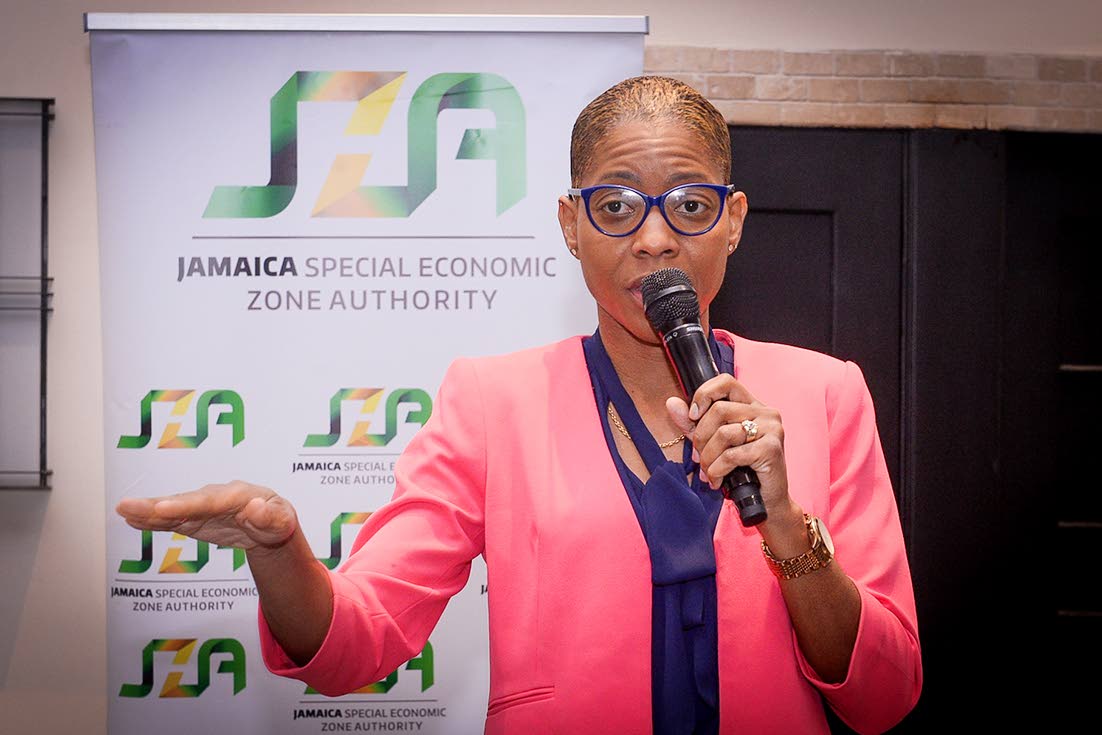 Kelli-Dawn Hamilton, chief executive officer, Jamaica Special Economic Zone Authority.
-
 Gloria Henry, vice-president of business process outsourcing and logistics at the Port Authority of Jamaica.
WESTERN BUREAU:
In the aftermath of Hurricane Melissa, which battered western Jamaica last October, the Jamaica Special Economic Zone Authority (SEZ) has moved to address a bottleneck that industry leaders say has slowed post-disaster rebuilding in the global services sector.
Kelli-Dawn Hamilton, the authority’s chief executive officer, says an urgent framework is now in place to facilitate the disposal of electronic waste, following approvals from the relevant ministries.
“What has happened since that time, through our parent ministry, Minister Aubyn Hill would have engaged with Minister Fayval Williams, and she approved an urgent disposal process,” Hamilton explained in an interview with The Gleaner. She said the new arrangement was already being rolled out. “Now there is a process in place to urgently dispose of e-waste. We heard the feedback from the industry, and we went about getting the appropriate approvals and we now have that in place,” she added.
Although no formal requests have yet been submitted, Hamilton said the authority was prepared to act quickly. “We don’t have any requests for removal of e-waste at this time, but we stand to respond as and when they come to us,” she said.
The issue was first raised publicly by Gloria Henry, vice president of business process outsourcing (BPO) and logistics at the Port Authority of Jamaica, who disclosed that reconstruction work at several global services facilities damaged during Hurricane Melissa had slowed because of difficulties in disposing of damaged computers and other electronic equipment. While the sector has shown strong signs of recovery since the Category-5 storm, she said strict and costly disposal procedures had continued to hamper rebuilding.
“We’ve had challenges in disposing of electronic waste; that process really has moved very slow and has somewhat retarded our rebuilding,” Henry said after a high-level consultation meeting with Delano Seiveright, state minister in the Ministry of Industry, Investment and Commerce, at the Montego Bay Freezone. She described the current regulatory system as especially burdensome for operators already grappling with post-disaster costs. “It’s more convoluted to get rid of waste than to bring in the equipment into Jamaica. It’s very expensive to dispose of one computer,” she added.
Electronic waste—commonly known as e-waste — includes equipment such as computers, mobile phones, printers and cabling that has reached the end of its useful life. Many such items contain hazardous materials, including lead and mercury, and pose environmental and public-health risks if improperly discarded.
EASE OF PROCESS
Acknowledging the concerns, Seiveright said the Government would look for ways to ease the process in light of the extraordinary circumstances created by the hurricane. “What we could do for sure is to consult further with our environmental authorities and see how best we can ease the process going forward, especially given the unique challenges of our post-hurricane events,” he said.
The state minister also sought to reassure stakeholders about the sector’s longer-term prospects, reiterating Jamaica’s intention to embrace technological change. “We look at AI as enhancing productivity, enhancing efficiency, and improving consistency, and we are going to ensure that AI works for us rather than against us,” he said. Addressing geopolitical pressures and protectionist policies abroad, he added: “Despite the geopolitical waves, we have a consistent focus to maintain a strong, effective industry. We want to continue to see expansion,” pointing to growth beyond traditional hubs into parishes such as Westmoreland and Manchester.
Meanwhile, Wayne Sinclair, president of the Global Services Association of Jamaica (GSAJ), said employment levels dipped slightly following the storm, largely because some workers were displaced after their homes were damaged or destroyed. The sector currently employs between 40,000 and 45,000 people, marginally below pre-hurricane figures, he noted. “That is part of the natural cycle of the industry; the direct impact on our employees as a result of Melissa has been pretty muted,” Sinclair said.
He praised workers for their determination during the recovery period, noting that many reported for duty despite prolonged power and internet outages. “We had to buy several surge protectors so people could charge their phones, but they showed up,” he said. “Persons found a way to get to work — some had to go round-about their normal transport routes, but they found their way.” Several companies, he added, continued paying staff during the disruption. “They understood the importance of showing up and providing a service to our clients,” he said.
albert.ferguson@gleanerjm.com