Sean Major-Campbell | Praying for Cuba
Loading article...
-
 Niala Gonzalez, a cancer patient, is kissed by her mother at the National Institute of Oncology and Radiology in Havana, Cuba, Friday, February 20, 2026.
-
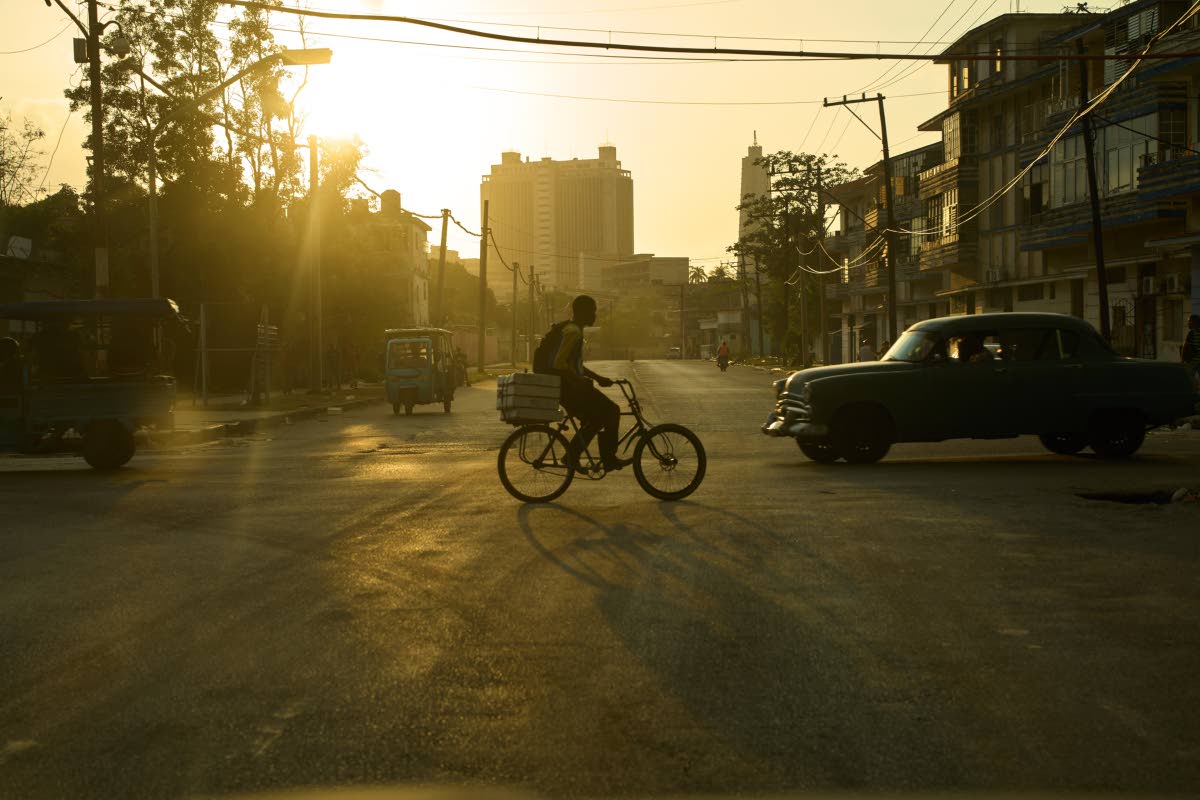 A man rides his bicycle at sunset in Havana, Wednesday, Feb. 18, 2026.
-

This Lenten time provides us with yet another opportunity to continue in a spirit of praying, fasting, and giving for our Caribbean region amid geopolitical dynamics and attendant threats to peace and stability. At the heart of our Christian witness, what might this mean for our neighbour, Cuba? A neighbour that has reached out in compassion to others over the years.
Are we able to hear Jesus presenting Cuba as being among the least of these? A nation that faces ongoing economic hardship, increasing fuel crisis, food shortage, sanitation and health crises as attendant factors for the most politically and economically isolated nation in the Western Hemisphere. How will Caribbean theology process the ongoing Cuban crisis as CARICOM seeks to grapple with humanitarian concerns for our neighbour?
The recent statement by former CARICOM leaders reflects the heart of a Caribbean tradition grounded in Christian ethical thinking. Take, for example, this excerpt: “ We advocate the imperative of repealing immediately any decree that will result in an unprecedented humanitarian crisis in Cuba and undermine the tenets of international law.”
Note words that are consistent with the worthy values of brotherhood and peace. Former Prime Ministers PJ Patterson and Bruce Golding also share in this support for Cuba. “ The foundation of the Caribbean Community rests on the right of each sovereign state to promote regional solidarity and advance comprehensive cooperation between all Caribbean states. The Caricom tradition of solidarity and the exercise of the right to enter and pursue beneficial programmes within our regional geographic space have proven invaluable and worthy of perpetuation.”
How many church members and leaders would be willing to affirm this truth? “ We believe that the Caribbean Citizenry will support any decision by our Leaders to render tangible material support to our brothers and sisters in Cuba at this time of need.”
Prime Minister Andrew Holness, addressing the Heads of Government Summit in St Kitts-Nevis, said, “Friends, we must address the situation in Cuba with clarity and courage. Cuba is our Caribbean neighbour. Its doctors and teachers have served across our region. Its people are part of our shared history. But today, the Cuban people face severe economic hardship, energy shortages, and a growing humanitarian strain. Jamaica is sensitive to the struggles of the Cuban people.”
What might clarity and courage look and sound like for us this Lenten season? Might the church community across the Caribbean become more vocal in prayerfully uniting in advocacy for peace? Would we, for example, consider a Caribbean day of fasting and prayer and advocacy for peace and justice specifically for Cuba?
Too often we see Caribbean folk caught up with the religious culture wars of the north, which have been used to divide us and take attention away from evil powers and wickedness in high places. We are yet to see how these supposedly conservative versus liberal quarrels often rob us of unity in the quest for righteousness, peace, and love. The work of social justice suffers, and the weakest bear the weight of suffering and oppression.
It is a Christian scandal when many Christians in the west are singing about drinking from their saucer because their cup has overflowed when we have brothers and sisters in Cuba and Haiti who are facing extreme poverty, hunger, and starvation! It is disgusting to hear the many who parade how blessed and highly favoured they are while being oblivious to the plight of our closest Caribbean neighbours. O that we would use Lent to return to being followers of Jesus Christ.
In these challenging times, the Church in many places on this second Sunday in Lent will use Psalm 121. The well-known opening verses state: “ I lift up my eyes to the hills; from where is my help to come? My help comes from the Lord, the maker of heaven and earth.”
The psalmist from a position of faith leans on God for help and protection. In times of great challenge and stress, the soul turns to a higher power for relief and confidence that all will be well. The emerging new world order is in full swing. Nations and people across the globe are meeting the reality of some of the most unprecedented changes since World War II. Life changes for millions will be more than they ever anticipated in their lifetime.
Children born in 2026 will see a world we never knew in our teens. How will they process matters of religious faith? How are we processing matters of religious faith today? Where is God in all of this?
It may be problematic and somewhat challenging when we limit ourselves to the notion that God allows all that is happening. This argument regarding the permissive will of God as opposed to the perfect will of God is problematic when the user of the argument resorts to complacency with a passive approach to oppressive and unjust structures in society. When Moses saw how his people were being oppressed by Pharoah, he did not just accept it as the permissive will of God. He saw that God also wanted prosperity for his people, too. Hence his willingness to be the advocate for freedom as he represented Yahweh’s call, “Let my people go.”
It is against the background of faith that Christians also claim with the psalmist a dependence on divine will for safety and protection. Psalm 121 ends with the ever-beautiful words: “ The Lord shall preserve you from all evil; it is he who shall keep you safe.
The Lord shall watch over your going out and your coming in, from this time forth for evermore.”
Fr Sean Major-Campbell is an Anglican priest and advocate for human rights and dignity. Please send feedback to columns@gleanerjm.com and seanmajorcampbell@yahoo.com.