STILL IN LIMBO
Loading article...
-
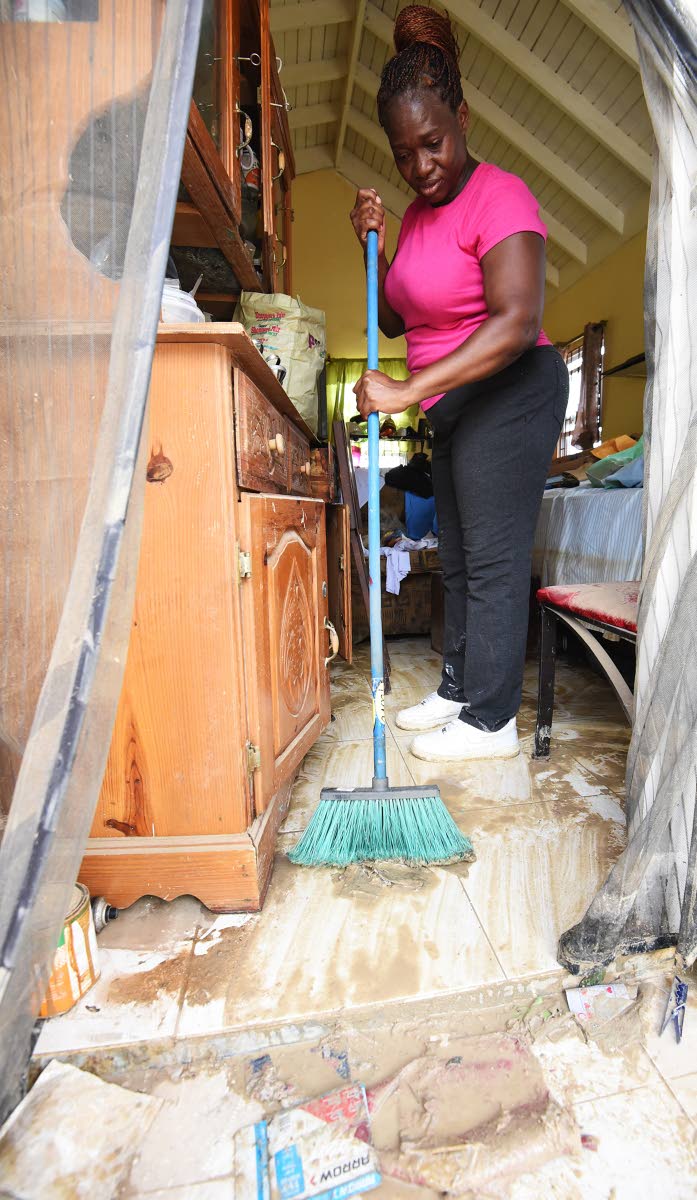 Aneita Williams cleaning mud from her house in The Estuary, a housing development in Friendship, St James, after the passage of Hurricane Melissa last October. Now displaced and given temporary accommodation by the NHT, she does not wish to return to her original unit, adding flooding is a recurring problem and that she remains traumatised by the Melissa experience.
-
 A section of Estuary in St James.
-
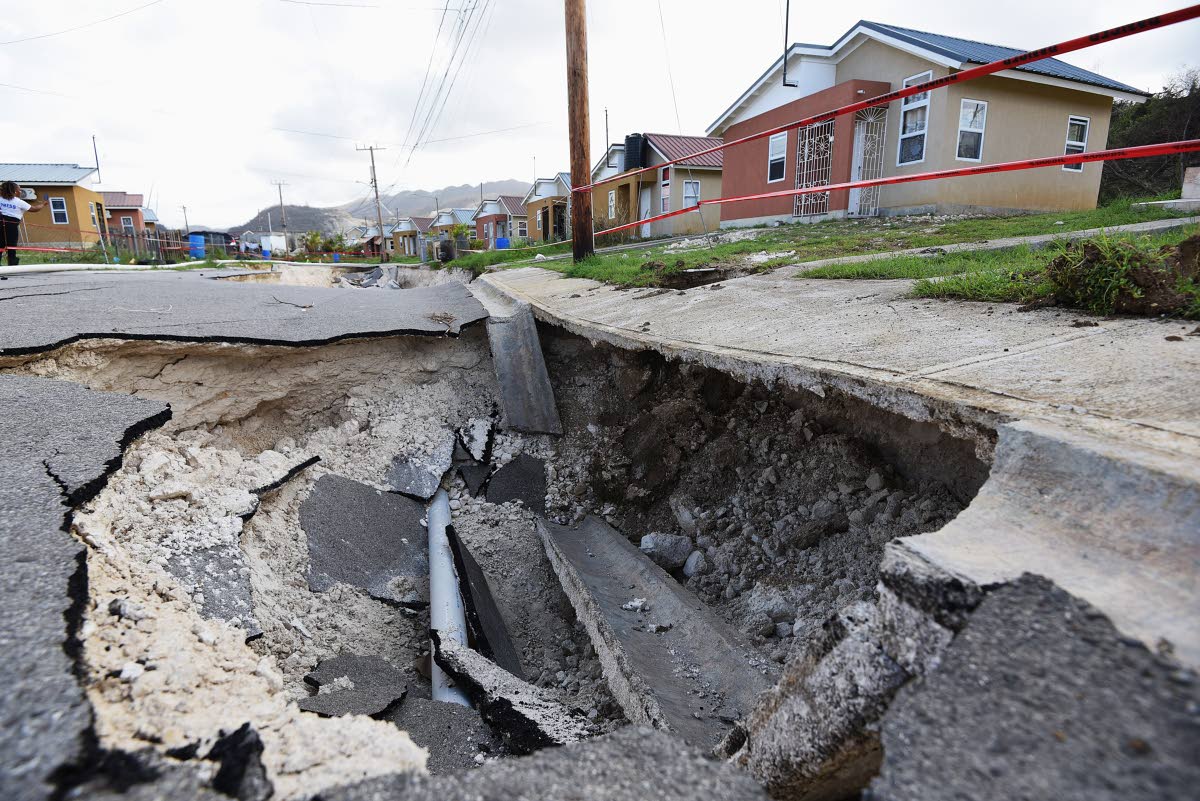 The collapsed roadway in Phase 2 of The Estuary as seen on November 6, 2025. Homeowner Ian White believes the collapse had a role to play in the flooding as it disrupted the channel taking the water away from the area.
-
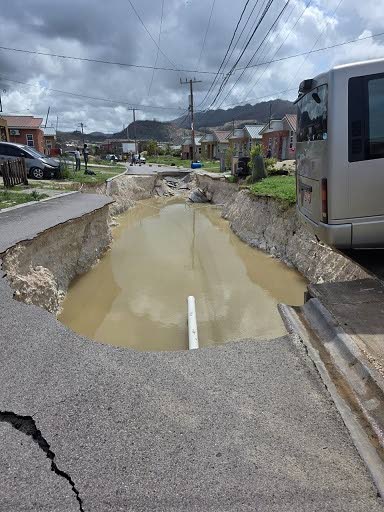 This damaged road in Estuary, St James, was a chilling sight a day after the hurricane passed through.
-
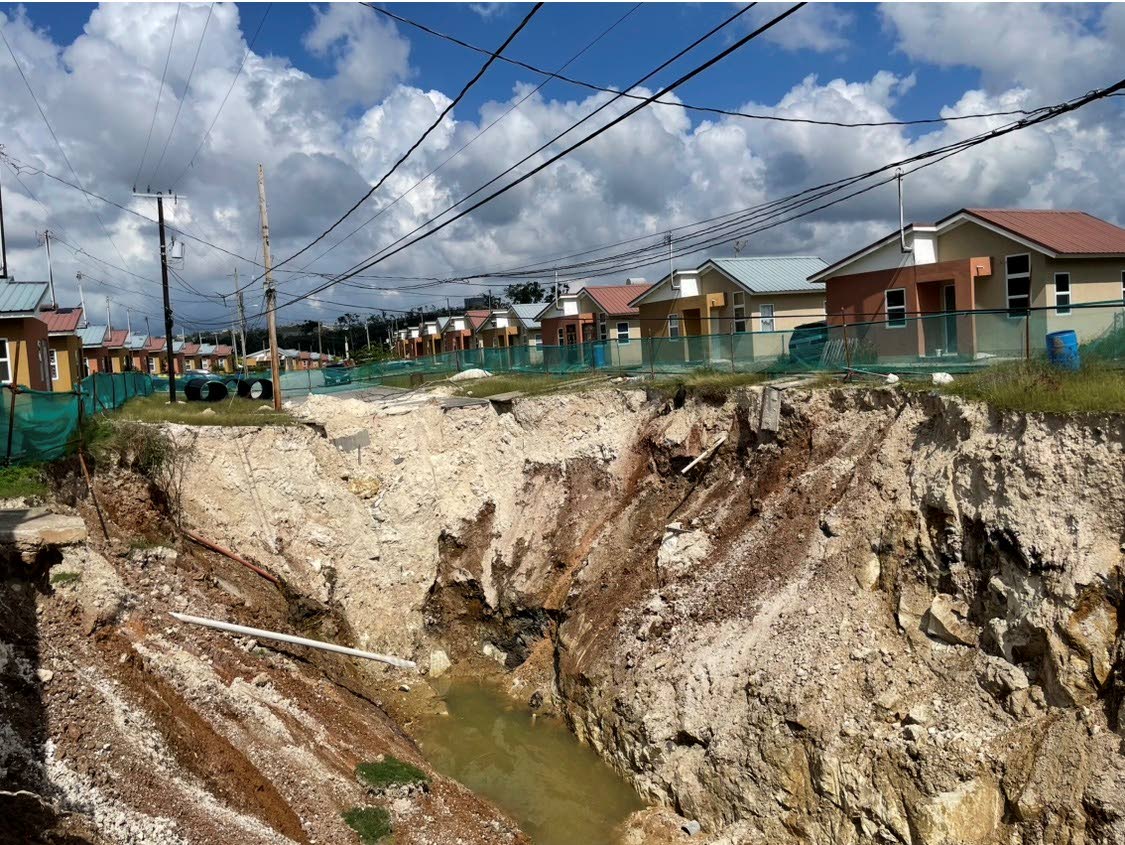 The deep pit initially caused by land caving in at The Estuary housing scheme, in St James.
Four months after Hurricane Melissa sent floodwaters surging through sections of Phase 2 of The Estuary in Friendship, St James, several homeowners say they remain burdened with loss, displacement, and uncertainty as they await word on whether they will be allowed to return home.
Residents contend that the flooding was exacerbated when a section of roadway collapsed, obstructing a primary drainage channel. Homes were left waterlogged, furniture destroyed, and mould spreading throughout interiors. Several families were forced out and left traumatised.
The National Housing Trust (NHT), which developed the project in partnership with WIHCON Limited, has provided financial support and three months of temporary accommodation to affected homeowners, many of whom purchased their properties less than five years ago. However, some residents argue that communication has been uneven and that a permanent solution remains unclear.
Ian White, who lived in the impacted area with his three children, said the house represented more than just a roof over their heads.
“That was the first house I owned that I was living in at the time,” he said. “I really loved it.”
When the floodwaters receded, White said, the extensive interior damage was revealed. Kitchen counters were ruined, furniture soaked beyond repair, drywall compromised, and mould had spread across walls and closets.
“In order for us to live comfortably again, they had to find somewhere to put us,” he said.
White has since been offered a temporary unit in Estuary Meadows but has yet to move in fully as he awaits replacement furnishings under the NHT’s Contents Assistance Programme. For now, he has been staying with friends.
“It’s very hard,” he admitted.
He explained that despite occasional financial challenges, there had been comfort in knowing he had his own space.
“Losing everything feels like starting all over again,” White told The Sunday Gleaner.
Even so, he said the NHT has listened to his concerns and he remains hopeful that an agreeable resolution can be reached.
When The Sunday Gleaner spoke with him last Wednesday, White was painting the temporary unit. He described the new location as markedly different from the calm surroundings he had enjoyed in Phase 2.
“Over by Phase 2, it is so peaceful and quiet. This side is busy, bikes riding up and down,” he said.
White believes the flooding stemmed from the road collapse near the development.
“From my experience, the road caved in, blocked the drain that takes away the water,” he explained. “The pipe they were using for the drainage system is a big plastic pipe. When the road sank, it blocked the channel. So the water couldn’t get out, and it flowed back to the pond, causing the rainfall to flood the scheme.”
Hesitant about returning
Although some residents remain hesitant about returning, White said he would consider it if the drainage and roadway issues are resolved.
“If they fix the breakaway and the drainage system, I have no problem going back,” he said. “But some persons are really scared of another flood because of their previous experience.”
He also questioned the $5,000 monthly rental charge associated with temporary relocation.
“I don’t think they should be charging us. It’s not our fault,” White said, noting that while a mortgage moratorium has been granted, payments are deferred rather than forgiven.
“In the meantime, I’m just working with them for now. I’m looking and praying that they come up with some solution,” he added.
Another homeowner, firefighter Nicolette Jarrett, declined relocation and returned to her family home in Hanover while awaiting clarity.
“I am more interested in the permanent fix than a relocation right now,” she told The Sunday Gleaner.
Jarrett said she was among the first to receive keys to Phase 2 after earlier allocations in Phase 1 were rearranged. Having lived there since 2021–2022, she has invested significantly in upgrading her one-bedroom unit.
“I am about 80 per cent complete with additions to the box,” she said, explaining that she extended the back of the house to add bedrooms. “My case is kind of special because I don’t know what will happen to what I’ve done if we have to permanently relocate.”
Construction has since been halted.
“My construction is paused because I don’t know if I will have to move permanently,” she said. “Every time we ask for an update, we hear ‘next week’ about the engineer’s report.”
Residents feeling abandoned
Jarrett said the uncertainty has left residents feeling abandoned.
“We are still in limbo. We are paying mortgage; we didn’t beg for these units, we bought them,” she said. “For this to happen and all our furniture gone, it’s like they’re taking forever.”
She also raised concerns about inconsistent communication and the requirement for some relocated residents to purchase water for installed tanks.
“If 10 of us go there, 10 of us get 10 different answers,” she said. “At least keep us informed.”
Jarrett said she is dissatisfied with the NHT response and believes the agency is not acting with urgency.
“I believe NHT is just dragging us along. I don’t think there’s any urgency for a fix. They offer this, they offer that, but there’s a lot of red tape,” she said, noting she has not heard anything about peril insurance or the Hurricane Melissa grants being offered by the NHT.
“It’s just taking too long. Even if it is taking long, if we were given frequent updates, we could at least hold on to that. To know they’re telling us something. I know the process is ongoing, but give us some explanation.”
“I don’t believe they’re moving quickly enough to even try to appease us a little. Sometimes we wonder what’s happening and have to ask each other, did anybody hear anything? Has anybody gotten feedback? That’s not acceptable.”
Another homeowner, Aneita Williams, who was among several residents rescued from the floods by White, also described ongoing challenges.
Rotated her stay
among friends
Although she received her temporary unit last December, she has struggled to get electricity connected and said the water supply remains an issue in the newer section of the scheme. Since the hurricane, she has rotated her stay among friends.
“They promised to give us money to buy furniture, but we’re still waiting. Even if the electricity comes on, I have no fridge or stove yet, so I’ll have to wait until the funds arrive before I can fully settle in,” she said.
Williams said she does not wish to return to her original unit, describing the flooding as a recurring problem and admitting she remains traumatised by the experience. She added that if offered a new unit, it would have to be at the same price she originally paid. Like other residents, she expressed frustration with communication from the NHT but is preparing to occupy the temporary unit while awaiting a resolution.
“Initially, I was starting to get stressed, but I realised it was a blessing and not a curse. The rain is falling, and I’m not getting wet. We had a cold front, and I was warm, and I am grateful for that,” she said.
“This is not a good situation for people. We just hope it doesn’t take forever,” Williams said.
In response, Donovan Evans, regional manager at the NHT St James branch, said approximately 35 residents were affected. About 20 accepted relocation offers, while others declined.
Evans said two forms of assistance are available: a contents grant of up to $1.5 million to replace lost furniture and appliances, and a regular grant of $500,000 for structural repairs such as roofing, cupboards, and doors.
He clarified that while a $5,000 monthly rental provision forms part of the legal arrangement, it is “not being enforced”, and grant funds will be transferred directly to residents’ accounts.
The engineer’s report, which will determine whether the affected section of Phase 2 is safe for occupancy, is expected by mid-March or earlier, Evans said. If deemed unsuitable, permanent relocation will be pursued.
He added that issues at temporary units, including mould, are being addressed “expeditiously”, water tanks have been installed where piped supply is absent, and the damaged roadway is being repaired by the contractor.
Responding to complaints about the pace of the agency’s response, Evans said, “We offer relocation, make the units available, provide water, and have reached out to JPS (Jamaica Public Service Company) to ensure power. I am not sure what they mean when they say we are not moving fast enough.”
tanesha.mundle@gleanerjm.com