Where faith meets forensics
Loading article...
-
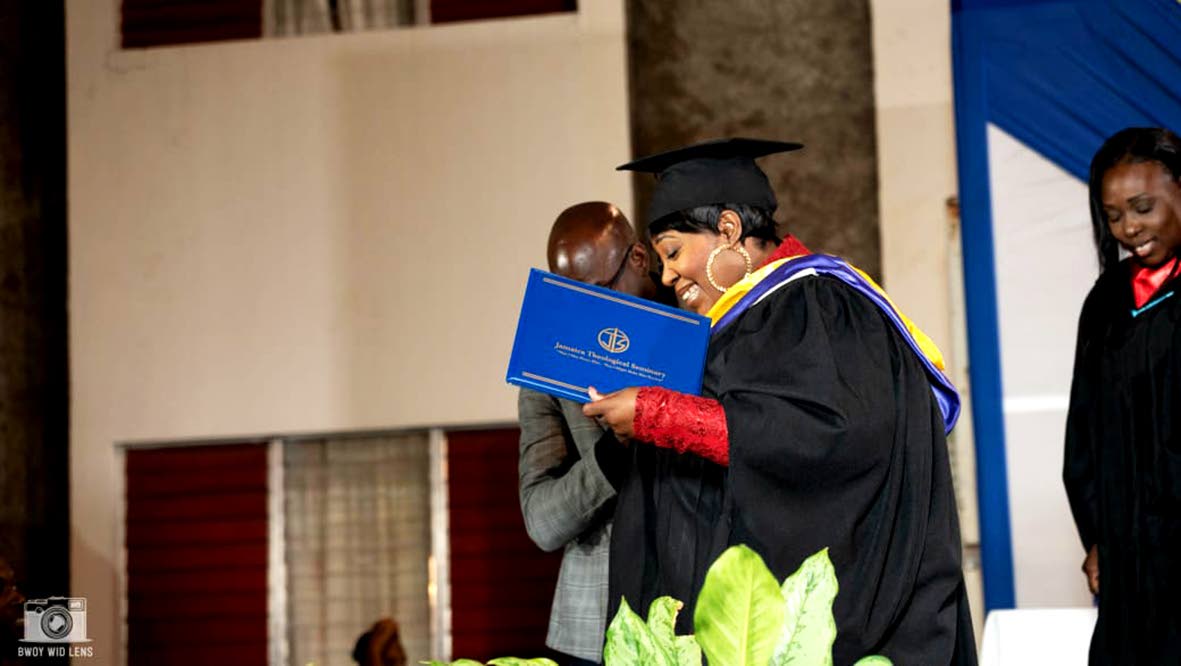 Detective Inspector Pilmar Powell, after receiving her master’s in forensic psychology.
-
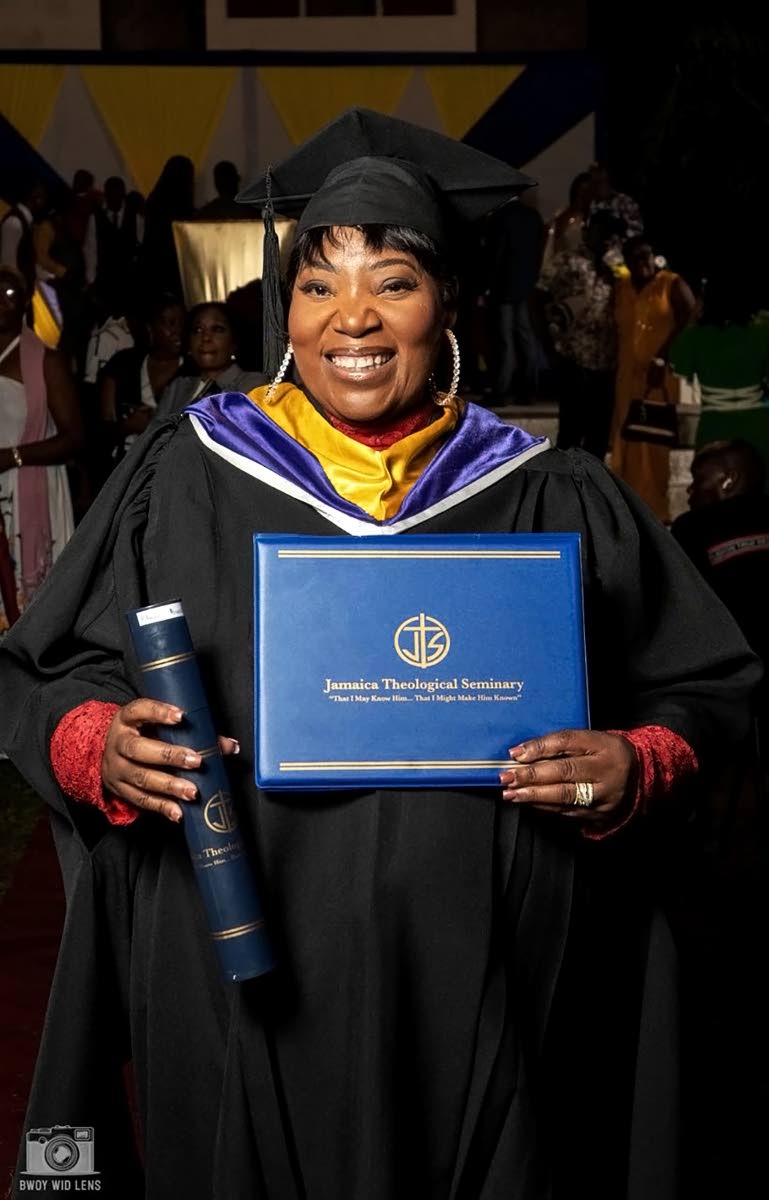 left: Detective Inspector Pilmar Powell, upon receiving her master’s in forensic psychology.
When Detective Inspector Pilmar Powell joined the Jamaica Constabulary Force (JCF) on July 15, 1995, she did not envision a life spent probing the complexities of the criminal mind. In fact, policing was not her first ambition.
Born in Kingston to industrial nurse Lonie Thomas and Clembert Powell, a commandant in the Island Special Constabulary Force before its 1998 amalgamation with the JCF, law enforcement was part of her environment but not necessarily her calling. Friends, however, encouraged her to sit the police entrance test, a suggestion that would chart the course of her career.
Powell began her service performing court duties, station duties and beat patrol. Her mother had hoped she would work with children, prompting her to request a placement at the Family Court after graduating from training with the Island Special Constabulary Force as it was.
But the trajectory of her career soon shifted as her diligence and commitment on the job, coupled with a growing knowledge of law enforcement, led to her placement in the Criminal Investigations Branch when the two forces merged.
There, the realities of crime ignited a deeper curiosity.
“I was curious and I wanted to know why people behave the way they do, so I sought higher learning to help me to understand,” Powell explained.
Her academic journey began with a University of the West Indies Extra Mural course in supervisory management in 1996, followed by a diploma in paralegal studies with a major in criminology.
“Dealing with so many criminal cases I became even more fascinated, and I realised that my investigative skills were extraordinary, still pondering about criminal behaviours and what mindset contributed to acting out these behaviours,” she said.
That curiosity eventually expanded beyond traditional investigative methods.
“This led me to combined pastoral studies with criminology, because, in my mind, there was a distinct link between divine intervention and the transformation that can occurred in one’s life when God intervenes, so I wanted to change lives as a pastor also,” Powell said.
“I was more convince when I saw the goodness of God in my life, and I know it could be replicated in others,” she continued.
Encouraged by a professor at the Jamaica Theological Seminary, Powell pursued a Bachelor’s degree in Social and Professional Transformation, a multidisciplinary programme combining theology, psychology, sociology and criminology.
The knowledge she gained enabled her to write several training proposals, including one on special investigations and a police first responder mental health training programme, introduced three years ago.
Powell believes understanding human behaviour requires both spiritual and scientific insight.
“The knowledge that people have issues of varied kinds, don’t matter their social status, is critical in understanding some form of behaviours,” she noted.
Her pursuit of deeper understanding led her to complete a Master’s degree in Forensic Psychology at the Jamaica Theological Seminary.
“This took me to a realm of understanding, because I was exposed to how sections of the brain function in a way that influence behaviours; this study is very important to me because this is where the law meets science,” she said.
Her work has already left a mark. Powell established the mental health desk in the St Catherine South Police Division, which gathers data on individuals with mental illness and liaises with the Ministry of Health and Wellness. She has also convened seminars to train police as mental health first responders.
Now she is working to establish a support desk for families caring for relatives with mental illness.
“This is significant, because we recognised that family members who are caring for persons with mental issues become depress as well.”
Beyond policing, Powell also runs a prison ministry, offering spiritual guidance to inmates – a reflection of her enduring belief that faith and science can work together to transform lives.
ruddy.mathison@gleanerjm.com