NSSC calls for greater student safety following violent school incidents
Loading article...
-
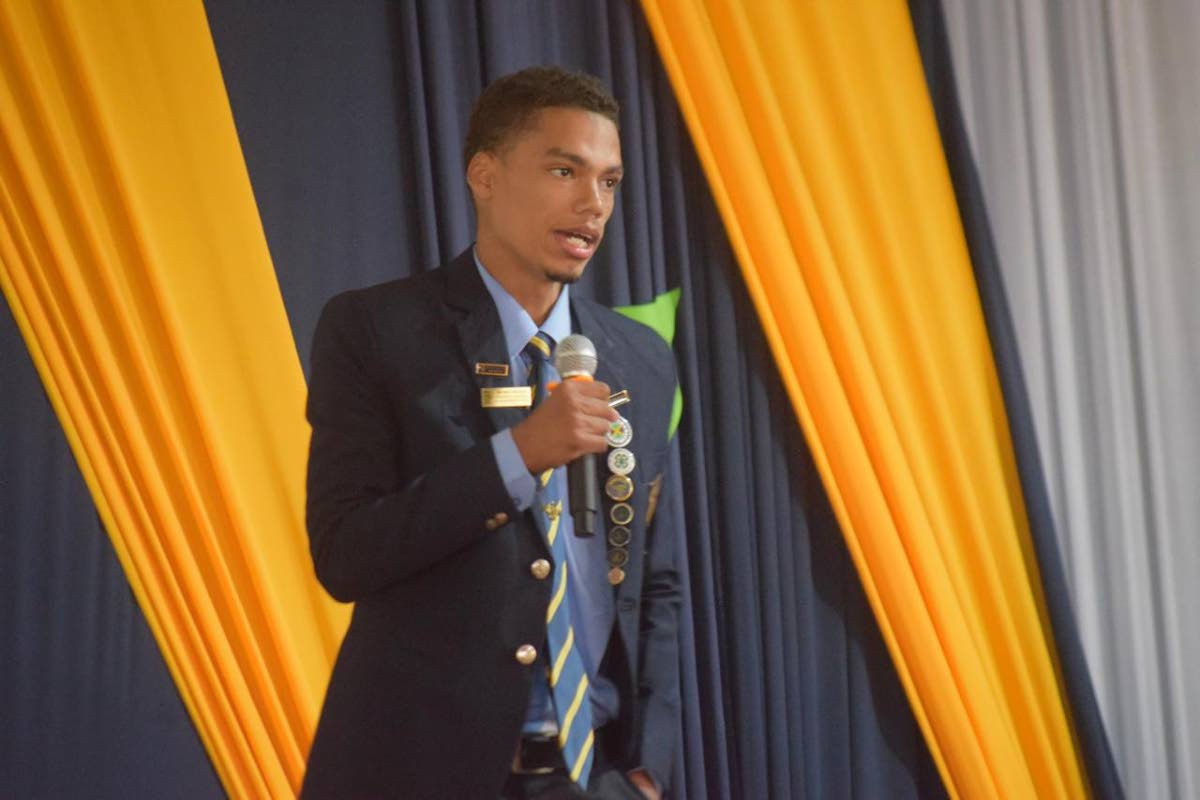 Brian Anderson, president of the National Secondary Students’ Council. Photo - Contributed
-
Brian Anderson, president of the National Secondary Students’ Council. Photo - Contributed
-
 Sharain Henry, vice president of the National Secondary Students’ Council with responsibility for the Ministry of Education’s Region 3. Photo - Contributed
WESTERN BUREAU:
In the wake of two violent incidents involving students in St Ann earlier this month, the National Secondary Students’ Council (NSSC) is urging the expansion of anti-violence campaigns and mental-health support across schools. The council argues that a stronger, more coordinated approach is needed to improve student safety and security.
NSSC President Brian Anderson said that protecting Jamaica’s young people requires a collective effort – one in which students themselves must be active participants.
“Protecting young people is a shared responsibility that our parents, educators, policymakers, and students themselves play a critical role in achieving. We must work together to build environments where safety is assured,” Anderson said in a media release.
He encouraged students who witness or experience violence to report it promptly. “We encourage any student experiencing or witnessing violence to report it to a trusted adult, any relevant authority, or even a member of the NSSC. When violence begins to shape the lives of our young people, the consequences can have an effect that lasts for generations,” he added.
The council’s renewed call follows two serious cases of school violence in St Ann. On March 4, Devonie Shearer, 16, a student at Ocho Rios High School, was struck in the head with a metal chair during a dispute with a 17-year-old schoolmate. Shearer later died in hospital, and the older student has since been charged with murder.
Two weeks later, on March 18, a 12-year-old student at Aabuthnott Gallimore High School was hospitalised after being hit in the head with a metal chair in a fight with a 13-year-old classmate. The older boy was subsequently taken into custody.
Sharain Henry, the NSSC’s vice president responsible for the Ministry of Education’s Region Three, said the incidents point to deeper issues surrounding students’ ability to manage conflict and stress.
“In Region Three, we are not only facing incidents of violence, but these incidents also point to a deeper issue of how students respond to pressure, conflict, and emotions. Many of our students are navigating academic stress, personal challenges, and peer influence, and without the right support, these pressures can manifest in harmful ways,” said Henry.
She noted that anti-violence seminars and similar initiatives offer students structured spaces to articulate their emotions and learn healthier alternatives. “This is why initiatives such as anti-violence campaigns and seminars are so important, as they create safe spaces for students to express themselves, be heard, and find positive alternatives to violence. The goal for the future should be not just to reduce incidents, but to foster a school culture that promotes understanding, respect, and emotional wellbeing,” Henry added.
Efforts to curb school-based violence have been widening. In February, the Fi We Children Foundation launched the second year of its ‘Mek Wi Reason: ADR in Schools’ project, which aims to equip students with alternative dispute-resolution and peer-mediation skills. The initiative has targeted Tarrant High School and Charlie Smith High School, two inner-city institutions in Kingston.
The Government has also signalled concern. In May 2024, Prime Minister Andrew Holness called for a reassessment of security risks across schools following a series of violent incidents, including the fatal stabbing of Akeilia White, a student of the Catholic College of Mandeville, by a schoolmate on May 13, 2024.