Authorities say Wag Water River works pose no risk to key St Mary bridge
Loading article...
-
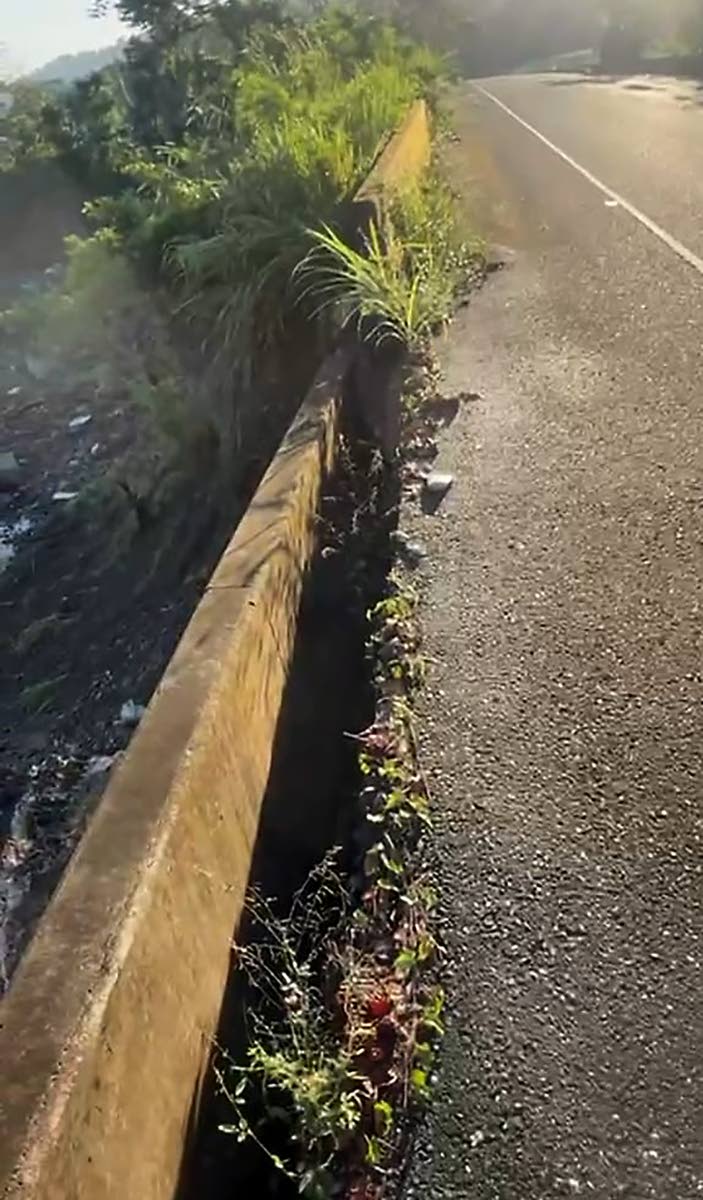 A wall on the approach to the bridge breaking away from the road surface. Photo - Contributed
-
A wall on the approach to the bridge breaking away from the road surface. Photo - Contributed
-
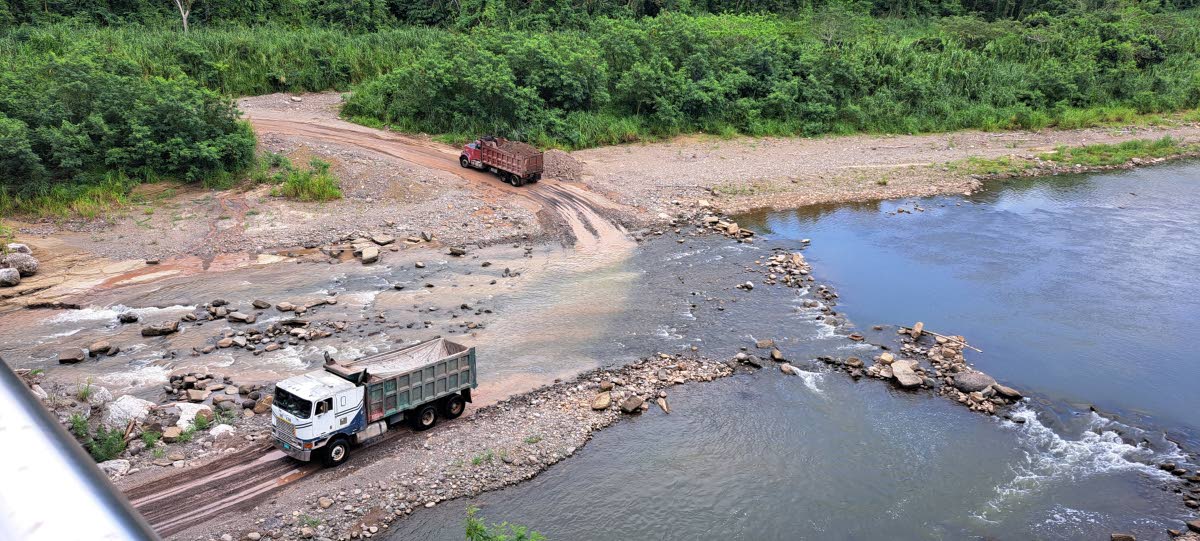 Activity along the Wag Water River just below the Westmoreland Bridge in St Mary. Photo - Photo by Gareth Davis Sr
The National Works Agency (NWA) and the Mines and Geology Division have moved to allay public concern that recent activity along the Wag Water River is putting the Westmoreland Bridge in St Mary at risk, insisting that the structure remains safe and that no mining is taking place near it.
“The bridge is safe and is not in any danger,” Stephen Shaw, manager for communication and customer services at the NWA, told The Gleaner yesterday, amid unease among residents following heavy rains.
Residents had raised alarm over what they believed to be mining activity near the 180-metre bridge, which spans the Wag Water River and links Highgate, Bromley and Lewis Store to Annotto Bay and Kingston. Shaw said, however, that the work in question forms part of river-management operations being carried out by the agency.
The activity, he explained, relates to “confluence in the Wag Water River that was heavily silted and is being cleared”, with the aim of improving water flow and reducing the risk of erosion and flooding.
That account is supported by the Mines and Geology Division, which has maintained that the works residents are describing as mining are, in fact, restorative measures undertaken by the NWA.
Commissioner of Mines Roy Nicholson said his office had received reports of alleged mining along the Wag Water River but found that no licensed mining is occurring within 300 metres of the bridge.
IMPACT EVIDENT
According to Nicholson, the visible works are intended to prevent erosion, limit flooding and maintain the river’s natural course.
He added that Jamaica Aggregate is the only company licensed to conduct mining operations along the Wag Water River and that such activity is not occurring in the bridge’s immediate vicinity.
Despite the assurances, residents say the impact of the works – whatever they are called – is already evident.
One resident, Oniel Bell, who supplied photographs showing what he described as damage near the bridge, warned that any failure would result in significant disruption. If the bridge were damaged or collapsed, he said traffic would have to be rerouted from the Annotto Bay end through Grande Hole, some nine to 10 miles away, along the Junction corridor and then to Highgate, adding another 10 miles or more.
“This is a fairly new bridge, which was constructed less than 15 years ago, as the previous structure was damaged during the passage of a hurricane. The approach to the bridge is collapsing and this will only get worse if they continue to mine in that area,” he said, expressing concern.
The concerns have prompted intervention from the member of parliament for St Mary South Eastern, Christopher Brown, who said his office has been inundated with calls from constituents.
Brown said he has shared the concerns with the NWA.
He also wants the works happening in the vicinity of the bridge to be paused to allow engineers to fully assess the condition of the structure.
Nicholson reiterated, however, that the NWA’s work is limited to correcting a stream flowing through a nearby gully, where garbage and debris are being washed into the river, posing the risk of blockages or diversion of the watercourse. The objective, he said, is soil stabilisation and flood mitigation rather than extraction for commercial purposes.
Completed in August 2013 at a cost of US$18 million, the Westmoreland Bridge replaced a previous structure destroyed during Hurricane Gustav in 2008. Part of the Junction Road corridor, it serves communities including Highgate, Richmond and Clanmel and remains the longest bridge in St Mary.
gareth.davis@gleanerjm.com