Sykes backs ‘multi‑door’ courts, mediation reform
Loading article...
-
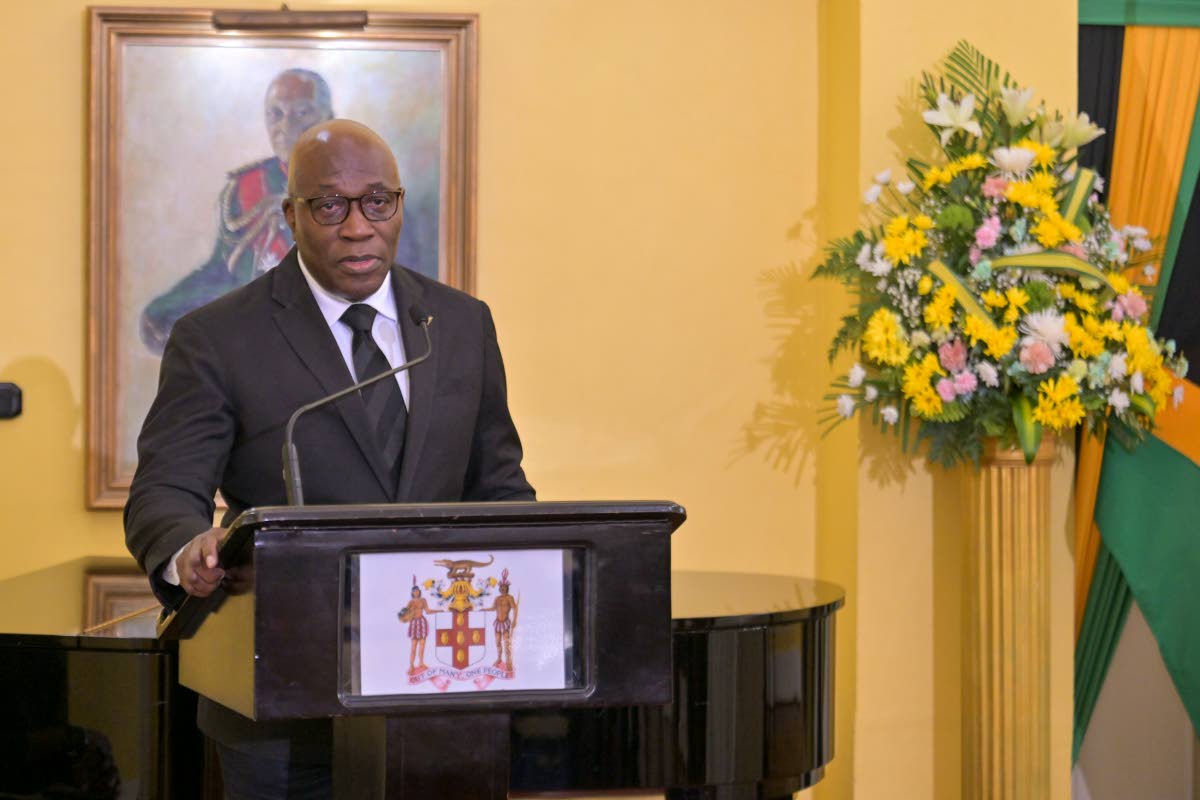 Chief Justice Bryan Sykes
-
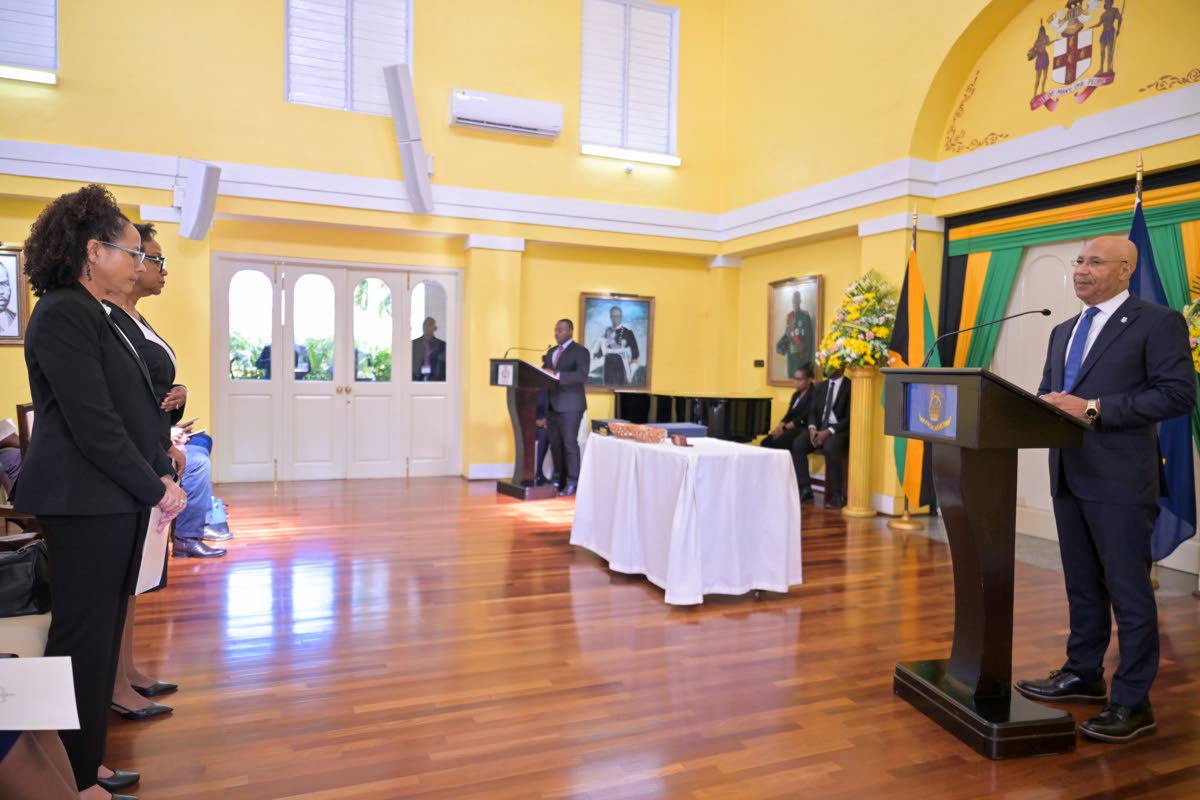 Governor General Sir Patrick Allen (right) administers the oath of allegiance and the judicial oath to Acting Judges of Appeal Justice Carolyn Tie-Powell (left) and Justice Lorna Shelly-Williams, during a swearing-in ceremony at King’s House in St Andrew, last Thursday.
Members of the judiciary are being urged to rethink the role of the courts, shifting away from a litigation-heavy culture towards one that privileges mediation and swift, proportionate resolution of disputes.
“While we are improving clearance rates, it is clear that there needs to be much more settlements on the civil side and plea bargaining on the criminal side. If we are to deliver timely justice, we must embrace a broader judicial mandate, one that includes, not only adjudication but resolution,” said Chief Justice Bryan Sykes.
He was speaking at last week’s swearing-in ceremony at King’s House, where eight new members of the judiciary took office.
The chief justice argued that a court system focused solely on adjudication is no longer sufficient to meet the demands of modern justice. While the authority to hear and determine cases remains indispensable, he said, the judiciary must evolve into what he described as a “multi door courthouse”.
“I speak, not only about the honour of judicial office but about its evolution that has brought about the need for courts to shift from being purely adjudicative bodies to becoming multi-door courthouses where dispute resolution is strategic, efficient, and enhancing justice,” he said.
APPROPRIATE DISPUTE RESOLUTION
Justice Sykes painted a stark picture of the current legal landscape, warning that litigation is frequently weaponised by those with deep pockets to “squeeze the economic life out of their opponents”. To counter this imbalance, he pointed to the principles of “appropriate dispute resolution” and highlighted the forthcoming implementation in Jamaica of the Singapore Convention on Mediation.
The convention, he noted, affirms that properly conducted mediated settlements merit recognition, enforcement, and legitimacy across borders. It is anchored in five guiding principles that he urged the newly appointed judges to embrace: party autonomy, efficiency and proportionality, judicial stewardship, integrity, and accessibility.
“At the heart of mediation is the recognition that those closest to a dispute are often best positioned to resolve it. As judges, we must respect and facilitate that autonomy, not by abdicating our roles but by guiding parties towards constructive engagement where appropriate,” he said.
To underscore the point, the chief justice recounted a case that had lingered in the Supreme Court for six years, mired in dense legal argument, before being swiftly resolved once it emerged that the claimant merely sought an apology.
“The apology was given in chambers. It was also done publicly, and the matter ended just by asking, ‘what do you want from all of this?’. So those are the things we have to keep in mind… that the parties know what they want and what they expect… so ask them,” he said.
Efficiency, he stressed, demands discernment. Not every dispute warrants a full trial, and judges “must be discerning in how judicial time and resources are deployed”. He added that the bench should engage more actively in judge-led dispute resolution by identifying opportunities for settlement, encouraging alternative mechanisms, and, where appropriate, facilitating the process themselves.
Integrity remains central, he said. Judges must model fairness, confidentiality, and good faith, ensuring that any process they endorse commands public confidence. He also highlighted accessibility as a defining concern, arguing that mediation offers a less intimidating, more affordable, and more responsive path for many litigants.
“I think the time has come when we have to think of litigation as the last resort, particularly when you are dealing with small and medium-sized businesses. Many of our citizens simply don’t have the means to engage in long, protracted litigation at any level,” he said.
Ultimately, Justice Sykes argued, both the judiciary and the wider society must cultivate a culture in which resolution is not seen as capitulation but celebrated as success. He closed by urging the new judges to adopt a growth mindset and to see their roles expansively.
“As you take your oath, I invite you to see yourselves, not only as judges of the law but architects of resolution. Embrace a judicial philosophy that is forward-looking, forward-thinking, responsive, and deeply committed to the effective administration of justice,” he said.