Fuel fallout
Loading article...
-
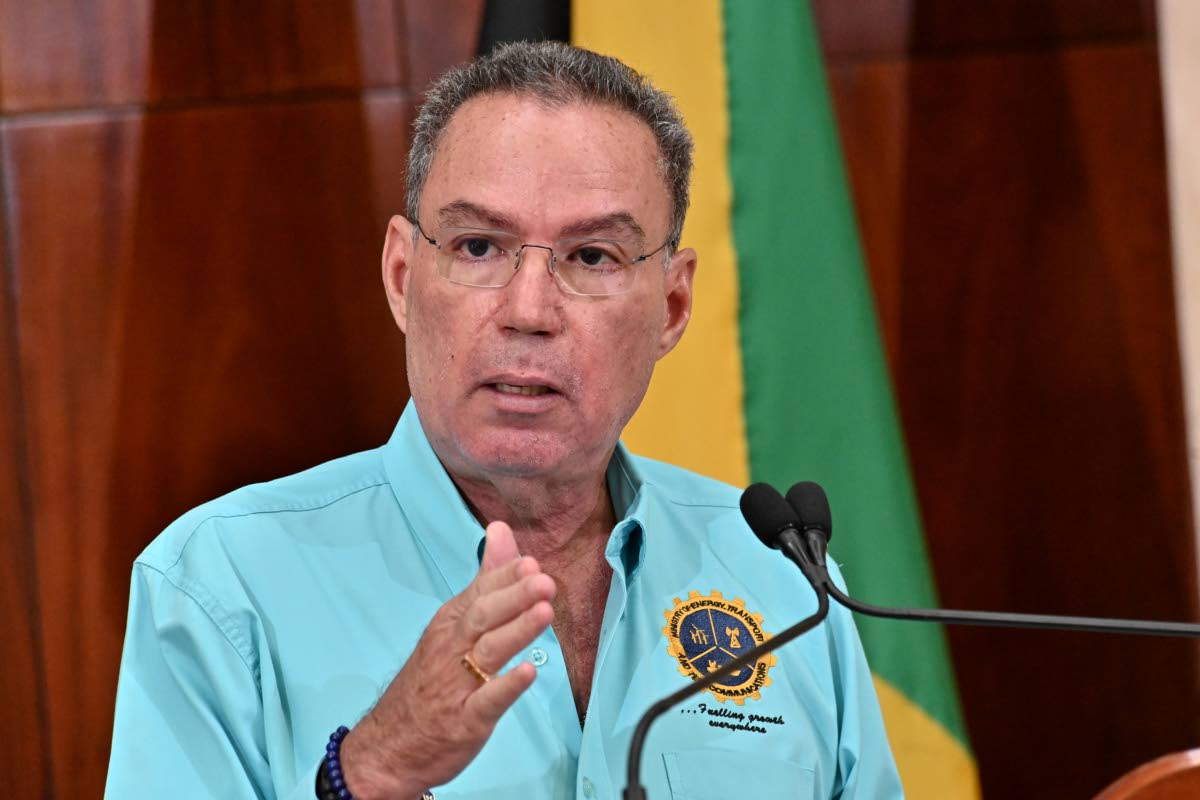 Daryl Vaz, minister of energy, transport and telecommunications.
-
 Keenan Falconer, economist with the UN Jamaican Economy Panel.
The removal of the fuel price cap at Petrojam, the state-owned oil refinery, will trigger an increase in the price of basic food items and some essential goods and services across several sectors, an economist has warned.
The cap prevented fuel prices in Jamaica from increasing or decreasing beyond $4.50 per litre each week.
It will be replaced by a new three-tiered system which will see petroleum prices being more closely aligned to global price movements, Energy Minister Daryl Vaz disclosed yesterday.
“What does that mean? ‘Cause you know I just talk straight. It means that the $4.50 cap can’t be sustained,” he said.
“And it means that we will have to have several different tiers of caps, probably three, that will speak to what’s happening in the market.”
Vaz confirmed that the removal of the cap will take effect next Wednesday and warned Jamaicans to brace for what could be dramatic increases in fuel costs.
“It’s good that you have another chance to full your [gas] tank at the current prices ... but that may change dramatically next week,” Vaz said during a post-Cabinet press conference at Jamaica House in St Andrew on Wednesday.
Keenan Falconer, an economist with the UN Jamaican Economy Panel, predicted that along with food prices, the cost of chemicals, fertilisers, plastics and other key agricultural inputs will go up.
The predicted spike in food prices will also be linked to increased transportation costs for agricultural products, he said.
“Like the Government, some businesses may be able to absorb initial price increases for a limited duration [of time] or decide to pass on portions of the increased costs,” Falconer reasoned.
He suggested that all stakeholders across Government and the private sector will have to coordinate to develop a plan for tangible consumer assistance over the next 12 to 18 months “at a minimum”.
Vaz, in outlining the rationale for the Government’s decision to remove the fuel price cap, disclosed that it accounted for financial losses at Petrojam totalling US$8.6 million, or approximately J$1.3 billion, at Petrojam due to rising oil prices globally linked to the ongoing conflict in the Middle East.
Before the start of the conflict between the United States, Israel and Iran in March, oil prices were relatively stable at an average of US$70 per barrel.
However, since then it has steadily climbed to a current average of US$100 per barrel.
Vaz disclosed that between March 12 and April 8 the full increases in transport fuel prices averaged J$49.20 per litre.
“That would have been the increase based on the changes in oil prices [globally],” he explained.
However, he said because of the pricing cap at Petrojam, only J$18 per litre of that amount was passed on to consumers.
“While the current mechanism has been effective in cushioning consumers, it has resulted in significant financial losses by Petrojam…$1.3 million to $1.4 million in four weeks, which was not passed on to the consumers,” he said.
The energy minister said if the cap remained in place up to June this year it would cost the Government $11.8 billion, or nearly two-thirds of the revenue measures imposed this fiscal year to rake in an additional $18 billion.
He described this as “unaffordable and unsustainable”.
“Let me be blatantly, truthfully upfront in your face, the Government of Jamaica cannot stomach $11.8 billion with all of what we have to do and the contending priorities,” he said.
Falconer acknowledged that the Government was faced with a difficult “trade-off” in adjusting to cap mechanism.
“Given the prevailing unpredictability, subsidising greater price hikes that are commensurate with actual global price increases may ultimately come at a further cost to taxpayers,” he reasoned.
He said higher fuel prices will result in an upward revision of the Government’s revenues and expenditures, but acknowledged that they are unlikely to increase in equal amounts.
The net tax receipts could be used to further cushion the effects on consumers through other policies and programmes.
livern.barrett@gleanerjm.com