Small victories over virus
Loading article...
-
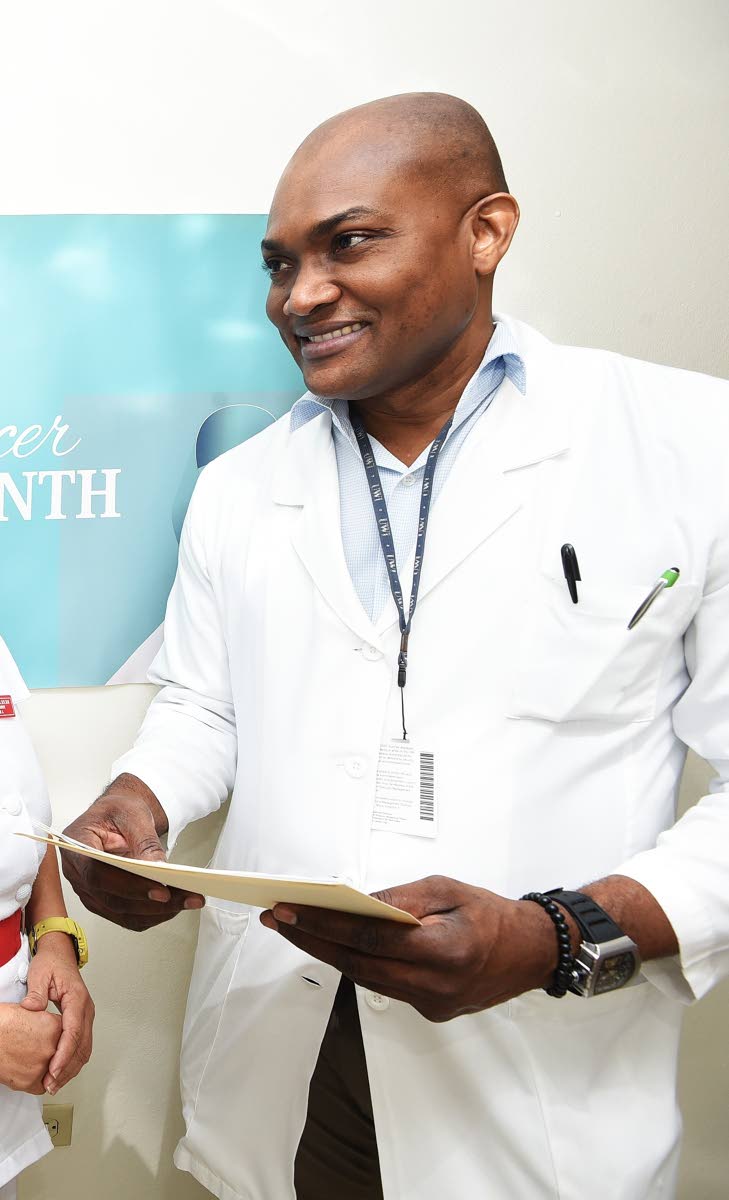 Dr Ian Bambury... ‘If there are high-risk behaviours, then recommendations for screening would have to be taken into consideration. But generally, we recommend screening to begin at age 21 years.’. Photo - File
-
Dr Ian Bambury... ‘If there are high-risk behaviours, then recommendations for screening would have to be taken into consideration. But generally, we recommend screening to begin at age 21 years.’. Photo - File
-
 Dr Elon Thompson, consultant urologist. Photo - Ian Allen/Photographer
-
 Dr Christopher Tufton, minister of health and wellness. Photo - File
The Government’s push to provide free cervical cancer screening for women and raise awareness during April is showing results, with some clinics reporting that they have exceeded their screening targets.
The South East Regional Health Authority (SEHRA), in a release promoting the service, said cancer of the cervix is one of the most common cancers among Jamaican women. Most cases are associated with the Human Papillomavirus (HPV), which is sexually transmitted through skin-to-skin contact.
Health Minister Dr Christopher Tufton said field officers from the ministry are reporting a strong response to both screening and vaccination efforts.
“Reports are that there has been a good take-up for Pap smears in SERHA, with over 100 persons screened at a recent SERHA outreach event, where there was also HPV screening at the Glen Vincent Clinic, which is one of the pilot sites. One hundred and five persons were screened as part of the month’s cancer awareness activities,” Tufton said, in a response to The Gleaner.
Cervical cancer is the second-most common cancer affecting women worldwide and in Jamaica. Gynaecologists say that when it is detected early through screening via Pap smear tests, the prospects for successful treatment are very good.
According to SEHRA, 386 new cases of cervical cancer were reported in 2020.
In observance of Cervical Cancer Awareness Month, the Government brought screening services to select health centres across the region, offering free Pap smear tests and HPV vaccinations aimed at promoting early detection and prevention.
Tufton also highlighted the link between HPV and cervical cancer.
“Twenty thousand doses of the HPV vaccine were administered, and 81 per cent coverage was achieved in 2025. The national programme was impacted by Hurricane Melissa; however, recent promotion carried out in SERHA with UNICEF in the last three months has resulted in improvements. Notably, 2025 recorded the highest number of doses given since the programme’s launch, reflecting post-pandemic recovery. We are anticipating further increases with the planned ramp-up for 2026 and beyond,” he reported.
ACQUIRED DISEASE
Consultant obstetrician-gynaecologist at the University Hospital of the West Indies, Dr Ian Bambury, said that for the most part, cervical cancer is an acquired disease.
“Cervical cancer is most often due to penetrative sex, but it can also be acquired through skin-to-skin contact. If there are high-risk behaviours, then recommendations for screening would have to be taken into consideration. But generally, we recommend screening to begin at age 21 years,” he told The Gleaner in a recent interview, noting that carriers of HPV can infect each other through risky sexual behaviour.
Tufton said the HPV vaccination policy has included boys age nine to 14 years since 2023.
Consultant urologist Dr Elon Thompson said HPV in boys can lead to penile cancer, and he has had to perform surgery to remove the penis in affected males.
In a recent interview with The Gleaner, he said: “Penile cancer is one of those cancers that was initially thought to affect persons of low socio-economic status, particularly smokers. There is definitely an association with HPV. We would describe penile cancer as the homologue of cervical cancer. Although cervical cancer is more common in women than penile cancer is in men, it can be one of the more severe cancers affecting men.”
The vaccines are administered to males age 9–14 years and females age 9–26 years. SEHRA noted that the sessions are also used to educate target groups about the importance of early screening and vaccination, while increasing public awareness about the need for regular check-ups.
Screenings have so far been held at the Glen Vincent Health Centre, Kitson Town Health Centre, Sydenham Health Centre, Central Village Health Centre, and Cumberland Health Centre, with the final session held yesterday at the St Jago Park Health Centre.
SEHRA is encouraging members of the public, especially women, to get screened, and is urging parents to have their children vaccinated against HPV, to help prevent cervical cancer and other related diseases.
erica.virtue@gleanerjm.com