Salman Rushdie testifies at terrorism trial of man convicted of stabbing him
Loading article...
-
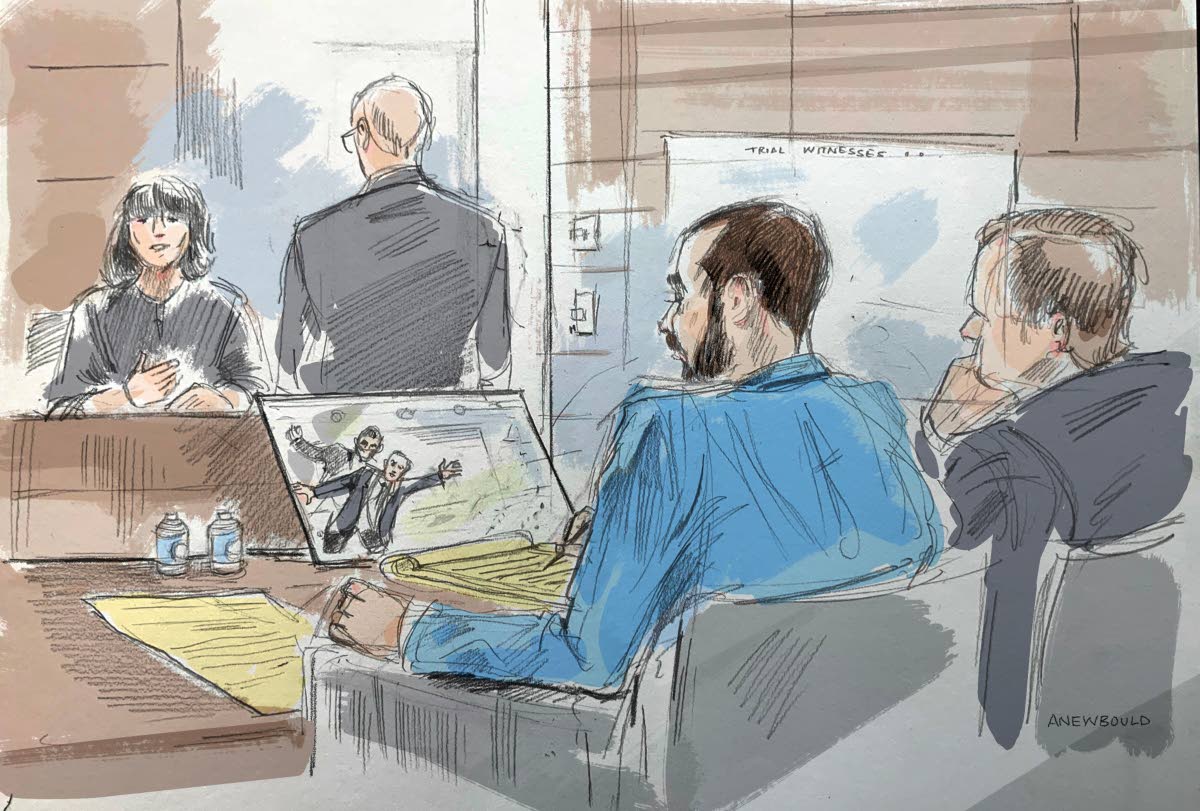 In this courtroom sketch, a witness describes video of an alleged attack on Salman Rushdie by Hadi Matar, in federal court in Buffalo, NY, on Wednesday, July 22, 2026. Matar, foreground, is seated with his lawyer’s co-council.
-
 Hadi Matar walks in to the Chautauqua County court in Mayville, NY, on May, 16, 2025.
-
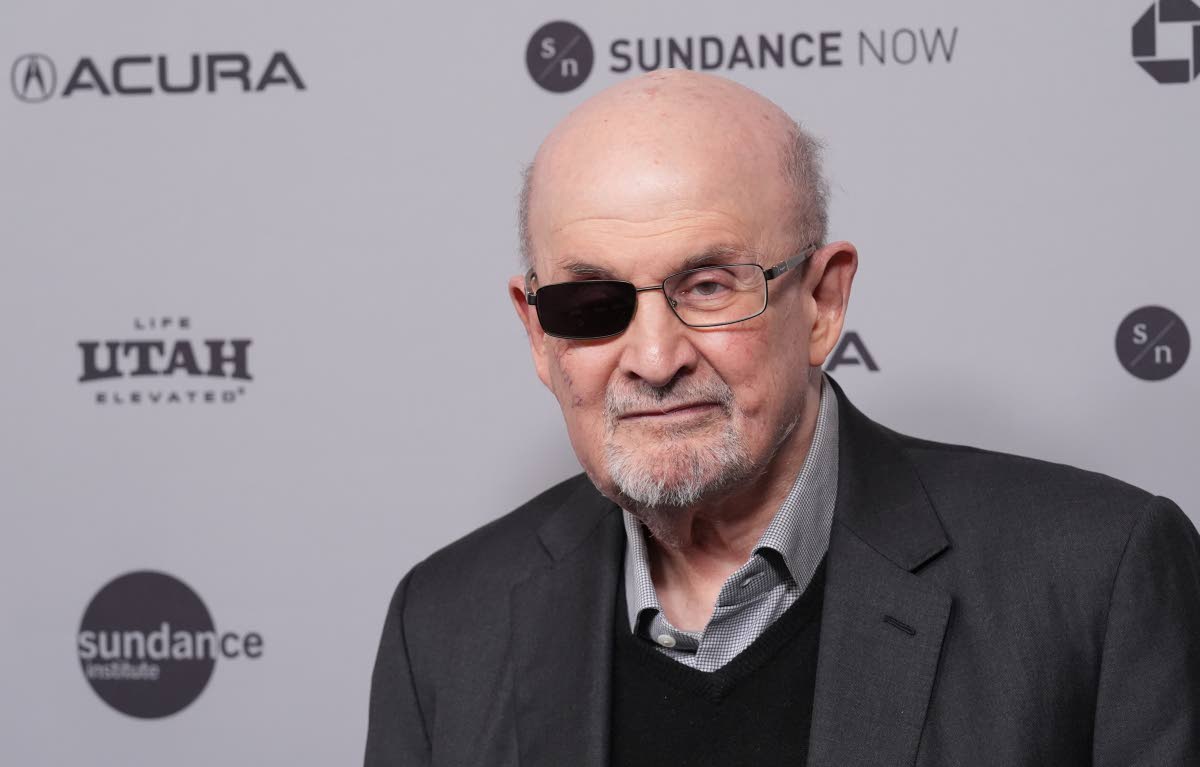 Novelist Salman Rushdie.
-
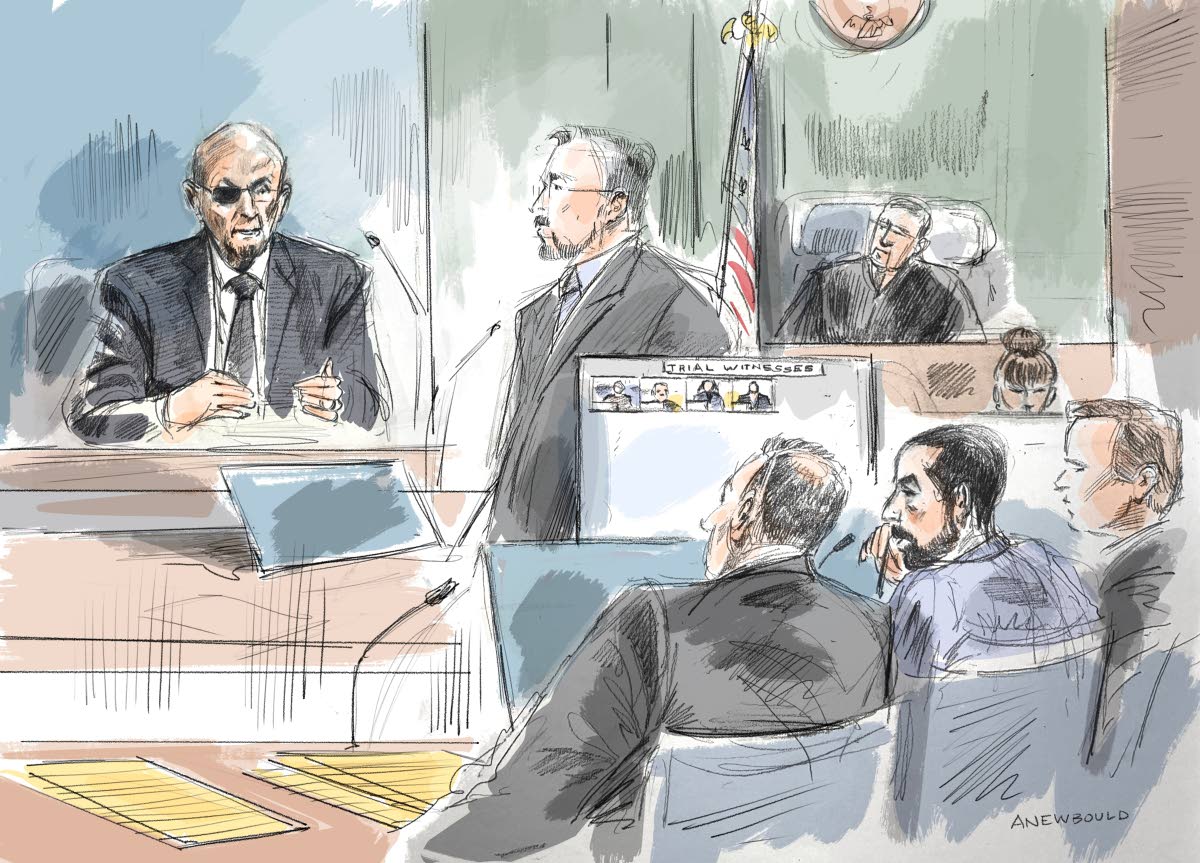 In this courtroom sketch, Salman Rushdie (left) testifies in federal court during the terrorism trial for Hadi Matar, Rushdie’s alleged attacker (second from bottom left) on Thursday.
BUFFALO, NY (AP):
Four years after being stabbed on an amphitheatre stage, Salman Rushdie sat across a courtroom from his convicted attacker Thursday and told jurors for a second time about the ambush that nearly killed him.
The prize-winning writer recalled feeling what he thought was a punch under his chin, then feeling blood coming from his neck.
Soon “I was on the stage, lying down, with an enormous pool of blood all around me,” Rushdie testified. “It was an enormous and expansive lake of blood.”
A Buffalo federal court jury watched Rushdie fixedly as he testified – and at one point removed his glasses to show his now sightless right eye – at Hadi Matar’s terrorism trial. He has pleaded not guilty.
Matar already was convicted of a state-level attempted murder charge in the 2022 attack at a cultural institution where Rushdie was poised to speak about threats to writers and artists. Federal prosecutors say Matar was acting on such a threat – an Iranian leader’s 1989 call for Rushdie’s death because of his novel The Satanic Verses.
“I can’t say what his ambitions or his aim was, but the wounds were dispersed across my body,” Rushdie testified.
Rushdie, 79, was composed and straightforward during little more than an hour on the witness stand. He outlined the attack – which blinded him in the right eye, damaged his liver, paralyzed his left hand for a time and briefly put him on a ventilator – and his lengthy recuperation and enduring injuries.
“The knife was a millimetre from my brain,” said Rushdie, whose attacker climbed on stage, approached from behind him and then slashed the author 15 times as the Chautauqua Institution audience gasped. Spectators and another speaker, Henry Reese, scrambled to aid Rushdie and restrain Matar, who was arrested by law enforcement assigned to the event. Rushdie has described the stabbing and recovery previously during Matar’s earlier trial, in a memoir and in interviews with The Associated Press and other outlets.
As Rushdie testified, Matar, 28, looked down at the defense table, sometimes rested his hand on his chin or turned to speak to his lawyer, looking toward the author only as Rushdie walked out a door. The writer glanced at Matar fleetingly, if at all.
Defence asks about book’s blowback
Matar’s defence has argued that prosecutors can’t prove his intent or mindset at the time of the attack – a key element in their claim that it was an act of terrorism motivated by allegiance to Iran’s government and the Iranian-backed Hezbollah militant group. Matar, currently serving a 25-year state prison sentence, faces a potential life sentence if convicted of federal charges that include engaging in an act of transnational terrorism.
When defense lawyer Nathaniel Barone asked whether Rushdie believed the defendant had ties to terrorism, the author replied: “I had no knowledge, but I had my suspicions.
Iran’s late Ayatollah Ruhollah Khomeini issued the 1989 fatwa, or religious edict, calling for Rushdie to be killed over The Satanic Verses, which includes a dream sequence about Islam’s Prophet Muhammad that some Muslims considered blasphemous. The novel sparked often-violent protests against Rushdie, who was born into a Muslim family, and the fatwa drove him into hiding for years. He gradually emerged after the Iranian government distanced itself from the order in 1998, though the fatwa was never officially repealed.
“For two decades or more, I led a public life without a hint of trouble,” Rushdie testified Thursday.
Barone repeatedly asked Rushdie whether he had anticipated blowback from the book.
“Probably, but I don’t believe the book to be on trial here. I believe someone else is on trial,” Rushdie said. At Barone’s request, the judge struck the comment from the court transcript.
Prosecutors say Matar was animated partly by comments that a former Hezbollah leader, the late Hassan Nasrallah, made about Rushdie and the fatwa in 2006. The US-born Matar also holds citizenship in Lebanon, where Hezbollah is based, and Matar’s mother has said a 2018 trip there left him moody and withdrawn.