Sean Major-Campbell | Rasta vibrations about apology and repair - Part 1
Loading article...
-
 Professor Anna Kasafi Perkins. Photo - xx
-
Professor Anna Kasafi Perkins. Photo - xx
-
 Pope Leo XIV appears at the window of the Apostolic Palace overlooking St Peter’s Square at the Vatican for the Angelus noon prayer on All Saints’ Day, a feast celebrated across much of the Christian world, Sunday, November 1, 2026. Photo - Alessandra Tarantino
-
 Photo - www.pexels.com
-
 Photo - File
-
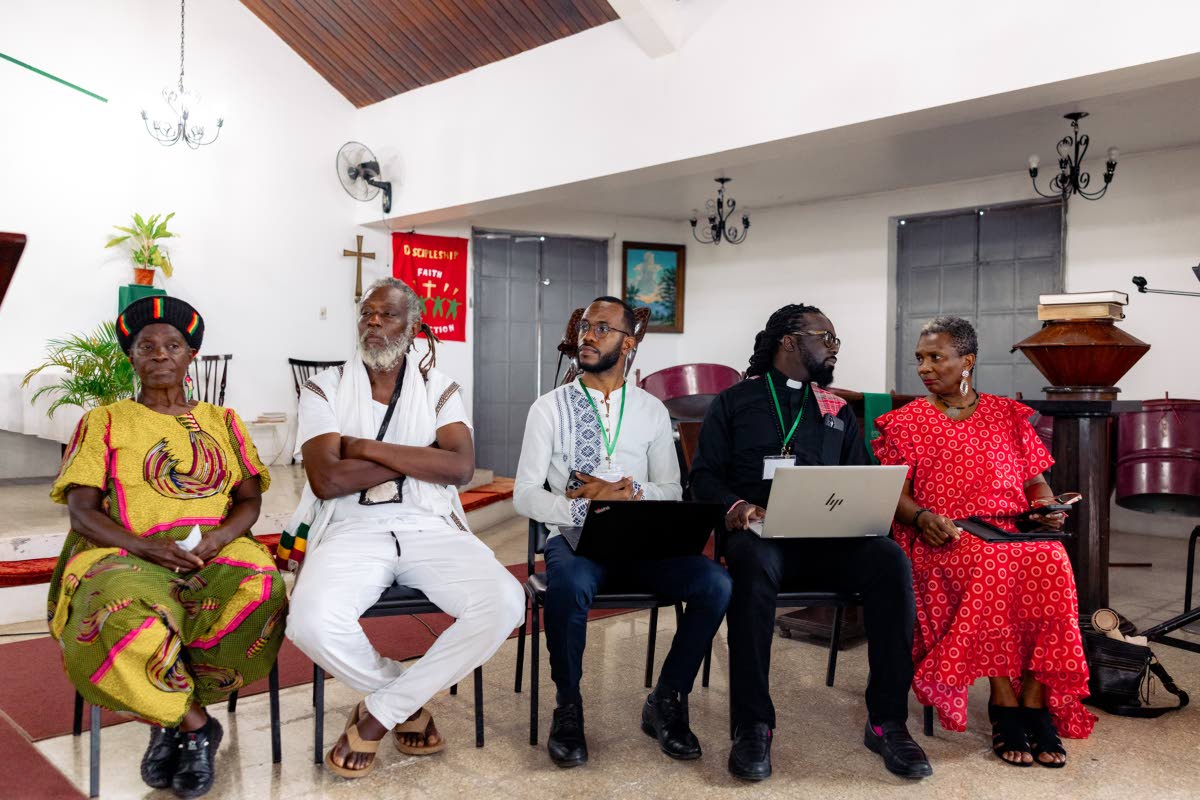 From left; Sister Nanny, First Man, Dr. Kirt Henry, Rev. Bertram Gayle and Rev. Marvia Lawes in the St. Augustine Church, in Coral Gardens. Photo - Contributed
The Transatlantic Reasonings Conference was held to include the transatlantic collective of reasonings, connections, futures. This intellectually stimulating, inspiring, and critically engaging interdisciplinary experience was rich. There is much to unpack from this truth-telling encounter which spoke to the heart, mind, and soul of all who realised that we were gathered in the presence and name of the ancestors.
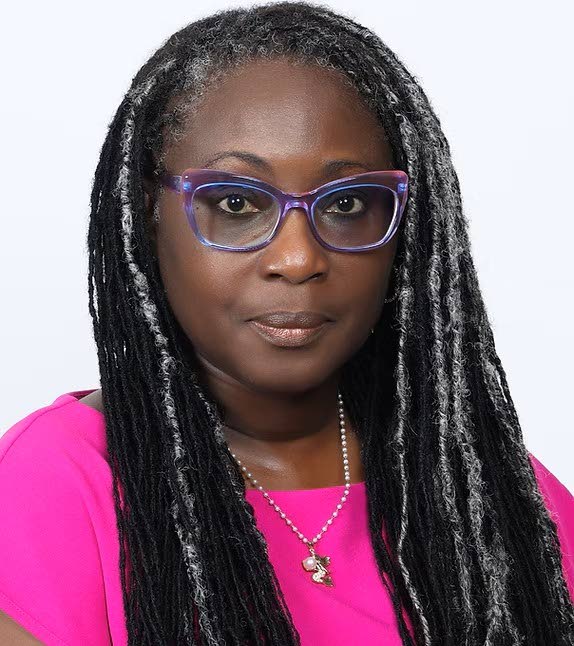
The keynote speaker opening the conference, Professor Anna Kasafi Perkins was courageous in her defence of “ Of Pardons and Anachronisms: A Theological Critique of Leo’s Ask in Magnifica Humanitas”. She noted, “Magnifica Humanitas opens by affirming the God-given grandeur of human life and the responsibility of each generation to shape its era so that human dignity is protected, justice advanced, and fraternity made possible. The encyclical is principally concerned with humanity’s changing circumstances, especially the power and reach of emerging technologies and the concentration of influence in the hands of those who possess technological knowledge and economic resources.”
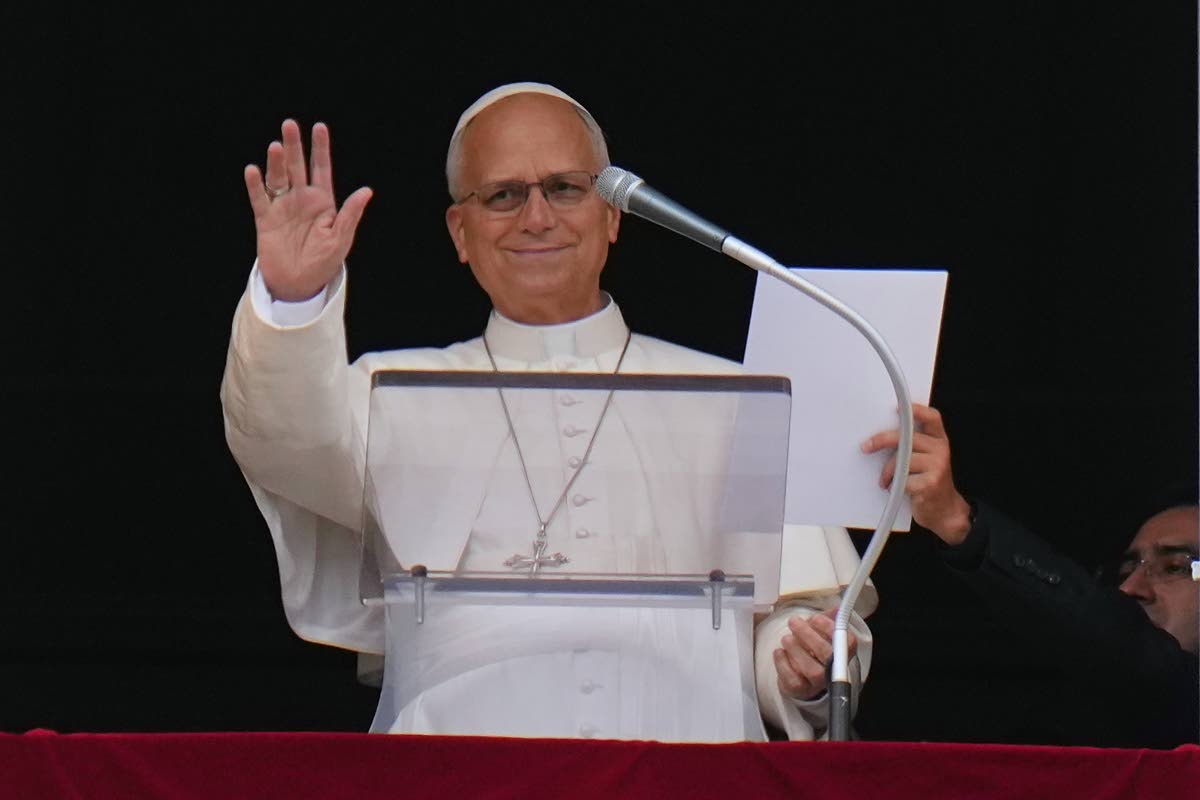
She observed that, “Yet, within Chapter 4, ‘Breaking the chains of new forms of slavery’, paragraphs 173–181, the encyclical turns to the history of slavery. Paragraph 176 culminates in a striking sentence: “For this, in the name of the Church, I sincerely ask for pardon.” The Pope expresses sorrow for the immense suffering and humiliation endured by people whose dignity was contradicted by systems of enslavement. He also acknowledges that slavery was tolerated by the Church for centuries before it was unequivocally condemned.”
The professor went on to observe, “There is a further difficulty. The Pope does not name the Transatlantic Trade in Africans or racialised chattel slavery specifically. His request for pardon is framed broadly, encompassing historical forms of slavery that the Church tolerated or failed to condemn. That breadth does not exclude the Atlantic system; it does, however, leave the reader to make the connection. The question before us is therefore, not whether the Pope’s words matter. They do. The question is whether the historical and theological framing that accompanies the request for pardon adequately confronts the Church’s responsibility for its role in the enslavement of Africans.”
It is not every day that a Roman Catholic theologian offers critique of the Pope’s presentation. It is therefore significant that this researcher in ethics, justice, popular culture, sexuality, theology, scripture, and quality assurance, uses her position of privilege and erudition to critically speak to justice issues within and without the space of church. This is a timely reminder to the global church community that introspection and change begins in the “house of God”. Space will not allow for a fulsome presentation of Anna Perkins’ excellent work in this column alone. More to come.
A major highlight of the conference was our visit to Coral Gardens, the historic site of the incident and atrocities of 1963. Sister Nanny and First Man spoke on behalf of the Rastafari Coral Gardens Benevolent society. A spirited conversation took place in the St. Augustine (Anglican) Church under the title, “Yaad Repair: Reasonings on Faith, Knowledge, and Spiritual Justice in Jamaica.”
Questions from the floor presented an opportunity to make clear that the Anglican Diocese of Jamaica and the Cayman Islands do not take orders from the Church of England. In fact, Anglican polity operates within provinces which operate independently of each other. Suffice to say that the Anglican Church in the Caribbean still must engage in the inevitable process of truth-telling, repair, and reconciliation. Ongoing theological reflection, historical accountability, ecumenical partnerships, wider civil society partnerships, and alignment with the CARICOM Ten-Point Plan for Reparatory Justice will enhance the church’s coming to terms with this urgent conversation for healing.
Secretary of the Rastafari Coral Gardens Benevolent Society, Sister Nanny, observed that in the process of colonisation, the colonists tried to take the memory from the bodies of the enslaved. She went on to share the account of one of the brethren, Rudolph Benjamin Franklyn, who farmed in the hills. As soon as he was ready to reap the crops, the overseer of the Rose Hall Estate would call the police to destroy the crops.
Two policemen and the overseer came to serve an order for Rudolph to vacate the plot. One of the policemen who came from Portland and knew about farming (since his father was a farmer) offered to personally intervene on behalf of Rudolph to get him to reap his crop. Unbeknownst to this kind policeman, the overseer and the other policeman went back to the property and a fracas developed, and Rudolph was shot six times in the stomach. Sister Nanny noted that later that day Rudolph was found still alive. He underwent surgery.
It is noted too that there was no ganja, green or cured, at the farm. Rudolph was also never charged with trespassing. In the Coral Gardens incident of Holy Thursday 1963, in a clash with the police at a gas station (which was set ablaze and burnt), Rudolph was shot and killed by the police. They refer to the atrocities of Good Friday as “Bad Friday” since the authorities had asked that all bearded men (Rasta men) be taken in dead or alive, hence Sister Nanny noting that it was a persecution of the Rastafarian Community. They were forcibly trimmed and beaten. “The innocent were persecuted ... The atrocities on Rastafari were declared by the prime minister on his own citizens.”
First Man from the Rastafari Indigenous Village recalled that the principles of the church have brought him through. He therefore greeted in the name of his parents “God consciousness” and “in the name of Emperor Haile Selassie I and the perfect balance of Empress Menen.” “When I speak, I carry the voice of my Rastafari Indigenous people. I also carry the voice of my ancestors.”
First Man also noted “The concept of my community was always repatriation which really means to return to your origin. Return to what you were stolen from. We were stolen from the concepts of ourselves. We are stolen from the heritage of our grandmothers or grandfathers. We are stolen from our cosmogony.”
When you hear our Rastafari siblings, you cannot help but face the raw reality of the holocaust of slavery and how its domino effects continue to the present. No wonder the Transatlantic Reasonings Conference engaged the question of whether forgiveness is possible. Sister Nanny is pertinent in stating that “forgiveness comes after atonement”. First Man declares, “The only time I know you are sorry is when your behaviour is adjusted.” (To be continued)
Fr. Sean Major-Campbell is an Anglican priest and advocate for human rights and dignity. Please send feedback to columns@gleanerjm.com and seanmajorcampbell@gmail.com