
Hubert Lawrence | New ISSA recruitment rules won't change much
Published:Wednesday | October 31, 2018 | 12:00 AM
If you think the new ISSA recruitment rules will affect the order of power at the ISSA/GraceKennedy Boys and Girls' Athletics Championships, think again.
It takes more than recruiting to win, and several of those contributing factors will remain even after the new rules chip in. Current champions Calabar High School and Edwin Allen High School have great coaches, efficient support teams and facilities that provide a competitive edge. Those things won't change.
On the boys' side, school size is a key factor. Calabar, Kingston College and Jamaica College are the most successful schools at Boys Championships, and each of them has about 2,000 boys on their books. That allows them to field big enough teams in all the major sports and to enter every one of the 43 events at Champs.
That's why smaller all-boys schools seldom win and why co-educational high schools have only won Boys Championships on six occasions, thanks to Excelsior High in 1960, Clarendon College in 1982, 1984 and 1985 and St Jago High in 1987 and 1993. At best, the biggest co-ed schools have half as many boys.
Like dominant Vere Technical and Holmwood Technical teams before them, Edwin Allen has on-campus boarding. That allows them to train when needed and to control nutrition throughout the day. That's a competitive edge that Vere rode to 15 straight Girls Championship titles from a total of 22, with Holmwood having 9 from a sum of 10.
Manchester High, who stopped the Vere streak in 1994, and St Jago High, winners in 1996, 1997, 1998 and 1999, and current challenger Hydel need to match that to come closer.
The restrictions will have an impact, though.
TRANSFERRING TO SCHOOLS
As indicated in this space last week, athletes who move between secondary-level schools have made and continue to make an important contribution to our international success in the sport. With more doors closed to such movement than before, fewer of them will be able to transfer to schools that can help them along the way.
This is where the new regulations will be felt. From Lennox Miller to Omar McLeod, from Merlene Ottey to Kerron Stewart, the transferred high school student-athlete has consistently given Jamaicans inspiration by performances on the track and in the field.
SUCCESFUL MOVES
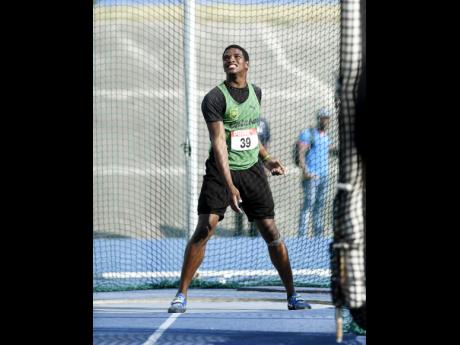
Latterly, Kai Chang vaulted up the world discus rating this year to become World Under-20 champion largely because he moved from Titchfield to Calabar and to the coaching of expert Julian Robinson. A few years ago, Commonwealth shot champion, Danielle Thomas-Dodd, trekked from Frome Technical to Edwin Allen and the coaching of Marlon Gayle. Now, graduated from Kent State University, she is among the world's best.
In addition, there are many who have transferred and gone on to educational success at the tertiary level on scholarships.
It goes without question that abuse must be stamped out where it is found. The first step is research to find out which schools are allowing their student-athletes to miss classes, to submit less than an acceptable amount of homework, to subvert school rules and to skip through school without preparing for examinations.
This research, which presumably can be facilitated by ISSA and the Ministry of Education, will point directly at schools who play tic-tac-toe with the future of the children who don their colours on the track.
Few will make the Olympics so all student-athletes must make a full effort at academics, so if they aren't the one we cheer for at the 2024 and 2028 Games, they will have extracted a lifelong benefit from the school system. That's an education.
- Hubert Lawrence has made notes at track side since 1980.