Lightning focus - Fourth incident puts ISSA safety rules under spotlight
Loading article...
-
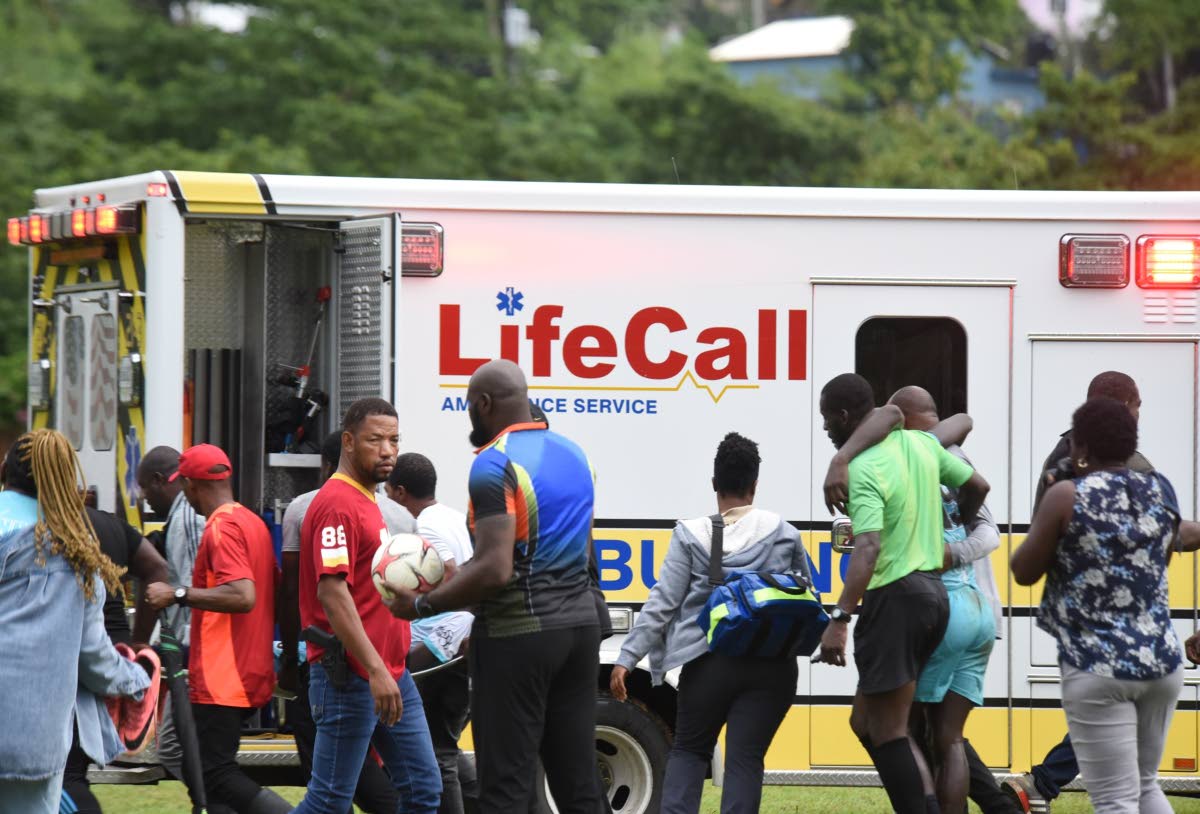 Two Denbigh High School footballers were taken to hospital by ambulance after lightning struck during Tuesday’s ISSA daCosta Cup quarter-final clash against Cornwall College at the Cornwall College playing field in Montego Bay, St James. Photo - Ashley Anguin
-
Two Denbigh High School footballers were taken to hospital by ambulance after lightning struck during Tuesday’s ISSA daCosta Cup quarter-final clash against Cornwall College at the Cornwall College playing field in Montego Bay, St James. Photo - Ashley Anguin
-
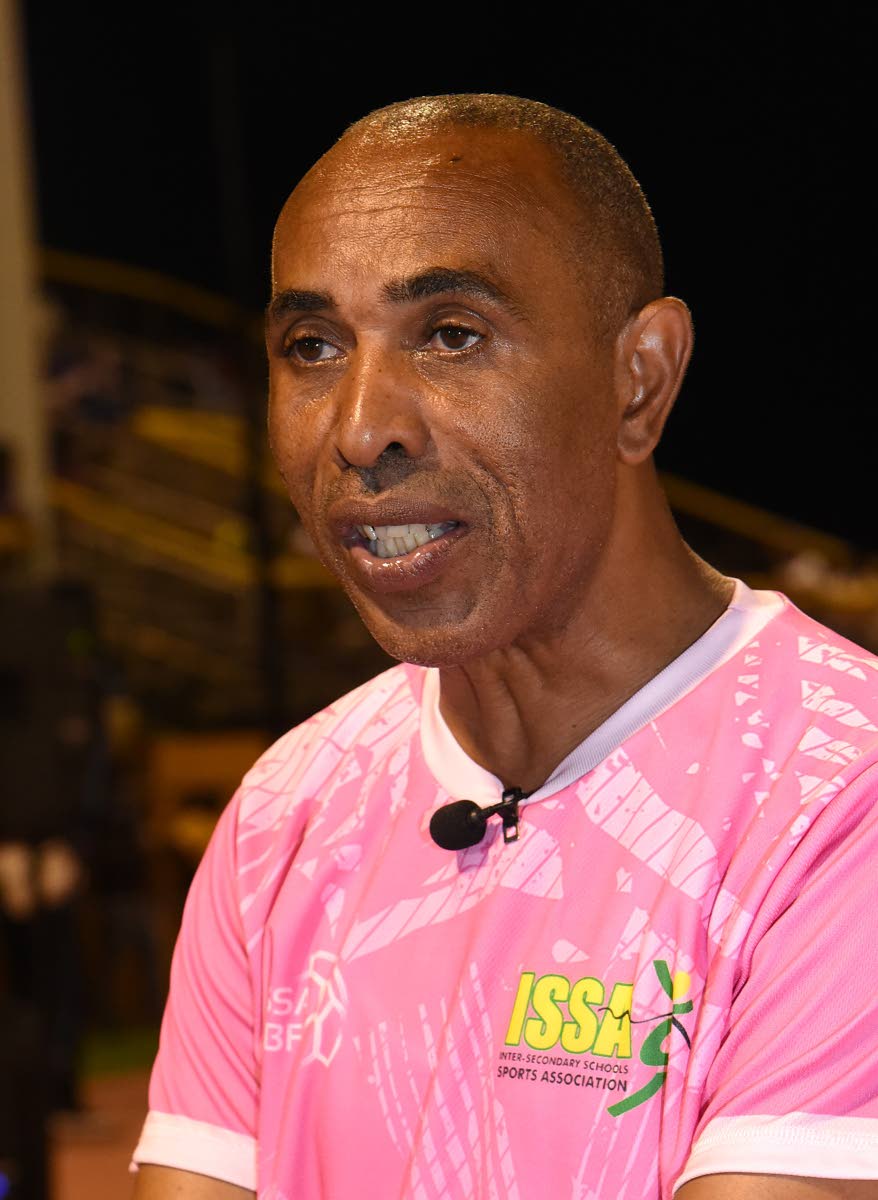 Keith Wellington, president of the Inter-Secondary Schools Sports Association. Photo - Ian Allen
The emergency protocols designed to protect athletes when thunderstorms threaten sporting events have come under renewed scrutiny after two Denbigh High School footballers were affected by lightning on Tuesday, the fourth such incident in Inter-Secondary Schools Sports Association (ISSA) football since 2019.
Lashawn Barnaby and Omarion Wright were affected during Denbigh’s daCosta Cup quarter-final match against Cornwall College in Montego Bay, St James. Both were taken to the Cornwall Regional Hospital and released on Tuesday night after undergoing multiple medical tests.
Similar incidents occurred twice in 2019 and once in 2023.
ISSA safeguards
ISSA President Keith Wellington said the association has measures in place to protect players when lightning threatens a match.
“What we have done in terms of our protocols is to insist that wherever there is any indication of lightning, players and officials should be removed from the playing area,” Wellington told STAR Sports on Wednesday.
“The protocol dictates that once there’s a lightning strike, you remove the players from the field and you wait for a minimum of, I think, 20 minutes. If there’s no further strike, then you can go back on. But if there’s another strike, you have to wait again for that prescribed time,” the ISSA president added.
He indicated that “I have not yet gotten the official reports from the match officials … but I’m hoping that the protocols were followed.”
International standard
The widely used international standard is the ‘30/30’ rule, which is followed by sporting bodies in the United States, Australia and elsewhere.
Under the guideline, play is stopped when lightning comes within roughly eight miles, or about 10 kilometres, of a venue. Competition does not resume until 30 minutes have passed without another lightning strike.
ISSA has urged officials to apply the 30/30 rule since lightning struck players during a Manning Cup match between Jamaica College and Wolmer’s Boys’ School in 2019.
The concern extends beyond schoolboy football, with questions being raised about the precautions taken in other sports in which athletes may be exposed to dangerous weather conditions.
JGA policy
Jamaica Golf Association (JGA) President Jodi Munn-Barrow outlined the procedures followed during tournaments when lightning is detected under the association’s policy.
“We have our rules; officials have an app that they monitor,” Munn-Barrow told The Gleaner yesterday.
“For example, this weekend at the Jamaica Open, we did have some lightning, and we were able to tell how far away the lightning was: five miles, three miles,” she revealed.
She said golfers are also required to follow additional safety measures.
“So, if it comes within one mile or less, then we pull the golfers off the course. We wait for at least 20 minutes of no lightning strikes before golf resumes, and we send them back out,” the JGA boss added.
“We also have an evacuation policy to have staff members in place so they can quickly remove the golfers off the golf course,” Munn-Barrow said. “… Many of the golf courses do have lightning detector systems. But those that do not always advise players that once they observe a lightning strike, they are to come off the golf course immediately and seek shelter,” she added.
Swimming protocols
Similar precautions are observed in local swimming.
Aquatic Sports Association of Jamaica (ASAJ) Meet Director Joseph Reynolds explained how the association responds when lightning is detected near pools.
“We install the lightning apps on our phones, and we have a number of persons who are assigned to check for lightning, even if it’s a blue sky, to check on lightning to see what’s happening around us,” Reynolds told The Gleaner, noting that safety is paramount.
“We have the coaches, and we have the lifeguards; if they sense that there’s anything happening, they ask me to check the app, and I’ll check it even though I’ve had people who are assigned to do it. And once the app says that we are to stop, we stop all activities, and we exit the pool,” he explained.
Major sporting bodies
Most major sporting bodies, from the NCAA to FIFA, suspend play when lightning is within about eight miles and wait 30 minutes after the last strike before resuming activity.