US isn’t looking at imminent military action in Cuba
Loading article...
-
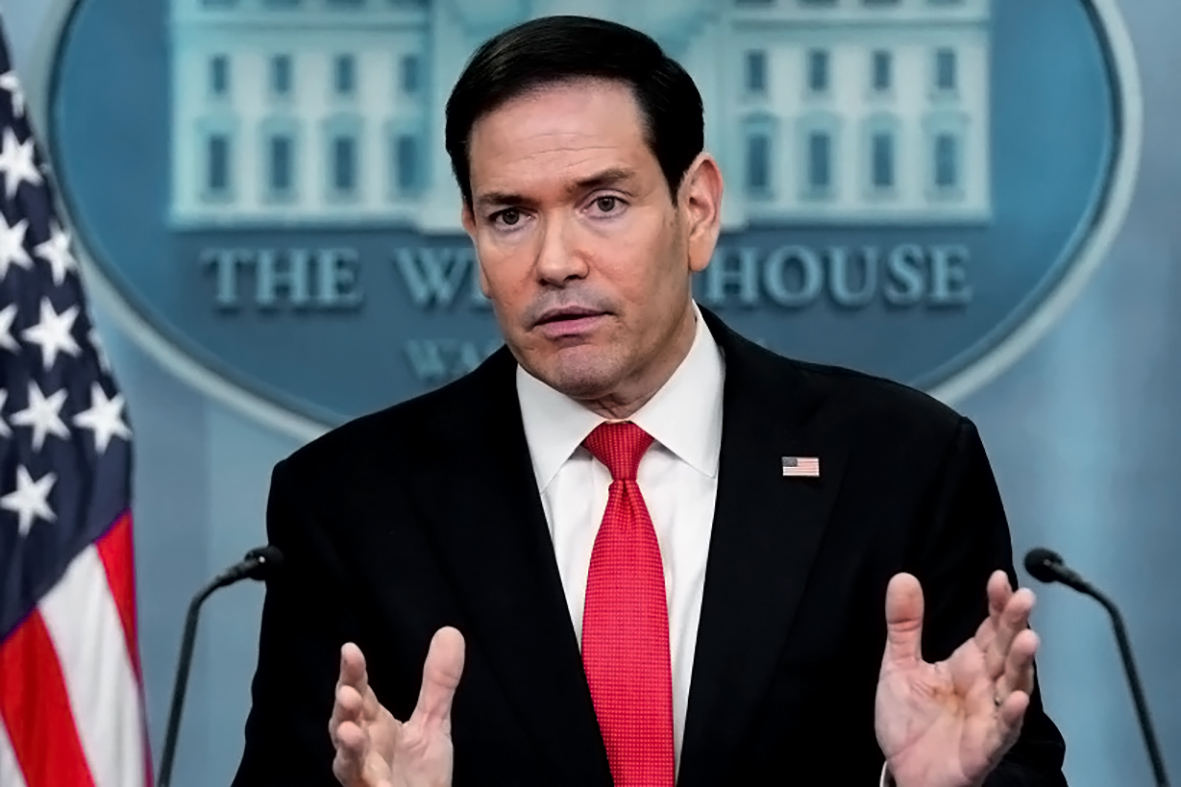 US Secretary of State Marco Rubio. Photo credit: Ap
-
US Secretary of State Marco Rubio. Photo credit: Ap
-
WASHINGTON (AP):
The United States is not looking at imminent military action against Havana despite President Donald Trump’s repeated threats that “Cuba is next” and that American warships deployed in the Middle East for the Iran conflict could return by way of the island, US officials say.
The officials involved in preliminary discussions with Cuban authorities also told AP that they are not optimistic the communist government will accept an offer for tens of millions of dollars in humanitarian aid, two years of free Starlink internet access for all Cubans, agricultural assistance and infrastructure support.
But they say Cuba has not yet outright refused the offer, which comes with conditions that the government has long resisted, even after the Trump administration imposed new sanctions Thursday on Havana. The largest of those sanctions is against GAESA, or Grupo de Administración Empresarial S.A., a business conglomerate operated by the Cuban Revolutionary Armed Forces.
The officials, who spoke on condition of anonymity to discuss the private talks, say there is still time for the government to accept the offer. They cautioned, though, that Trump could change his mind at any time and that military options are still on the table.
The Treasury and State departments announced the sanctions after Trump signed an executive order last week expanding the administration’s authority to impose penalties on Cuba.
Cuban Foreign Minister Bruno Rodríguez described the measures as “collective punishment” and denounced the US government’s “genocidal intent against Cuba.”
“These actions rely on the assumption that the United States can impose its will on the world while threatening foreign citizens and businesses with illegitimate coercion,” Rodríguez wrote on X.
POSSIBLE ACTION
Shortly after signing the order yesterday, Trump gave a speech mentioning that “Cuba’s got problems” and suggesting that a military show of force may be in the offing.
He said one of the US aircraft carriers on its way back from the Middle East could “come in, stop about 100 yards offshore, and they’ll say: ‘Thank you very much. We give up.’”
One official involved in the discussions said the new sanctions authority was intended, however, to make clear to the Cubans that the Trump administration’s immediate goal is “not regime change, but changing the regime’s failed policies.”
Secretary of State Marco Rubio, the son of Cuban immigrants who has long taken a hard line against Cuba’s leadership, has said repeatedly that the country’s government has failed. He said this week that Cuba’s economic model doesn’t work and those in power “can’t fix it.”
“And the reason that they can’t fix it is not just because they’re communist. That’s bad enough,” he told reporters Tuesday at the White House. “But they’re incompetent communists. The only thing worse than a communist is an incompetent one.”
Rubio is visiting Rome and Vatican City, meeting Pope Leo XIV on Thursday in part to discuss Cuba, where the Catholic Church has significant influence.
US officials don’t know if Cuba will accept conditions but say dialogue is open
One US official said it is an open question as to whether Cuba’s leadership is willing to meet US conditions, which include the release of political prisoners, an end to political and religious repression, and an opening to American private sector investment.
At the same time, the official said the door has not closed to dialogue that could help both countries given Cuba’s proximity to the US.
The United States sees a national security threat in what the official called increasing influence on the island by China and Russia, including intelligence and logistics cooperation.
Cuban officials are adamant, though, that Cuba’s internal governance is not up for negotiation.
“Negotiations on issues like regime change or removing the president are out of the question,” Cuban Ambassador to the United Nations Ernesto Soberón Guzmán told reporters last week. “No internal affairs of Cuba are on the table.”
Guzmán also told The AP last month that Havana will not abide by any American “ultimatums” to release political prisoners and that Cuba’s leaders are “preparing for all scenarios” if Trump makes good on threats to intervene.
The White House didn’t immediately respond to a request for comment about military action in Cuba.